
S 125 CrPC | Unproven Allegations Of Wife's Infidelity Cannot Stop Interim Maintenance: MP High Court
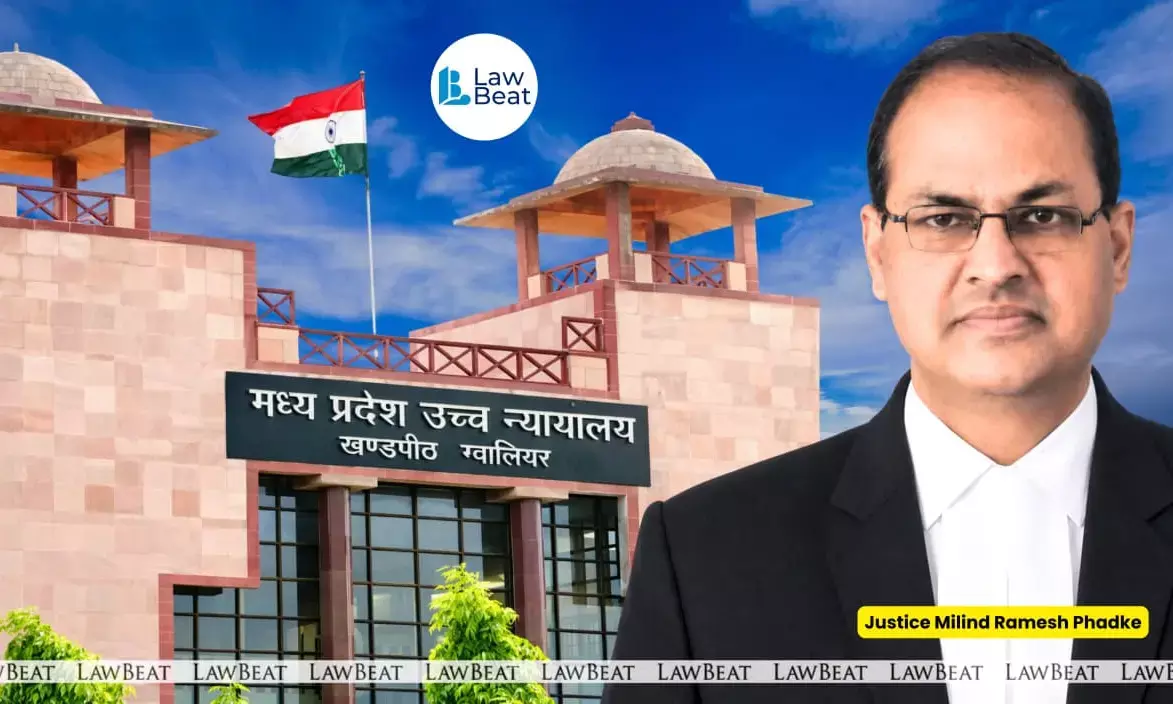
MP High Court Refuses to Stop Rs 3,500 Monthly Interim Maintenance to Wife Over Infidelity Allegations
The Madhya Pradesh High Court at Gwalior has refused to disturb an interim maintenance order in favour of a wife, holding that a husband’s unproven allegations of desertion and an “improper relationship” cannot, by themselves, stop a court from granting immediate financial support while the main case is pending.
Justice Milind Ramesh Phadke, on November 16, dismissed a criminal revision filed by Deepak Kushwah, who had challenged a Family Court order directing him to pay Rs 3,500 per month to his wife, Sangeeta Kushwah, as interim maintenance under Section 125 of the Code of Criminal Procedure (CrPC).
The couple married on January 16, 2024. After disputes, the wife began living separately and approached the Family Court under Section 125 CrPC seeking maintenance (MJCR 915/2025). While that case was pending, she sought interim relief, and the court granted Rs 3,500 per month on August 6, 2026. The husband then moved the High Court under Sections 397 and 401 CrPC.
Husband Alleged Desertion and Infidelity
Appearing for the husband, Advocate Ratan Nigam argued that the wife had left the matrimonial home voluntarily and without sufficient cause. It was further alleged that she was in an improper relationship with another person, citing conversations from her mobile phone.
Relying on Sections 125(4) and 125(5) CrPC, which describe situations where a wife cannot claim maintenance, the husband contended that the Family Court ignored these provisions. The order, he argued, suffered from “material illegality and non-application of mind.”
Justice Phadke noted that the husband’s main grievance rested on allegations yet to be proved. “Mere allegations made by one spouse against the other, in the absence of their proper substantiation, cannot by themselves be treated as conclusive proof,” the court observed, referring to Section 125(4).
The court also reminded that Section 125 exists to provide “immediate financial assistance” to a person unable to maintain herself and to prevent “destitution and vagrancy.” Calling the provision “social and remedial in nature,” it said that at the interim stage a court only makes a prima facie assessment of the parties’ circumstances and the material on record, which is “not required to be treated as a final determination” of their rights.
Examining the Family Court’s order, the High Court found that the lower court had weighed the wife’s claim and the husband’s objections before exercising its discretion. The husband, it said, “has not been able to demonstrate” that the Family Court acted arbitrarily or based its order on an erroneous assumption of law or a material misreading of the record.
The ruling does not shut the door on the husband. The High Court clarified that his contentions about the wife’s alleged relationship and the applicability of Sections 125(4) and 125(5) may be examined by the Family Court “at the appropriate stage,” after both sides lead evidence. Since the maintenance proceedings are still pending, it declined to record any conclusive finding on these disputed facts.
Describing interim maintenance as an “interlocutory arrangement” meant to safeguard a claimant’s immediate financial needs, the court said it does not finally decide her entitlement. The husband will have “every opportunity” to place his material and evidence before the Family Court, which must weigh it independently “without being influenced by any prima facie observations made at the interim stage.”
The court also underlined the limits of its own power. Revisional jurisdiction under Sections 397 and 401 CrPC is “supervisory and revisional in nature” and not meant for re-appreciating the record like an appeal. Interference is justified only for patent illegality, material irregularity, perversity or an error of jurisdiction. Finding none, the court dismissed the revision as “devoid of merit.”
Interim maintenance is meant to keep a spouse afloat while a case runs, not to decide who is at fault. Allegations about a spouse’s conduct must be proved with evidence at the right stage, and cannot be used as a shortcut to avoid paying support in the meantime.
Case Title: Deepak Kushwah vs. Smt. Sangeeta Kushwah
Order Date: November 16, 2026
Bench: Justice Milind Ramesh Phadke