
SC Reservation Benefits Cannot Travel Across States After Migration: Madhya Pradesh High Court
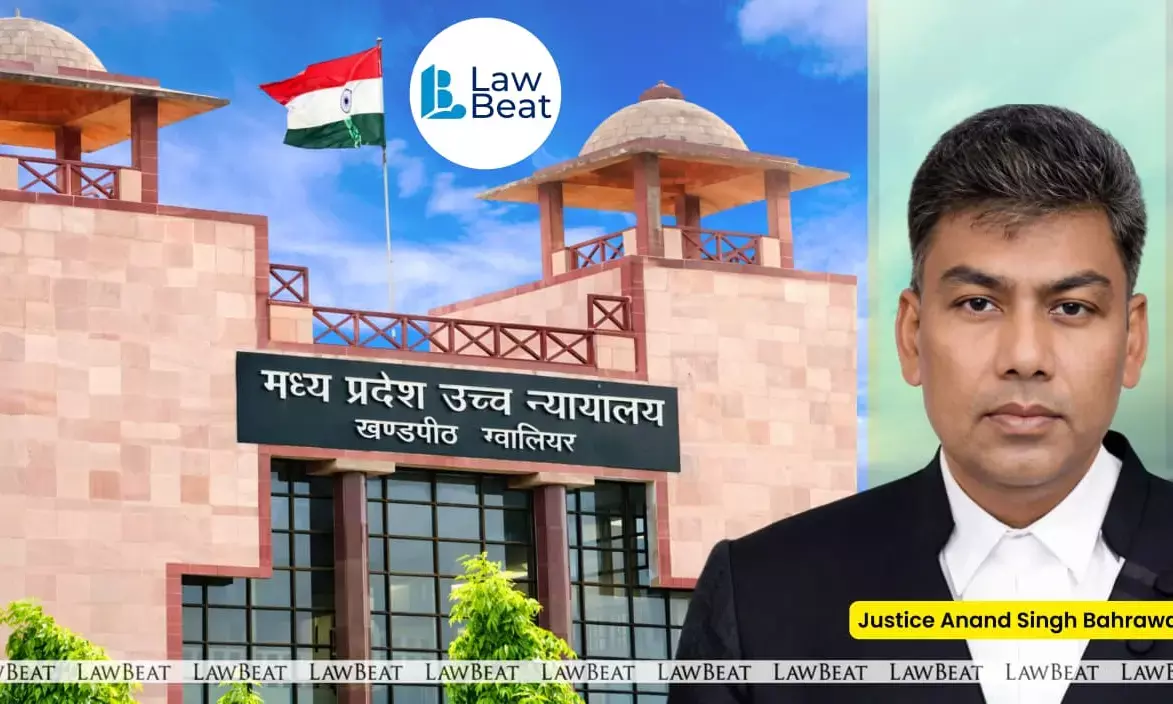
Caste Certificate From Another State Cannot Grant Reservation In Madhya Pradesh: High Court
The Madhya Pradesh High Court has held that a person carrying a Scheduled Caste certificate issued in another State cannot claim reservation benefits in Madhya Pradesh after migration, even if the caste is recognised in both States. The Court reiterated that reservation benefits remain linked to the person’s “home State” and cannot automatically travel with migration after marriage or relocation.
Justice Anand Singh Bahrawat passed the order while deciding a petition filed by Smt. Hemlata Arya, who had challenged an order of the Additional Commissioner, Chambal Division, Morena, directing fresh consideration for appointment to the post of Anganwadi Worker in Sheopur district.
According to the case record, Arya had applied for appointment as an Anganwadi Worker in Ward No. 8, Baroda, Sheopur, under the Scheduled Caste category. She claimed that despite being more meritorious, authorities had first appointed another candidate, Famida Bano, and later appointed respondent Kirti Sharma. Arya then approached the Additional Collector, who allowed her appeal in July 2017 and directed authorities to appoint her. Pursuant to that order, she was appointed as an Anganwadi Worker on August 29, 2017.
However, Kirti Sharma challenged the decision before the Additional Commissioner, who later set aside the appointment and ordered fresh consideration after hearing all concerned candidates. Arya subsequently approached the High Court challenging the remand order.
Appearing for the petitioner, Advocate Mahesh Goyal argued that Arya was entitled to consideration under the Scheduled Caste category because her caste certificate was valid throughout India. He submitted that the Collector had already found her to be more meritorious and entitled to 61.5 marks.
Opposing the plea, Government Advocate B.M. Patel and Advocate Bhanu Prakash Singh, appearing for respondent No. 5, argued that Arya’s caste certificate had been issued by authorities in Kota, Rajasthan, and therefore she could not seek reservation benefits in Madhya Pradesh.
Accepting the respondents’ stand, the High Court said the legal position on the issue was already settled by several Supreme Court decisions as well as earlier rulings of the High Court. Referring extensively to judgments including Bir Singh v. Delhi Jal Board, Marri Chandra Shekhar Rao v. Dean, Seth G.S. Medical College, Action Committee v. Union of India, and MCD v. Veena, the Court observed that reservation benefits are State-specific and depend upon the social and educational backwardness faced by communities within a particular State.
The Court observed that, “the benefit of reservation can be extended only in the home State,” and since the petitioner’s home State was Rajasthan, “the benefit of the Scheduled Castes category cannot be extended to her in the State of Madhya Pradesh.”
The Court further noted that merely because a caste bears the same nomenclature in two States does not mean the degree of backwardness or social disadvantage remains identical. It said extending reservation benefits to migrants could defeat the purpose of protecting local disadvantaged communities in a particular State.
Justice Bahrawat also relied upon an earlier Madhya Pradesh High Court ruling delivered in the case of Smt. Sita Saini v. The State of Madhya Pradesh and Others in October 2025, where similar principles were discussed in detail while dealing with migration and caste status after marriage.
While refusing to interfere with the Commissioner’s order, the Court also observed that the writ petition itself was directed against a remand order, which merely required reconsideration of the candidates’ inter se merit after giving them an opportunity of hearing.
The Court ultimately directed the Project Officer to reconsider the appointment process within three months after granting personal hearing to all candidates, including Arya and Kirti Sharma. However, the authority was specifically directed to treat Arya as not entitled to reservation benefits under the Scheduled Caste category in Madhya Pradesh.
Case Title: Smt. Hemlata Arya v. The State of Madhya Pradesh and Others
Date of Order: April 29, 2026
Bench: Justice Anand Singh Bahrawat