
Section 125 CrPC | Courts Must Look At Husband's Status, Not Just Disclosed Income, Says MP High Court
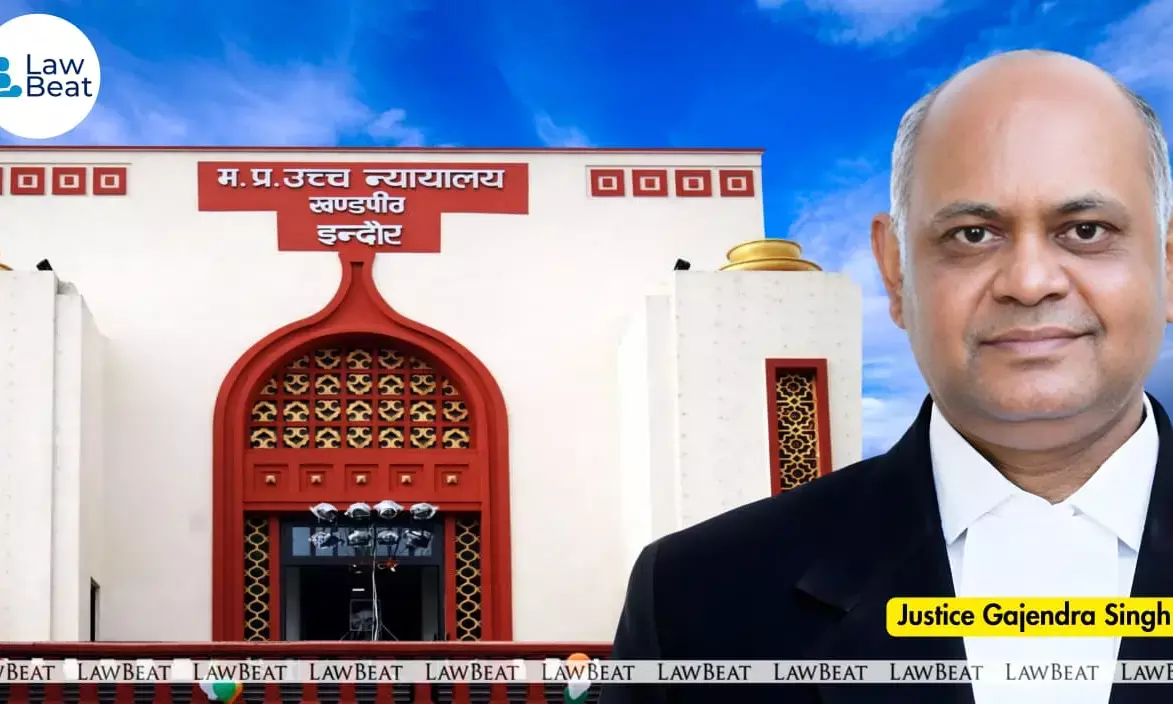
Maintenance Is A Social Welfare Right, Not A Contest Over Income Proof: MP High Court Under Section 125 CrPC
The Madhya Pradesh High Court has set aside a Family Court order that denied maintenance to a woman while granting only Rs 20,000 per month to her minor son, holding that a wife caring for a child and living separately amid allegations of cruelty cannot automatically be treated as residing away from her husband without sufficient cause.
Allowing a criminal revision petition filed by Garima and her minor child against Satish, Justice Gajendra Singh observed that maintenance proceedings are social welfare proceedings and that courts must not place the entire burden on a wife to establish the exact income of her husband. The Court enhanced the maintenance payable to the child from Rs 20,000 to Rs 30,000 per month and also awarded Rs 30,000 per month to the wife from the date of the original application.
The case arose from an order passed by the Second Additional Principal Judge, Family Court, Indore, in January 2026. The Family Court had rejected the wife’s claim for maintenance under Section 125 of the Code of Criminal Procedure while directing payment of maintenance only to the couple’s minor son.
According to the record, the parties were married on May 6, 2013, and a son was born in October 2015. The wife approached the Family Court in March 2024 alleging ill-treatment, economic abuse, neglect and extra-marital affairs. She claimed that her husband, an M.Tech and MBA professional, was working as Deputy General Manager at EKI Energy Pvt Ltd and also had business interests and other sources of income. Seeking maintenance for herself and the child, she asserted that the family had enjoyed a high standard of living.
The husband opposed the plea, contending that the wife had left the matrimonial home without justification in February 2024. He further alleged that criminal cases lodged against him were false and argued that the wife was well educated and capable of earning independently.
Before the High Court, counsel for the petitioners, Advocate Shashank Sharma, argued that the Family Court failed to properly appreciate the circumstances under which the wife was living separately. It was submitted that an FIR alleging offences including cruelty and dowry-related allegations had already been registered against the husband and his family. Counsel further argued that the Family Court wrongly ignored material regarding the husband’s financial status.
Appearing for the respondent, Advocate Rajat Raghuwanshi opposed the revision petition and supported the findings of the Family Court.
After examining the record, the High Court found fault with the reasoning adopted by the Family Court. The Court noted that the existence of the criminal case and the fact that the wife was taking care of the minor child could not be ignored while deciding whether she had sufficient reason to live separately.
In a significant observation, Justice Singh held, “It cannot be held that she is residing separately without sufficient cause.” The Court further observed that “the marital obligations of the wife are not confined only to the husband but it is also towards minor child.”
The High Court also rejected the Family Court’s approach in assessing the husband’s income. Stressing that maintenance cases are intended to protect vulnerable family members, the Court said, “It is not an adversarial litigation; rather, it is a social welfare proceeding.”
The judgment underlined that while income may sometimes be concealed, a person’s social and financial status cannot easily be hidden. The Court remarked, “The source of income may be concealed, but the status cannot be concealed.”
Holding that the husband could not avoid his responsibility to maintain both his wife and child according to their standard of living, the Court allowed the revision petition. The ruling reinforces the principle that maintenance laws are meant to ensure dignity and financial security for dependants and that courts must adopt a realistic approach while evaluating claims involving family welfare. The Court directed adjustment of amounts already paid and ordered compliance accordingly by authorities.
Case Title: Garima and Others v. Satish
Date of Order: June 30, 2026
Bench: Justice Gajendra Singh