
Section 125 CrPC |Father Must Fund Daughters' Higher Education, Not Just Pay Maintenance: MP High Court
Women Empowerment Requires Action, Not Paper Promises: MP High Court Orders ₹46 Lakh for Daughters' Education
The Madhya Pradesh High Court has held that a father's obligation towards his daughters extends beyond basic maintenance and includes meeting their higher education expenses, observing that women's empowerment cannot remain confined to paper and must be translated into action.
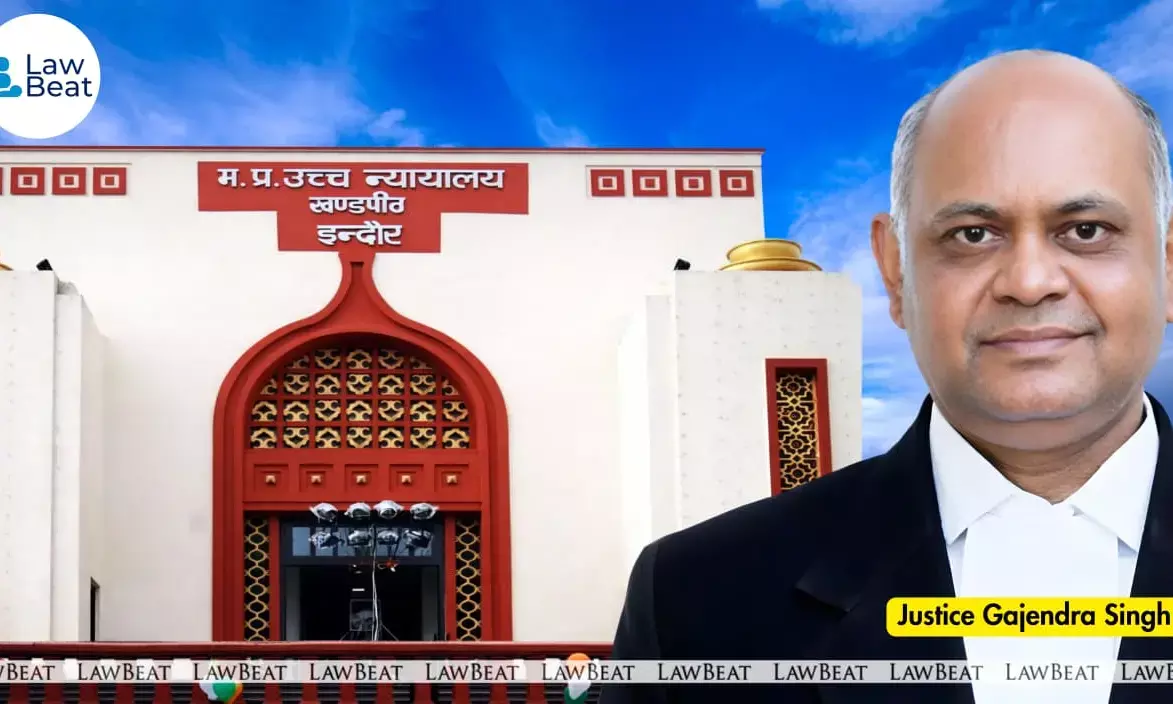
Allowing a criminal revision petition filed by petitioner and her two daughters, Justice Gajendra Singh directed the father, to pay ₹46.26 lakh towards the educational expenses incurred by the daughters for pursuing medical and engineering courses. The Court said that a financially capable father cannot deny educational support to his daughters merely because they have attained adulthood.
The case arose from an order passed by the Principal Judge, Family Court, Mandsaur, which had awarded maintenance of ₹6,000 per month to the wife and ₹3,000 per month each to the two daughters from the date of the application under Section 125 of the Code of Criminal Procedure. The Family Court had restricted the daughters' entitlement to maintenance until they attained majority.
Aggrieved by the quantum awarded, the wife and daughters approached the High Court contending that the Family Court had failed to correctly assess the husband's financial status and had ignored the substantial expenditure incurred on the daughters' higher education. They argued that one daughter was pursuing a medical degree abroad while the other was enrolled in a B.Tech programme, requiring considerable financial support.
Appearing for the petitioners, Advocate Vishal Sharma submitted that the Family Court overlooked documentary evidence relating to the daughters' educational expenses and wrongly awarded a meagre amount despite the respondent's financial capacity. Advocate Padmnabh Saxena, appearing for the respondent, opposed the plea and supported the Family Court's order.
The Court examined the material on record and noted that the respondent was the Chairman of Shree Jee Graphics Computer Society Samiti and was also associated with the operation of a nursing institute. It further observed that income tax returns do not always reflect actual earnings and that income can be assessed from surrounding circumstances and available evidence.
Justice Singh referred to the respondent's own admissions during cross-examination, including that his income for a particular year was reflected at more than ₹17 lakh, that he owned a car and motorcycles, and maintained multiple bank accounts. On that basis, the Court concluded that the respondent was a person of sound financial status.
The High Court then examined the educational expenses incurred by the daughters. It noted that the younger daughter had secured admission to Kyrgyz State Medical Academy for a five-year medical programme. The total expenditure for the course was shown to be ₹26.69 lakh. The elder daughter had enrolled in a B.Tech (Computer Science Engineering) course at Manipal University, Jaipur, involving expenses of approximately ₹19.56 lakh towards tuition, hostel and mess charges.
Finding that these costs had not been taken into account by the Family Court, the High Court held that the father's legal and moral responsibilities included supporting his daughters' education.
In a significant observation, the Court stated, “Father is obliged to provide the education to daughter also. Woman empowerment does not remain on paper it requires implementation and the father is having sufficient income and cannot deprive the girl children from providing the educational expenses.”
While declining to enhance the maintenance awarded to the wife, noting that she possessed a Bachelor of Education degree, the Court found merit in the daughters' claim for educational expenses.
Consequently, the Court partly allowed the revision petition and directed the respondent to pay a total sum of ₹46,26,200 towards the educational expenses incurred by the two daughters. The amount has been ordered to be paid within four months.
The Court further directed that if the amount is not paid within the stipulated period, it would carry interest at six per cent per annum. Any amount already paid would be adjusted, and the petitioners would be free to initiate execution proceedings in accordance with law.
Case Title: Smt. Savita and Others v. Deepak
Date of Order: May 29, 2026
Bench: Justice Gajendra Singh