
Section 20 HAMA | Major Unmarried Daughter Need Not Prove Disability For Maintenance: MP High Court
Disability Not a Must for Maintenance to Major Unmarried Daughter, Rules MP High Court
The Madhya Pradesh High Court has held that a major unmarried daughter need not prove any physical or mental disability to claim maintenance from her father, clarifying that the only requirement under law is that she is unable to maintain herself from her own earnings or property.
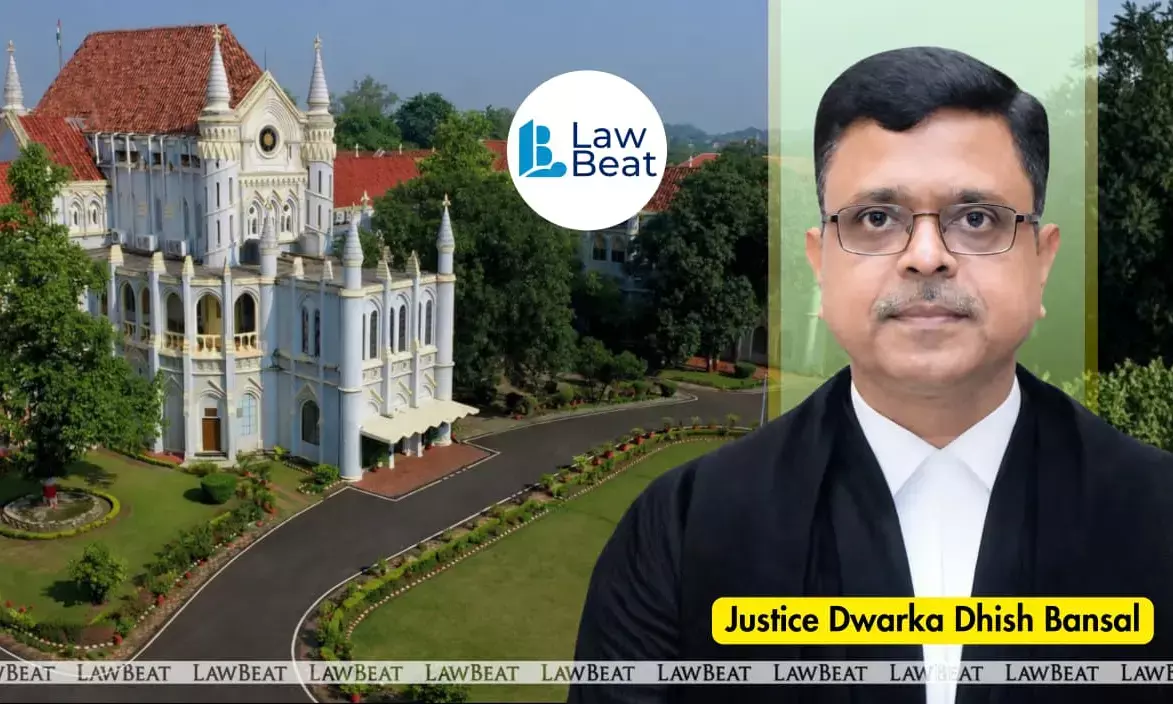
Justice Dwarka Dhish Bansal, sitting at the Jabalpur bench, dismissed a criminal revision filed by a father who was contesting a Family Court, Satna order that had granted his major unmarried daughter Rs 2,000 as monthly interim maintenance, while denying any maintenance to his wife.
The father, Ganga Singh, described in the cause title as handicapped, had approached the High Court against the order dated August 13, 2024, passed by the Principal Judge, Family Court, Satna, in a maintenance case filed jointly before it by his wife and his major unmarried daughter. While the Family Court refused maintenance to the wife on the ground that she did not prima facie appear to be his legally wedded wife, it awarded interim maintenance to the daughter, prompting the father to challenge even that limited relief.
Appearing for the petitioner, Advocate Ravendra Kumar Tiwari, along with Advocate Taneyaa Manucha, argued that since the daughter was already major on the date the application was filed, her claim under Section 125 of the Code of Criminal Procedure was not maintainable.
Relying on the Supreme Court's ruling in Abhilasha v. Parkash and other precedents, counsel submitted that a major unmarried daughter could only seek maintenance under Section 20(3) of the Hindu Adoption and Maintenance Act, 1956, and that too only if she suffered from some disability. It was further argued that in the absence of a plea for conversion of the application into one under the HAMA, the Family Court had no jurisdiction to grant any relief at all.
Advocate Priya Mishra, representing the wife and daughter, defended the impugned order as a purely interim arrangement pending final adjudication, relying on coordinate bench decisions from Rajasthan, Allahabad and Delhi to argue that no interference was warranted at this stage.
The High Court rejected the petitioner's stand on both counts. Referring to the Supreme Court's decision in Abhilasha v. Prakash, it noted that a Family Court which has jurisdiction over an application under Section 125 CrPC can, in an appropriate case, also exercise jurisdiction under Section 20 of the HAMA to grant maintenance to a daughter who has since turned major, so as to avoid multiplicity of litigation.
On the question of a wrong provision being cited in the application, the Court held that this by itself could not defeat the claim. Citing the Supreme Court's rulings in N. Mani v. Sangeetha Theatre and P.K. Palanisamy v. N. Arumugham, the order observed that "mentioning of a wrong provision or non-mentioning of a provision does not invalidate an order if the court and/or statutory authority had the requisite jurisdiction therefor."
Examining Section 20(3) of the HAMA itself, the Court clarified that the provision nowhere makes disability a precondition. It held that "while seeking maintenance under Section 20(3) of the HAM Act, the major unmarried daughter has to show that she is not in a position to maintain herself out of her own earnings or other property and it is not necessary that she should also suffer with some disability." Since the petitioner had not pointed to anything to suggest the daughter could support herself, the Court found the Family Court's order justified.
While dismissing the revision, the bench permitted the respondents to seek correction of the pending application to reflect that it was filed under both Section 125 CrPC and Section 20(3) of the HAM Act, given that it was a joint plea by the wife and daughter. The Court also cautioned that if the father failed to clear pending interim maintenance dues, strict recovery action would follow and his defence in the case could be struck off.
Case Title: Shri Ganga Singh (Handicapped) v. Smt. Devi Singh and Anr.
Date of Order: July 10, 2026
Bench: Justice Dwarka Dhish Bansal