
Senior Citizens Cannot Be Forced To Suffer In Their Own House: Jharkhand HC
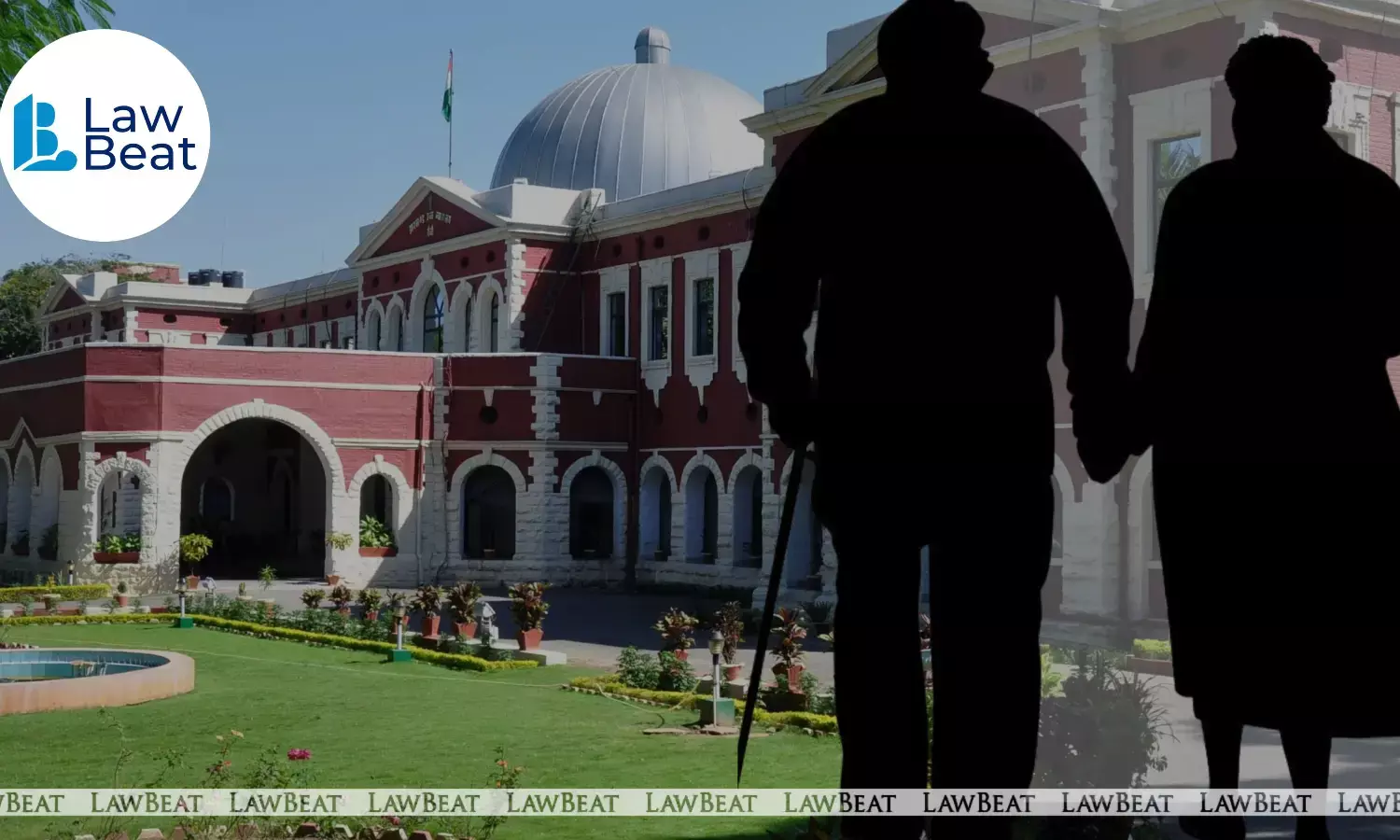
Jharkhand High Court upholds rights of elderly parents to live peacefully in their self-acquired home amid family dispute.
In a strong reaffirmation of the rights of elderly parents to live with dignity in their own home, the Jharkhand High Court has held that when aged parents and their son and daughter-in-law cannot co-exist peacefully, the law mandates that the house must remain with the senior citizens.
Setting aside an appellate order that had modified eviction directions, the Court emphasised that the Maintenance and Welfare of Parents and Senior Citizens Act, 2007 is meant to secure a peaceful and secure life for parents in the twilight of their years, not to legitimise harassment in the name of inheritance.
Justice Rajesh Kumar, by judgment dated 10.02.2026, allowed a petition filed by 75-year-old Lakhan Lal Poddar and his 72-year-old wife Uma Rani Poddar and set aside the order dated 23.02.2024 passed by the Deputy Commissioner, Ramgarh in Appeal No. 89 of 2023.
The High Court restored the protection earlier granted to the elderly couple under the Maintenance and Welfare of Parents and Senior Citizens Act, 2007, holding that the appellate order was not in consonance with the aims and objects of the Act.
The dispute arose within a family. The petitioners, both senior citizens, were residing in a house at Ramgarh, which the Court recorded as their self-acquired property.
Petitioner No. 1 had served in Central Coalfields Limited and, after retirement, was living in the said house with his wife.
Their son and daughter-in-law were also residing there.
According to the parents, their son and daughter-in-law had been maltreating and torturing them, making it impossible for them to live peacefully in their own home.
Invoking the provisions of the 2007 Act, they approached the competent authority the Sub-Divisional Officer, Ramgarh by filing Maintenance Case No. 2 of 2022. Upon inquiry, the authority directed the son and daughter-in-law to vacate the house within 30 days by order dated 23.11.2022.
The son and daughter-in-law initially challenged the eviction order before the High Court. However, with consent of parties, liberty was granted to approach the appellate authority under the Act the Deputy Commissioner, Ramgarh.
The Deputy Commissioner, by order dated 23.02.2024, modified the original eviction order in favour of the son and daughter-in-law.
Aggrieved by this modification, the elderly parents once again approached the High Court.
The Court first addressed the procedural objection relating to the son’s right to appeal.
While noting that ordinarily the statutory scheme grants locus primarily to senior citizens, the Court observed that in the earlier proceedings, locus had been relaxed with consent of parties.
Therefore, it declined to interfere on technical grounds and proceeded to examine the merits.
On merits, the High Court made several significant observations. It noted that the property in question was the self-acquired property of the senior citizens.
The factual matrix, including reports considered by the authorities, indicated serious discord and property disputes between the parties. The Court observed that there was evident “disliking for each other” and that the ambiance in the house did not permit peaceful co-existence.
Referring to the Statement of Objects and Reasons of the Maintenance and Welfare of Parents and Senior Citizens Act, 2007, the Court emphasised that the legislation was enacted to address the breakdown of the joint family system and to protect elderly parents from emotional neglect and lack of support; The Act is intended to ensure maintenance, security, and protection of life and property of senior citizens.
The court observed that mental harassment is often a matter of perception and difficult to quantify, but when co-existence in the same house becomes impossible, the law must step in.
In a poignant observation, the Court held that when peaceful co-existence is not possible, “the mandate of law is clear that the house in question should be handed over to the senior citizen, who has acquired this property by working throughout his active life.”
In the last phase of life, the Court said, such a person needs a secure and peaceful life.
The Court also underlined that any claim of the son and daughter-in-law over the property is only through inheritance and not otherwise. Inheritance, the Court observed, carries with it corresponding duties. If children expect to benefit from inheritance, they are duty-bound to provide a proper ambiance so that parents feel secure and comfortable in their own home.
Finding that the appellate order dated 23.02.2024 was not aligned with the aims and objects of the 2007 Act, the High Court set it aside and effectively restored the protection granted to the elderly parents.
Case Title: Lakhan Lal Poddar & Anr. v. State of Jharkhand & Ors.
Bench: Justice Rajesh Kumar
Date of Judgment: 10.02.2026