
Separate Preliminary Cut-Off For Horizontal Reservation Not Mandatory: MP High Court
MP Police SI Recruitment: High Court Validates 2025 Amendment on Reservation Cut-Offs
The Madhya Pradesh High Court has upheld a 2025 amendment to the Madhya Pradesh Police Executive (Non-Gazetted) Service Recruitment Rules, 1997, rejecting challenges by police constables and ex-servicemen who sought separate cut-off marks for horizontally reserved categories at the preliminary stage of the MP Police Sub-Inspector recruitment process.
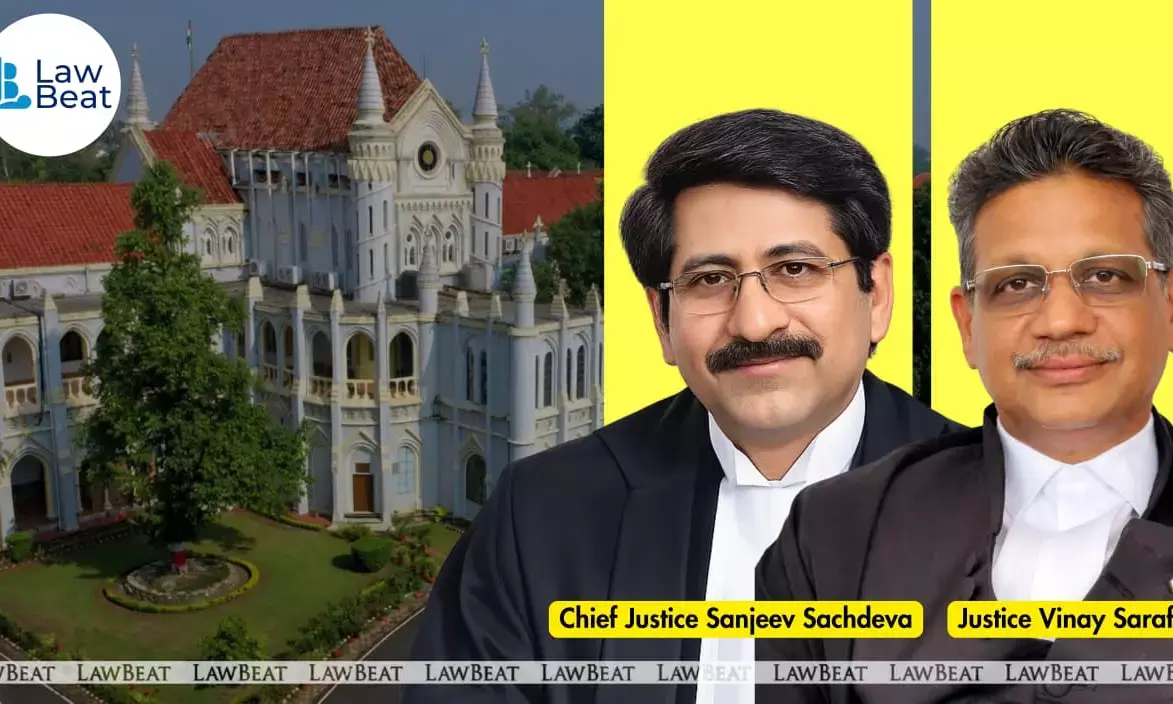
A Division Bench comprising Chief Justice Sanjeev Sachdeva and Justice Vinay Saraf dismissed a batch of writ petitions challenging the Gazette Notification dated January 24, 2025, and provisions of the MP Police Sub-Inspector Recruitment Rule Book, 2025. The petitioners had argued that the amended rules unlawfully denied separate cut-offs for ex-servicemen and police constables during the preliminary examination, thereby diluting the benefit of horizontal reservation.
Senior Advocate Naman Nagrath, assisted by Advocate Dinesh Singh Chouhan, appeared for the petitioners in the lead matter. Advocates Suyash Vyas and Anil Kumar Gautam also represented petitioners in connected cases. The State was represented by Government Advocate Anubhav Jain, while Siddhartha Sharma appeared for the Employees Selection Board.
The dispute arose after the State amended the recruitment rules to provide that, at the first stage of the examination, cut-off marks would be declared only for vertical reservation categories such as Unreserved, OBC, SC, ST and EWS candidates. The amendment specifically stated that no separate cut-off marks would be declared for horizontal reservation categories at the preliminary stage.
Petitioners contended that ex-servicemen reservation operates across all vertical categories and should be applied at every stage of selection, including the preliminary examination. They argued that without a separate cut-off, the objective of reservation would be frustrated because an insufficient number of reserved-category candidates would advance to the next stage. Reliance was placed on Supreme Court judgments including Indra Sawhney v. Union of India, Anil Kumar Gupta v. State of UP and Rajesh Kumar Daria v. Rajasthan Public Service Commission dealing with the operation of horizontal reservations.
Rejecting the challenge, the High Court held that horizontal reservations function as interlocking reservations within vertical categories and do not create independent compartments requiring separate preliminary-stage cut-offs.
The Bench observed that the preliminary examination is merely a screening test intended to shortlist candidates and does not determine final merit. Therefore, the Court found no constitutional requirement mandating separate cut-off marks for horizontally reserved categories at that stage.
The Court also distinguished the Supreme Court’s recent ruling concerning visually impaired candidates in judicial service recruitment. According to the Bench, that decision was based on the statutory framework governing persons with disabilities and could not automatically be extended to ex-servicemen or police constables in the present recruitment exercise.
The Bench further noted that the recruitment scheme itself does not contemplate carrying forward unfilled seats reserved for ex-servicemen or police constables. If adequate candidates from those categories are unavailable, the remaining vacancies are filled from the corresponding vertical categories.
In that backdrop, the Court questioned the necessity of insisting upon a separate preliminary-stage cut-off for such horizontal categories. While dismissing the petitions, the Bench nevertheless observed that the competent authorities may consider relaxing cut-off marks for horizontally reserved candidates in future recruitment exercises if such relaxation is considered necessary to fulfil the underlying objective of reservation and is incorporated in accordance with the applicable rules where warranted.
Emphasising that fixation of a separate cut-off effectively amounts to granting relaxation, the Court said such relaxation cannot be claimed as a matter of right. “No writ of mandamus can be issued to any authority to exercise its powers to extent the relaxation to any candidate or category,” the Bench observed. It added that the competent authority may choose to relax standards if it considers such a course appropriate, but courts cannot direct creation of separate cut-offs contrary to the governing rules.
Holding that the amendment merely clarifies the recruitment process, the Court concluded that the provision stipulating that “there will be no separate cut-off marks in preliminary examination stage” is valid and cannot be struck down. Consequently, all petitions were dismissed without costs.
Case Title: Dharmu Khapariye and Others v. The State of Madhya Pradesh and Others
Date of Order: May 22, 2026
Bench: Chief Justice Sanjeev Sachdeva and Justice Vinay Saraf