
'Show-Cause Notice Cannot Be Challenged Prematurely': Delhi High Court Refuses To Stall CAG Audit Process For BSES
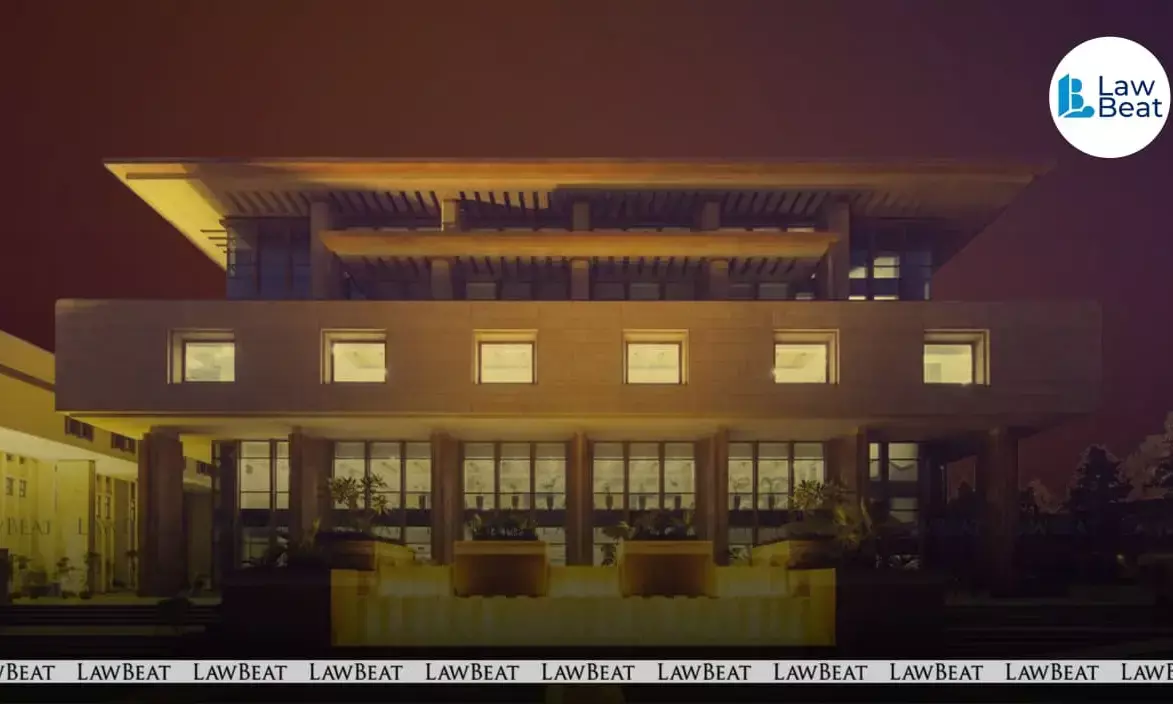
Delhi High Court said that BSES must first respond to the show-cause notice proposing a CAG audit before seeking judicial intervention.
The Delhi High Court has refused to interfere with a show-cause notice issued to Delhi power distribution companies BSES Rajdhani Power Ltd. (BRPL) and BSES Yamuna Power Ltd. (BYPL) proposing to entrust their audit to the Comptroller and Auditor General (CAG), holding that the companies had approached the court at a premature stage before any final decision had been taken.
Dismissing the writ petition, Justice Tejas Karia held that the June 6 notice merely afforded the distribution companies an opportunity to submit their objections and did not determine any right or liability. Court also rejected BSES' argument that the proposed audit was contrary to the Supreme Court's Regulatory Asset (RA) judgment in the BSES writs or the Delhi High Court's earlier United Residents Joint Action (URJA) judgment.
In its August 2025 Regulatory Asset (RA) judgment, the Supreme Court directed electricity regulators to prepare a roadmap for liquidation of regulatory assets and ordered a strict and intensive audit into the circumstances leading to their prolonged accumulation. Earlier, in 2015, a division bench of the Delhi High Court, in the URJA case, had quashed the Delhi government's attempt to order a CAG audit of BSES, holding that since the Delhi Electricity Regulatory Commission (DERC) already had statutory powers to scrutinise the utilities' accounts, a parallel CAG audit would serve no public purpose.
Why did the court refuse to interfere with the show-cause notice?
Court said the impugned notice was only the first step in the statutory process under Section 20(3) of the CAG Act and could not, by itself, be treated as an adverse order.
"It only affords the Petitioners an opportunity to respond to the proposed entrustment of audit to the CAG," court observed, adding that a writ court ordinarily does not quash a show-cause notice unless it is perverse, suffers from a jurisdictional defect or has been issued by an authority lacking inherent jurisdiction.
Relying on the Supreme Court's decisions in Union of India v. Kunisetty Satyanarayana (2006) and Secretary, Ministry of Defence v. Prabhash Chandra Mridha (2012), court reiterated that a writ petition ordinarily cannot be entertained against a mere show-cause notice as it does not, by itself, give rise to a cause of action or adversely affect any legal right.
Did the Supreme Court's Regulatory Asset judgment bar a CAG audit?
Answering this in the negative, court rejected BSES' submission that the Supreme Court had directed only an audit of DERC's regulatory functioning and not of the private distribution companies.
Court held that the RA judgment directed Regulatory Commissions to undertake a "strict and intensive audit of the circumstances" in which the distribution companies continued without recovery of regulatory assets. Such an exercise, it said, does not exclude examination of the companies' records, conduct, accounts and financial position.
"The scope of the audit is... sufficiently broad to include all relevant circumstances that may explain the accumulation of RA," court observed. It added that the Supreme Court had not specified the agency that must conduct the audit and had nowhere prohibited the CAG from undertaking it, provided the requirements of the CAG Act were satisfied.
Why did the court distinguish the earlier URJA judgment?
The companies had relied heavily on the Delhi High Court's 2015 URJA judgment, which had quashed an earlier attempt by the Delhi government to initiate a CAG audit.
Justice Karia held that the earlier decision arose in a materially different factual and legal setting. Unlike the previous case, the present proposal stemmed from the Supreme Court's RA judgment and had been initiated by the Delhi Electricity Regulatory Commission (DERC) to comply with those directions, not to create a parallel mechanism for tariff regulation.
Court also noted that, unlike the earlier exercise, the present notice provided the companies an opportunity of hearing before any decision on entrustment of audit would be taken. Further, the proposed audit was confined to issues arising from the RA judgment and was "prima facie in public interest" since the outcome would directly affect electricity consumers.
Court clarified that the observations in its judgment were limited to examining the validity of the show-cause notice and would not bind the competent authority while deciding whether to entrust the audit.
It directed that the authority must independently consider all submissions made by the companies during the hearing before taking a final decision. With these observations, the petition was dismissed, while all rights of the parties in the pending Supreme Court proceedings relating to implementation of the RA judgment and Appellate Tribunal for Electricity's (APTEL) directions were kept open.
Case Title: BSES Rajdhani Power Limited & Anr. v. Government of NCT of Delhi & Ors.
Judgment Date: June 22, 2026
Bench: Justice Tejas Karia