
Sonia Gandhi Voter Roll Case: Delhi Court Sets Aside Magistrate’s Order Refusing Probe, Orders Fresh Hearing
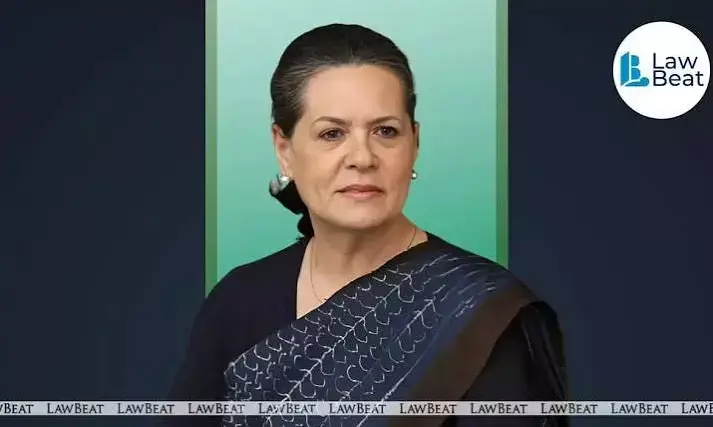
Delhi court set aside the magistrate’s order refusing a probe into the complaint concerning Sonia Gandhi’s alleged pre-citizenship inclusion in the electoral roll
A Delhi court on Monday set aside a magistrate’s order refusing to direct a probe into a complaint concerning the alleged inclusion of Congress leader Sonia Gandhi’s name in the electoral roll before she acquired Indian citizenship.
Special Judge Vishal Gogne of the Rouse Avenue Court allowed a revision petition filed against the September 11, 2025 order of the Additional Chief Judicial Magistrate and remanded the matter for fresh consideration. The matter has been listed for September 29.
The complaint had been filed by advocate Vikas Tripathi, vice-president of the Central Delhi Court Bar Association, seeking registration of an FIR over the allegation that Sonia Gandhi’s name appeared in an electoral roll three years before she acquired Indian citizenship in 1983.
The magistrate had earlier dismissed the complaint seeking an FIR.
Magistrate's order was 'Non-Speaking': Court
Setting aside the order, Special Judge Gogne termed it “non-speaking” and held that it suffered from a “manifest error in law.”
The Court held that the magistrate had not complied with Section 175(3) of the Bharatiya Nagarik Suraksha Sanhita (BNSS), including by failing to hear the concerned police officer and obtain a status report from the police station.
The Court further observed that the non-speaking nature of the order was evident because the magistrate had not considered the two options available under law; directing registration of an FIR or proceeding with an inquiry under the BNSS.
Court says Magistrate digressed into Citizenship issue
The Special Judge observed that instead of examining the central question of whether the complaint disclosed the commission of a cognisable offence, the magistrate had “digressed towards the issue of citizenship.”
The Sessions Court also found that observations concerning the jurisdiction of the Central Government and Election Commission in relation to citizenship were improper.
The Court further held that the complaint could not have been rejected merely on the basis of a photocopy of an uncertified record, describing the approach as suffering from a manifest error of law.
Matter remanded for fresh hearing
The Court has remanded the matter to the magistrate for fresh consideration and directed that a speaking and reasoned order be passed after hearing the parties.
The order does not itself direct registration of an FIR against Sonia Gandhi. Instead, the complaint has been sent back for the magistrate to consider afresh whether the allegations disclose a cognisable offence and what course of action is warranted under the law.
Sonia Gandhi had earlier filed a response opposing the complaint, submitting that it was politically motivated and had been instituted for an extraneous purpose.
The matter will now come up before the magistrate on September 29 for fresh proceedings.
Background
In December 2025, a Session court had issued notice to Congress leader and MP Sonia Gandhi in the revision petition. Previously on September 11, 2025 a Delhi Court had dismissed a criminal complaint seeking registration of an FIR against Congress leader Sonia Gandhi over the alleged inclusion of her name in the 1980 electoral roll before she acquired Indian citizenship.
The complaint invoked provisions of the Indian Penal Code, Bharatiya Nyaya Sanhita, and the Representation of the People Act, 1950, alleging cheating, forgery, and false declaration. The informant relied on a photocopy of an electoral roll extract and news reports to claim that Gandhi was registered as a voter in New Delhi in 1980, despite being granted Indian citizenship only in 1983 under Section 5(1)(c) of the Citizenship Act, 1955.
Rejecting the plea, ACJM Vaibhav Chaurasia had observed that the allegations lacked the fundamental ingredients to constitute the offences of cheating or forgery and were based on “mere bald assertions” without legally sustainable evidence. The Court held that the complaint was an attempt to misuse criminal law by projecting an ordinary dispute as a criminal matter to invoke its jurisdiction. "Such a course, in substance, amounts to a misuse of the process of law by projecting a civil or ordinary dispute in the garb of criminality, solely to create a jurisdiction where none exists," it said.
Most significantly, the Court had underscored that it had no authority to adjudicate issues relating to citizenship or voter eligibility. “This Court is not empowered to adjudicate upon questions which, by express constitutional and statutory mandate, fall within the exclusive domain of the Central Government in matters relating to citizenship in view of Article 11 of the Constitution of India, 1950, and the Citizenship Act, 1955,” the order had stated.
The Court further had emphasized that the determination of inclusion or exclusion from electoral rolls lies solely with the Election Commission of India under the Representation of the People Act, 1950 and 1951. Any interference by the Court, it said, would amount to “unwarranted transgression” into the constitutional functions of the competent authorities and a violation of Article 329 of the Constitution.
The criminal complaint filed by Advocate Vikas Tripathi sought a thorough investigation into the purported irregularity, which, if proven, could have legal ramifications under the Representation of the People Act. Tripathi approached the Court under relevant criminal provisions, requesting that authorities initiate an inquiry into the matter. “The reason for the deletion is nowhere to be found. There can be two reasons, either someone takes the citizenship of another country or files a Form 8 (application for correction in particulars). But the prerequisite is that the person has to be a citizen,” Narang had said. He had questioned what documents were submitted to the Election Commission when her name was first included in 1980.
Order Date: September 21, 2026