
State Bar Council Has No Power to Stall District Bar Associations' Elections: Allahabad High Court
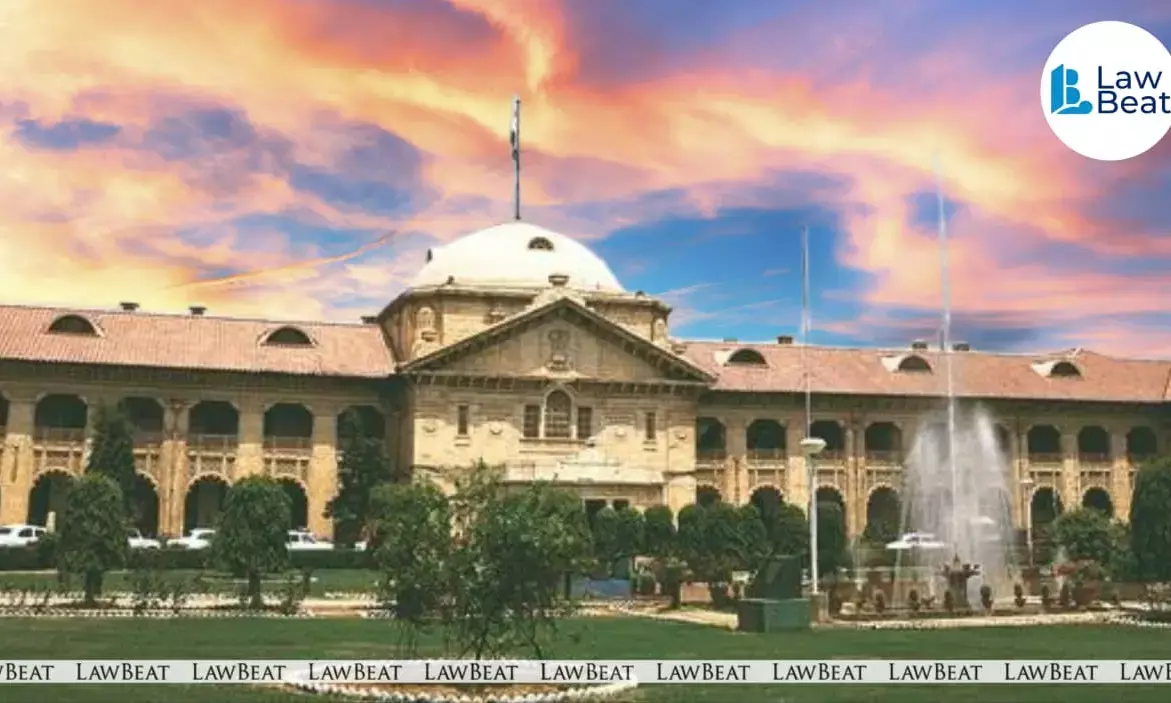
Allahabad High Court permits district bar association elections, setting aside the State Bar Council order
The Allahabad High Court has held that the Bar Council of Uttar Pradesh lacked the authority to impose a blanket embargo on elections of district bar associations across the state, stating that such elections are governed by the respective associations’ bye-laws and not by directives issued by the State Bar Council.
A division bench of Justices Atul Sreedharan and Anish Kumar Gupta passed the order while disposing of a writ petition filed by Jitendra Singh, a practising advocate and a member of the Janpad Diwani Evam Faujdari Bar Association, Gautam Budh Nagar. Singh had approached the court challenging a direction that effectively stalled bar association elections between November 15, 2025 and February 2026.
The petitioner, who intended to contest the post of president in the forthcoming 2025–26 bar association elections, contended that the restriction was imposed without legal authority. The impugned direction stemmed from a letter issued by the Bar Council of India on October 25, 2025, which asked the State Bar Council to ensure that no district bar association elections were held during the said period. The stated objective was to avoid overlapping schedules and administrative complications during elections to the Uttar Pradesh Bar Council.
During the hearing, the high court examined whether such a direction could legally extend to district-level bar associations. Court was informed that a similar challenge was pending before the Supreme Court in Vijay Pal Singh Tomar vs Bar Council of India. As the apex court was scheduled to hear that matter, the Allahabad High Court had earlier deferred consideration.
On December 8, however, the bench took note of a Supreme Court order dated December 5, which disposed of the Tomar petition by allowing the petitioner and other members of the Mathura Bar to join proceedings pending in M. Vardhan vs Union of India. The respondents clarified that the principal issue before the Supreme Court related to the fair, transparent and timely conduct of elections to State Bar Councils.
The Allahabad High Court underscored that elections to district bar associations do not form part of the controversy pending before the Supreme Court. It observed that such elections are governed by the respective associations’ bye-laws and are not regulated by the Advocates Act in the same manner as elections to State Bar Councils.
When questioned on the source of authority for imposing the embargo, counsel for the Bar Council of India relied on Sections 7(g) and 48-B of the Advocates Act. These provisions, the BCI submitted, empower it to exercise general supervision and control over State Bar Councils and to issue binding directions to them.
The bench, however, drew a distinction between the powers of the Bar Council of India over State Bar Councils and the absence of statutory authority vested in the State Bar Council to control elections of district bar associations. While accepting that the BCI could issue directions to the State Bar Council, the court held that the latter could not, in turn, regulate or suspend elections of bar associations that function under their own bye-laws.
“The Bar Council of India did not have the authority to control or regulate the elections of Bar Associations, which are governed by their own bye-laws,” the court observed, adding that the State Bar Council had acted without statutory backing in issuing a state-wide directive postponing elections.
Accordingly, court disposed of the writ petition, permitting the concerned bar association to proceed with its elections strictly in accordance with its bye-laws. At the same time, it imposed a limited safeguard, directing that while notifying election schedules, bar associations must ensure that there is no clash with the notified elections of the Uttar Pradesh Bar Council.
The bench further directed that there must be a minimum gap of ten days between elections to the State Bar Council and elections of district bar associations, in order to avoid logistical and administrative overlap.
Case Title: Jitendra Singh vs. State Of Uttar Pradesh And 4 Others
Order Date: December 8, 2025
Bench: Justices Atul Sreedharan and Anish Kumar Gupta