
‘Stay Makes Conviction Non-Operative’: Allahabad HC Dismisses Challenge to Rahul Gandhi’s Election from Raebareli
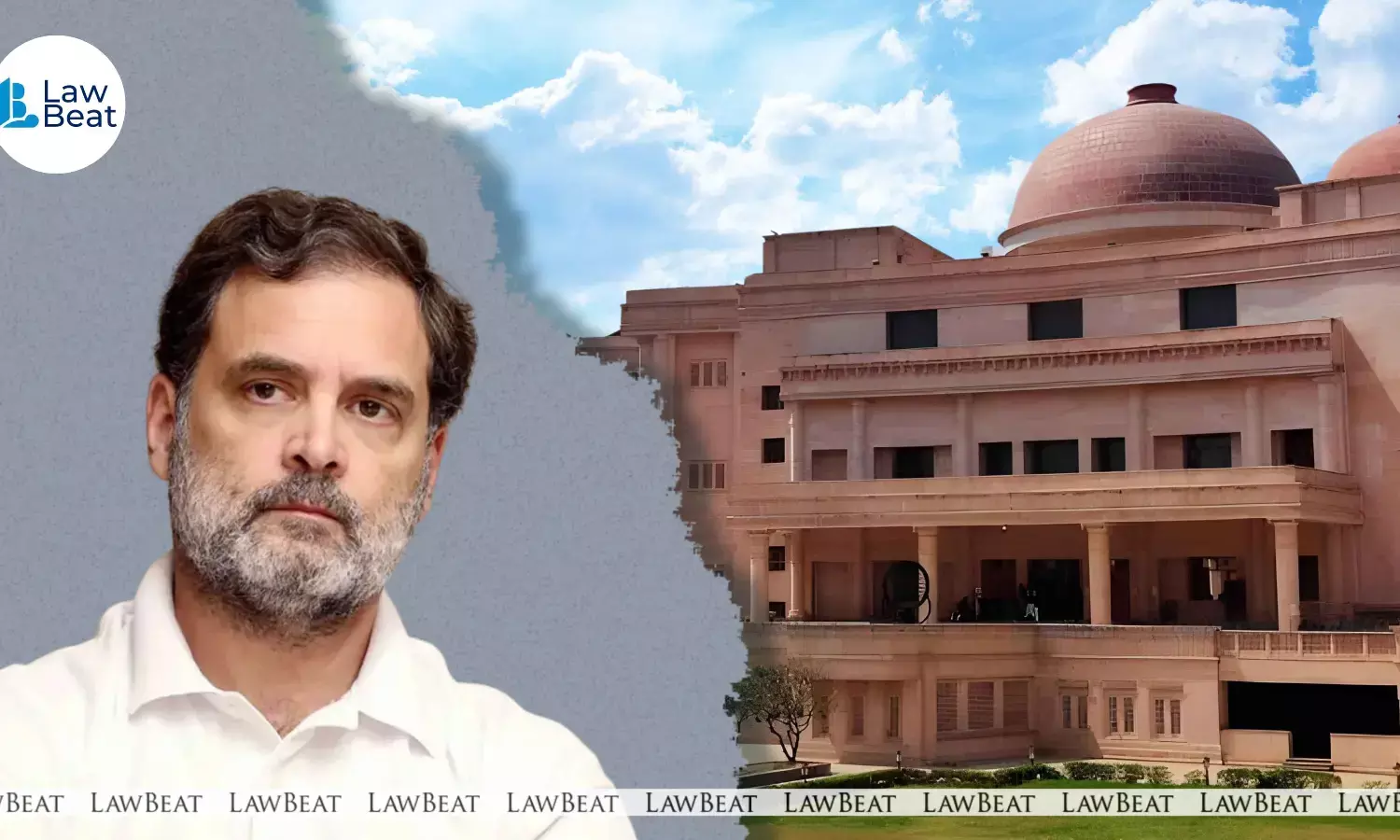
Allahabad High Court dismisses petition challenging Rahul Gandhi's MP status, citing the Supreme Court’s stay on his conviction
The Allahabad High Court has dismissed a petition questioning the legality of Rahul Gandhi’s election as Member of Parliament from Raebareli, holding that the Congress leader’s criminal conviction, having been stayed by the Supreme Court, did not create any disqualification under election law.
Court ruled that once a conviction is stayed, the bar contained in Section 8(3) of the Representation of the People Act, 1951, cannot operate, and therefore no writ of quo warranto can be issued against him.
The petition, filed by advocate Ashok Pandey, sought a direction asking Rahul Gandhi to disclose under what authority of law he continued to occupy the office of MP. The petitioner argued that Gandhi’s two-year sentence imposed by a Surat trial court in a 2019 criminal defamation case automatically disqualified him from being chosen as or continuing as a Member of Parliament under Article 102 of the Constitution read with Section 8(3) of the Representation of the People Act.
He contended that the acceptance of Gandhi’s nomination papers from both Wayanad and Raebareli was illegal, and that the Congress leader had usurped a constitutional office he was not entitled to hold.
Adv. Pandey submitted that although the Supreme Court had stayed Gandhi’s conviction pending appeal, the stay order did not expressly permit him to contest elections. He contrasted this with the order passed in favour of former MP Afzal Ansari, where the Supreme Court had explicitly stated that Ansari would not be disqualified from contesting elections during the pendency of his criminal appeal. According to the petitioner, this difference showed that Gandhi remained disqualified despite the stay on conviction.
The Election Commission and Union government disputed the petitioner’s interpretation, relying heavily on the Supreme Court’s judgment in Lily Thomas, which held that a stay on conviction removes the disqualification arising from Section 8. They argued that once a conviction is stayed, the legal effect of the conviction is suspended, and the individual cannot be treated as a convicted person for the purpose of electoral disqualification.
A bench of Justice Shekhar B. Saraf and Justice Manjive Shukla agreed with this position. The judges examined the framework governing disqualification and the distinction between a stay on execution of sentence and a stay on conviction. Referring to Ravikant Patil and other Supreme Court judgments, the bench held that while a stay on execution of sentence does not interfere with the fact of conviction, a stay on conviction renders the conviction “non-operative,” thereby removing the statutory disqualification.
The petitioner relied on passages from the Constitution Bench judgment in B.R. Kapur to argue that a conviction continues to operate until set aside in appeal. Court rejected this reading, observing that the cited portion concerned cases in which only the sentence was stayed. In contrast, the Supreme Court in Gandhi’s case had expressly stayed the conviction itself, fundamentally altering its legal effect.
The bench held that treating Rahul Gandhi as disqualified despite the stay of conviction would contradict binding precedent and the legal consequences flowing from Section 389 of the Code of Criminal Procedure, which empowers appellate courts to stay convictions. It noted that the “anathema of conviction goes out of the window” when a higher court stays it, even though the appeal remains pending.
Concluding that no legal embargo existed on Gandhi contesting or holding office, the high court dismissed the petition as devoid of merit. It also rejected the petitioner’s request for a certificate of appeal to the Supreme Court under Article 134A, holding that no substantial question of law remained open for adjudication.
The writ petition was dismissed in these terms.
Case Title: Ashok Pandey vs. Sri Rahul Gandhi And 3 Others
Order Date: December 4, 2025
Bench: Justice Shekhar B. Saraf and Justice Manjive Shukla