
'Student’s Income Can’t Be Assumed Zero': Allahabad HC Applies Minimum Wages, Enhances Accident Compensation to ₹16 Lakh
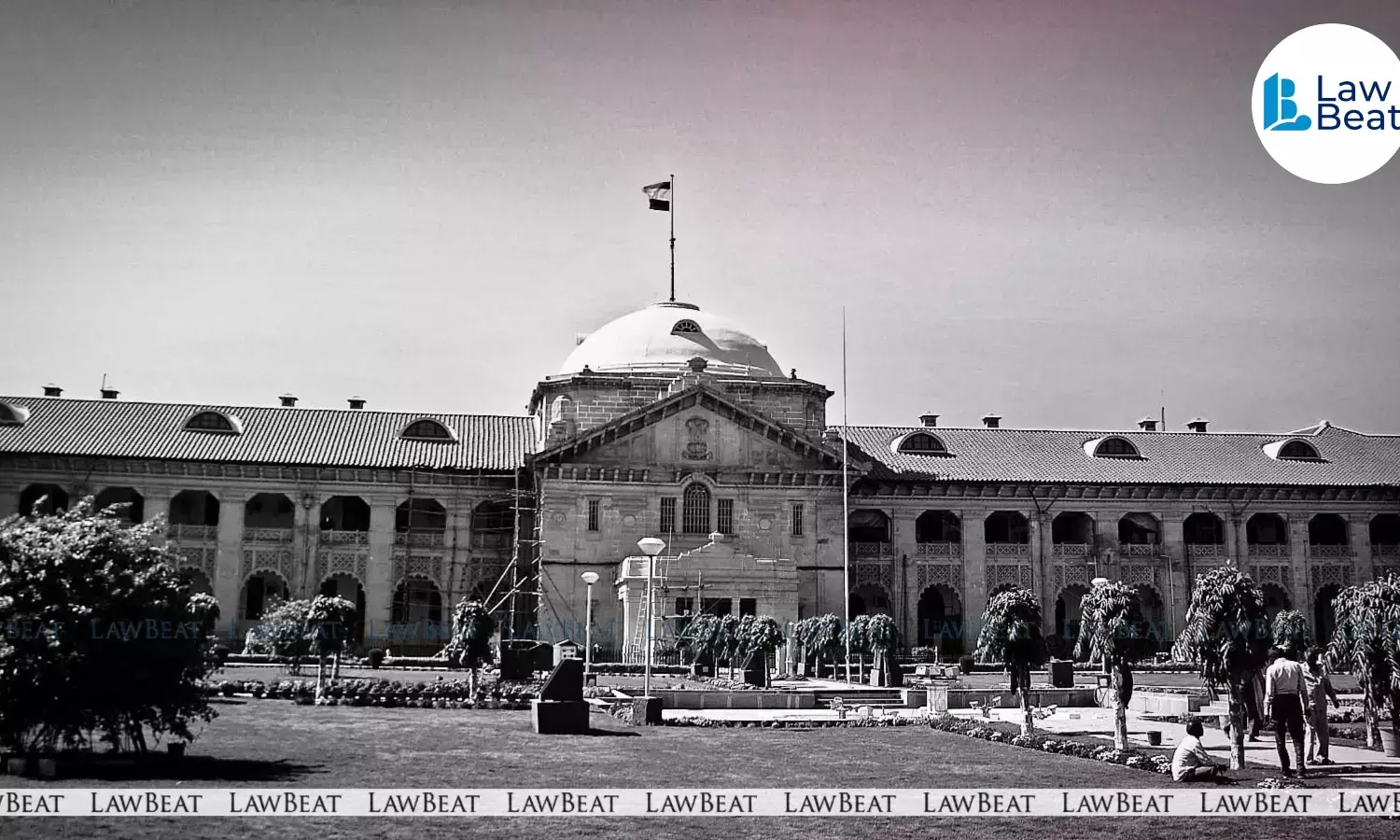
Allahabad High Court orders increased payout for student death using minimum wage standards for motor accident compensation
The Allahabad High Court recently held that a motor accident claims tribunal cannot mechanically treat a deceased person as having no income or fix an arbitrary notional income merely because the deceased was a student or because documentary proof of earnings was not produced.
Observing that the absence of formal proof does not justify disregarding the earning capacity of a young deceased, court ruled that in such cases, income must be assessed by applying the minimum wages applicable to an unskilled worker in the State at the time of the accident.
The bench of Justice Sandeep Jain enhanced the compensation payable to the family of a 22-year-old accident victim from Rs. 2.6 lakh to over Rs. 16 lakh, holding that the motor accident claims tribunal had committed serious errors in assessing the deceased’s income, applying the multiplier, and denying future prospects.
Court allowed an appeal filed by the mother, sister, and two brothers of Ankit, who lost his life in a road accident on June 10, 2014. The appeal was directed against an award passed on April 30, 2016, by the motor accident claims tribunal, Bulandshahr.
Ankit died after being hit by a bus, owned by the Uttar Pradesh State Road Transport Corporation. Since neither the corporation nor the driver of the bus filed any cross-appeal, the high court noted that the factum of the accident and the negligence of the bus driver were no longer in dispute.
Before the tribunal, the claimants had stated that Ankit was a labourer earning around Rs. 9,000 per month and that the family was entirely dependent on his income, as his father had already passed away. However, in the absence of documentary proof, the tribunal treated the income as purely notional and assessed it at Rs. 15,000 per annum. On that basis, it awarded a total compensation of Rs. 2,60,000 along with interest at 7 percent per annum.
Challenging the award, the claimants argued before the high court that the income assessment was grossly inadequate, that no amount had been awarded towards future prospects despite Ankit being only 22 years old, and that the tribunal had wrongly applied a multiplier of 16 instead of 18. They also contended that only one-third of the income should have been deducted towards personal expenses, as Ankit was the sole breadwinner supporting a large dependent family.
On the other hand, UPSRTC submitted that Ankit was studying in Class 12 at the time of the accident and that there was no reliable evidence to show that he was earning any income. It was argued that the tribunal had therefore taken a reasonable view by awarding compensation on a notional basis.
Rejecting this approach, the high court held that merely because the deceased was a student, it could not be presumed that he was not earning anything.
Court observed that in the absence of documentary proof, the tribunal was required to assess income by treating the deceased as an unskilled worker and applying the minimum wages prevailing in Uttar Pradesh at the time of the accident.
Relying on Supreme Court precedents, including National Insurance Co. Ltd. v. Pranay Sethi, (2017) and Magma General Insurance Company Ltd. Vs. Nanu Ram @ Chuhru Ram & others (2018), court fixed Ankit’s monthly income at Rs. 6,362, being the minimum wage for an unskilled worker in 2014.
It further held that under Rule 220-A of the Uttar Pradesh Motor Vehicles Rules, 1998, the claimants were entitled to an addition of 50 percent towards future prospects, as the deceased was below 40 years of age.
The high court also corrected the multiplier, applying 18 in view of Ankit’s age, and held that only one-third of the income should be deducted towards personal expenses, as the deceased was supporting his widowed mother and unmarried siblings.
Under non-pecuniary heads, court enhanced compensation towards loss of consortium, loss of estate, and funeral expenses in line with the law laid down by the Supreme Court.
After recalculating all heads, court determined the total compensation payable at Rs. 16,04,092, along with interest at 7 percent per annum from the date of filing of the claim petition. The earlier award of the tribunal was modified accordingly.
Court directed UPSRTC to deposit the enhanced amount before the tribunal within two months, with liberty to adjust any amount already paid, and left it to the tribunal to apportion the compensation among the claimants based on their age and dependency.
Case Title: Smt. Kashmiri And 3 Others vs. U.P.S.R.T.C. Thru Regional Manager And Another
Order Date: January 13, 2026
Bench: Sandeep Jain