
Students Who Stay Silent Against Crime Become 'Paper Tigers': Madras High Court
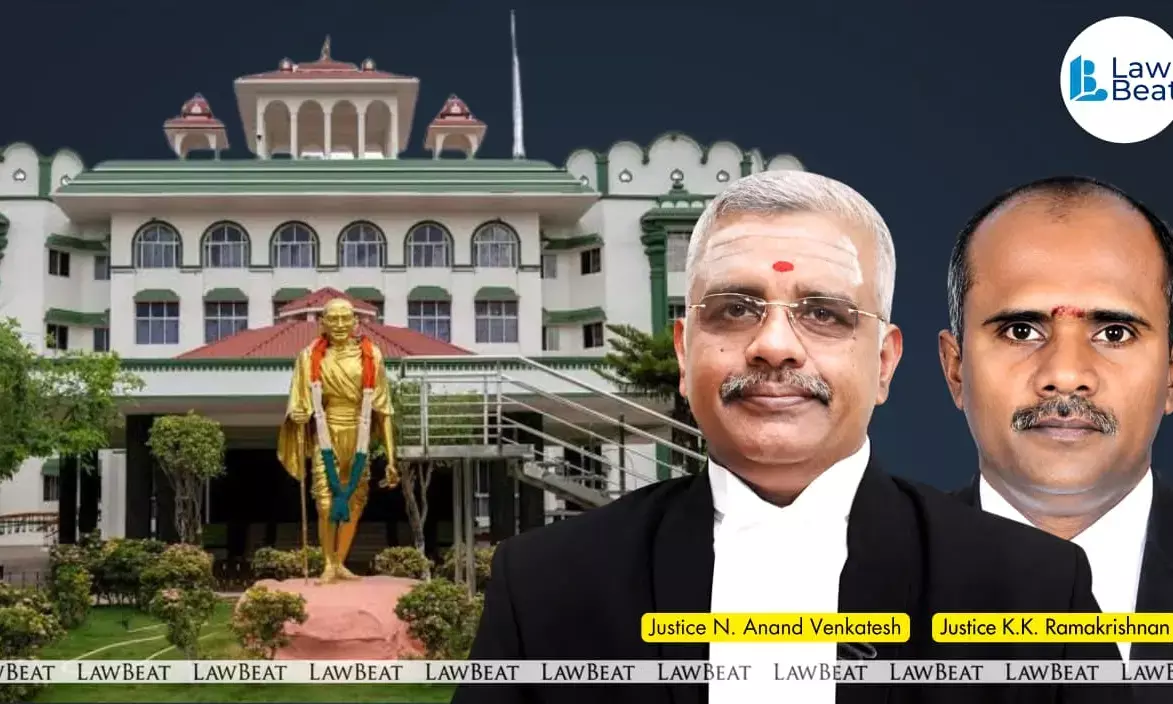
Madras High Court criticised students who turned hostile in the trial of their classmate's murder case.
The Madras High Court has said there is "no use" in students merely expressing dissent or airing views on social media if they fail to stand up against crime in real life, observing that such inaction would only make them "paper tigers".
Expressing disappointment over several engineering students turning hostile in a murder trial, the court said they had not only failed to stop the attack or overpower the assailant, but also "let down" the deceased by refusing to support the prosecution and uphold the truth.
The observations came while the court dismissed the appeal of a former engineering student convicted of murdering his classmate inside a classroom in Karur in 2016 after she ended their relationship.
Upholding his life sentence, the division bench of Justice N. Anand Venkatesh and Justice K.K. Ramakrishnan noted that many student eyewitnesses, despite having given statements during the investigation, resiled from them during trial.
Court said that while the students may not have been in a position to physically prevent the attack, "the minimum they should have done" was speak the truth before the court.
Why did the Madras High Court criticise the students?
The bench noted that several students who had witnessed the attack had given statements under Section 164 of the Code of Criminal Procedure during the investigation but turned hostile during the trial. Calling their conduct disappointing, court observed that they had failed both as bystanders and as witnesses.
"In the first place, no attempt was made by any student to prevent the accused person from carrying out the attack. Even after the incident, no attempt was made by the students to overpower the accused person," the bench said.
"There is no use in merely expressing dissent and expressing views in social media and it has to translate itself into action or else the students will only become paper tigers in real life," court observed.
The bench further remarked that "with a heavy heart", it had to conclude that the students had "let down the deceased" by not supporting the prosecution and had failed in their duty to uphold the truth.
Also Read| Test Identification Parade loses its evidentiary value, if witness not examined during trial: SC
It also said that education had failed to build character in the students who turned hostile and that each had exhibited "pusillanimity".
What was the murder case before the Madras High Court?
According to the prosecution, the deceased, Sonali, and the accused, Udayakumar, had earlier shared a close relationship while studying Civil Engineering at Karur College of Engineering. After the deceased chose to distance herself from him, the accused allegedly developed animosity.
On August 30, 2016, he entered her classroom carrying a wooden log and repeatedly assaulted her on the head during class hours. Assistant Professor PW1, who attempted to rescue her, was also attacked on his wrist. The accused allegedly threatened those present before fleeing the scene. Sonali later succumbed to severe brain injuries at hospital.
The trial court convicted the accused under Sections 449, 294(b), 324, 302 and 506(II) of the IPC [332, 296, 118, 103, and 351 of the BNS, respectively] and sentenced him to life imprisonment along with other concurrent sentences. Challenging the conviction, the accused argued before the high court that his identity had not been established as no Test Identification Parade (TIP) had been conducted.
Why did the Madras High Court reject the challenge to identification?
Rejecting the contention, the division bench held that a Test Identification Parade (TIP) is only an aid during investigation and is not mandatory in every case. What mattered, it said, was whether the witness's identification of the accused in court was reliable.
Court found that PW1, who was himself injured during the attack, had sufficient opportunity to observe the assailant in broad daylight. Referring to the Supreme Court's decision in Pargan Singh v. State of Punjab (2014), the bench observed that a traumatic event such as a brutal attack leaves a lasting imprint on human memory.
"A person, who encounters such an extreme experience is not likely to forget the face of the assailant even for a life time," court observed, holding that PW1's dock identification of the accused nearly two years after the incident was trustworthy.
Also Read| 'Test Identification Parade Crucial to Prosecution': SC acquits man in killing of 14-yr-old girl
The bench reiterated that the testimony of an injured witness carries a higher degree of credibility and cannot be discarded unless there are very strong reasons.
The high court held that the medical evidence fully corroborated PW1's version of the incident. The post-mortem showed multiple skull fractures and severe brain injuries, with the doctor opining that the death was caused by cranio-cerebral injuries.
Court also brushed aside discrepancies highlighted by the defence, including those relating to the accused's clothing and the recovery of the wooden log used in the assault, terming them minor inconsistencies that did not affect the core prosecution case.
At the same time, the bench criticised the investigating officer for claiming that the wooden log had been recovered from a bush after the accused's arrest despite eyewitnesses consistently stating that it had been abandoned inside the classroom.
"As usual, the investigating officer, who probably does not even have the fundamental knowledge in conducting of investigation, mechanically comes up with the theory of recovery," court remarked, adding that such lapses could not overshadow the otherwise overwhelming evidence against the accused.
Finding the evidence of the injured eyewitness credible and sufficiently corroborated by medical and surrounding circumstances, the Bench dismissed the appeal and affirmed the conviction and life sentence imposed by the trial court.
Case Title: Udayakumar v. The State
Order Date: June 15, 2026
Bench: Justice N. Anand Venkatesh and Justice K.K. Ramakrishnan