
Sukesh Chandrasekhar Sentenced To 8 Years In SC Judge Impersonation Case, Delhi Court Orders Sentences To Run Consecutively
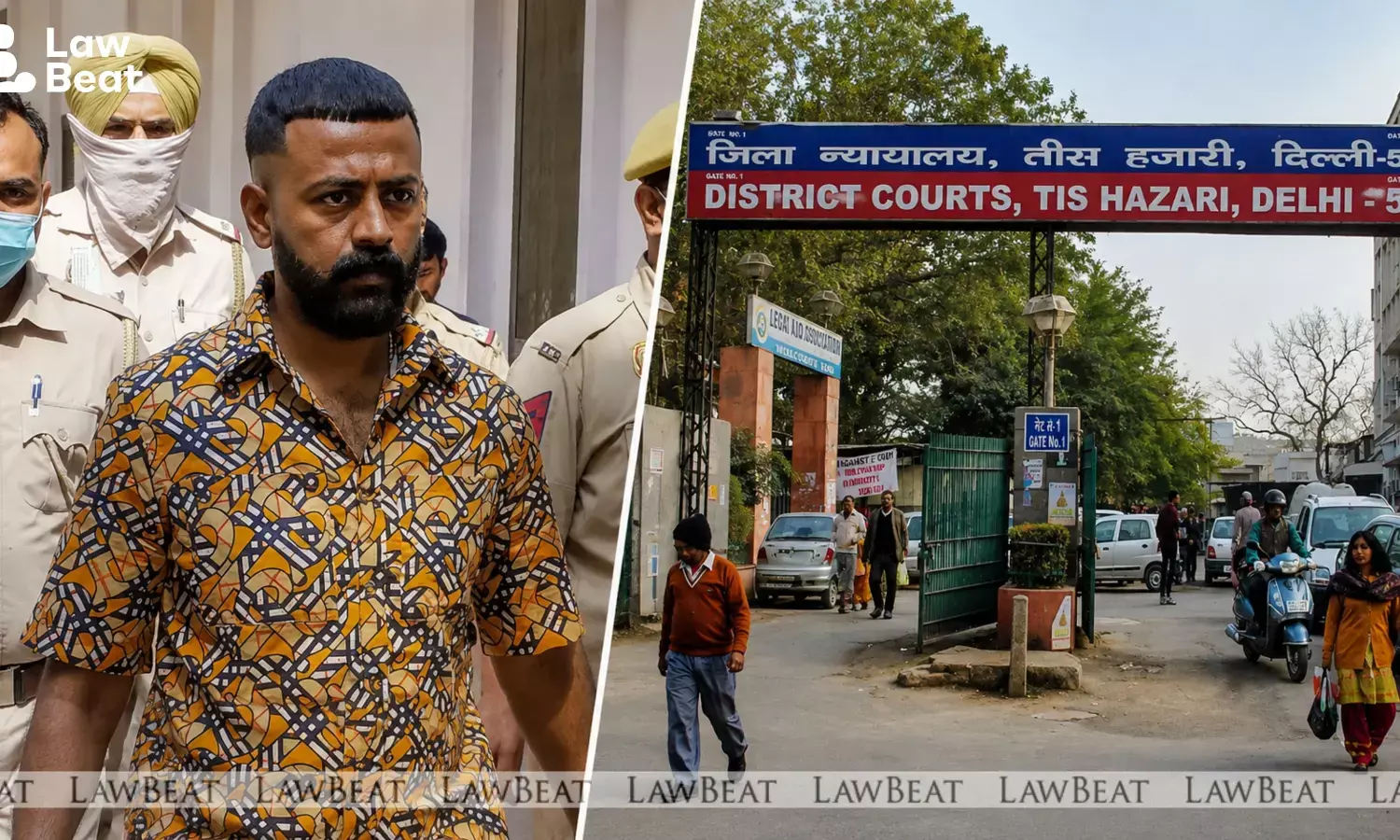
Tis Hazari Courts, Delhi, where CJM Harshita Mishra sentenced Sukesh Chandrasekhar to 8 years of rigorous imprisonment for impersonating a Supreme Court judge
A Delhi court has sentenced conman Sukesh Chandrasekhar to a total of 8 years of rigorous imprisonment for impersonating a sitting Supreme Court judge to pressure a special judge into granting him bail in 2017, directing that the sentences run consecutively rather than concurrently.
CJM Harshita Mishra of Tis Hazari Courts, pronounced the order on sentence on 29 August 2026, nine days after convicting Sukesh under Sections 170, 189 and 507 of the Indian Penal Code in her judgment dated 20 August 2026.
The Sentence
The court sentenced Sukesh to rigorous imprisonment for 2 years and a fine of Rs. 5,000 under Section 170 IPC, rigorous imprisonment for 2 years and a fine of Rs. 5,000 under Section 189 IPC, and rigorous imprisonment for 4 years under Section 507 IPC, with an additional month of imprisonment in default of payment of fine. All substantive sentences were directed to run consecutively, bringing the total custodial term to 8 years.
The court held that the case was "a fit and compelling case for consecutive sentences," stating that the nature of the offences, the distinct mischief addressed by each provision, and their cumulative impact on the administration of justice made concurrency inappropriate. It noted that where distinct criminal wrongs are deliberately committed, "each substantial wrong must be adequately reflected in the punishment."
Why arguments on sentence were heard the same day as conviction
The order records in detail that the court had granted Sukesh's counsel, Advocate Praveen Dabas, one week's time to address arguments on sentence at the time judgment was pronounced. However, counsel himself requested that sentencing arguments be heard the same day, despite the court's insistence that the granted time be utilised. The court noted that when it "brushed aside" an earlier submission from counsel questioning the court's intent, counsel stated he wished to challenge the conviction "at the earliest" and wanted the sentence question dealt with immediately.
The court recorded that when finally called upon to argue on sentence, counsel did not place any mitigating circumstance, personal circumstance, or rehabilitation possibility before the court, and instead simply stated the court may proceed in accordance with law. Counsel later sought concurrent, rather than consecutive, sentencing.
State's submissions: 31 criminal cases, Rs. 200 crore extortion case
APP Amit Yadav submitted that Sukesh is "not an ordinary offender" but a "seasoned conman" who has repeatedly used deception, false identity and calculated manipulation to interfere with the administration of justice. The prosecution placed before the court a list of 31 criminal cases registered against Sukesh across states; 10 pending in Karnataka (Bengaluru), 9 in Tamil Nadu (Chennai), 6 in Delhi, 2 in Maharashtra (Mumbai), and 1 in Andhra Pradesh (Hyderabad), relating to cheating by impersonation as government officials, the son of a Chief Minister and Minister in Karnataka, and cheating simpliciter, among others.
The prosecution also flagged the extortion case involving Sukesh and Aditi Singh, wife of former Ranbaxy owner Shivender Singh, describing it as "one of the most brazen white-collar crimes in recent memory." The state alleged Sukesh, operating from behind bars, posed as the Law Secretary, Union Home Secretary and senior PMO representatives, using spoofing software and voice modulation, over months of calls that caused losses of approximately Rs. 200 crore to the family.
The prosecution sought the most severe punishment with consecutive sentencing.
Defence counsel objected to the list of 31 cases being considered, arguing they remain sub judice with no convictions recorded. The court agreed with this objection, stating it was "refraining from taking those into account while deciding on the question of sentence" since the cases have no bearing on the present sentencing exercise, though it noted them as part of the record of submissions made.
Court's sentencing framework: "triangulation" of three interests
The court set out an extended framework for its sentencing exercise, describing it as "an exercise in triangulation of three competing but interconnected interests; the interests of the offender, the interests of the victim, and the larger interests of society." It observed that "sentencing is neither a mechanical nor an arithmetical exercise nor an occasion for judicial indignation," and that the appropriate sentence must occupy the point where "punishment without vengeance, deterrence without excess, and compassion without abdication of judicial responsibility" meet.
No mitigating circumstances found; court cities "absence of remorse"
The court held that the convict, aged 38, has been involved in more than 30 criminal cases and was found using mobile phones illegally smuggled into his cell while in custody, resulting in his transfer from Tihar Jail to Rohini Jail and then to Mandoli Jail.
The court found "no mitigating circumstance of any meaningful weight" in Sukesh's favour, noting that he had at no stage displayed genuine remorse and had instead sought to attribute mala fides to the complainant judicial officer, Smt. Poonam Chaudhary, including insinuating that she had colluded with Delhi Police to falsely implicate him. The court stated that even her act of returning a call was portrayed by the defence as suspicious, calling this "not remorse but an unwillingness to acknowledge the gravity of the convict's own conduct."
The court further noted that as the trial neared conclusion, "the convict started a slanderous campaign against this Court also, hoping to derail the trial and delay the pronouncement of judgment."
Court flags deepfake and AI impersonation risk for future cases
In a notable portion of the sentencing order, the court observed that the case brings into focus "a new and deeply concerning dimension of interference with the administration of justice," pointing to the rise of deepfakes and AI-generated audio-visual material. It stated that a fraudulent communication "may no longer be confined to a crude telephone call, a forged letter or an obviously fabricated document," and that AI-generated voices, faces and communications could create "an appearance of authenticity" difficult to distinguish from genuine communication.
The court held there is "a real likelihood that cases of this nature may become more frequent in the coming years," and that the judicial system must "remain one step ahead of those who seek to exploit technological advancement for criminal purposes."
The court held that Sukesh is entitled to the benefit of the period already undergone in custody. On a submission from defence counsel that Sukesh had not furnished bail bonds and had remained in custody throughout, the court called for a clarification report from the Jail Superintendent, listing the matter for 2 September 2026.
The court also directed that a copy of the order be sent to the Commissioner of Police, and listed the matter for a compliance report from the Delhi Police Commissioner on 1 October 2026, pursuant to directions issued in the earlier judgment dated 20 August 2026.
Case Title: State v. Sukesh Chandrashekhar
Bench: CJM Harshita Mishra
Order Date: August 29, 2026