
Suppression Of Criminal Antecedents Grounds For Termination, Rules Madhya Pradesh High Court
Madhya Pradesh High Court Upholds Termination of Probationary Watchman Over Suppression of Criminal Case
The Madhya Pradesh High Court at Jabalpur has dismissed a petition filed by a probationary watchman challenging his termination from service, holding that suppression of criminal antecedents and unsatisfactory conduct during probation justified his discharge without the need for a departmental enquiry.
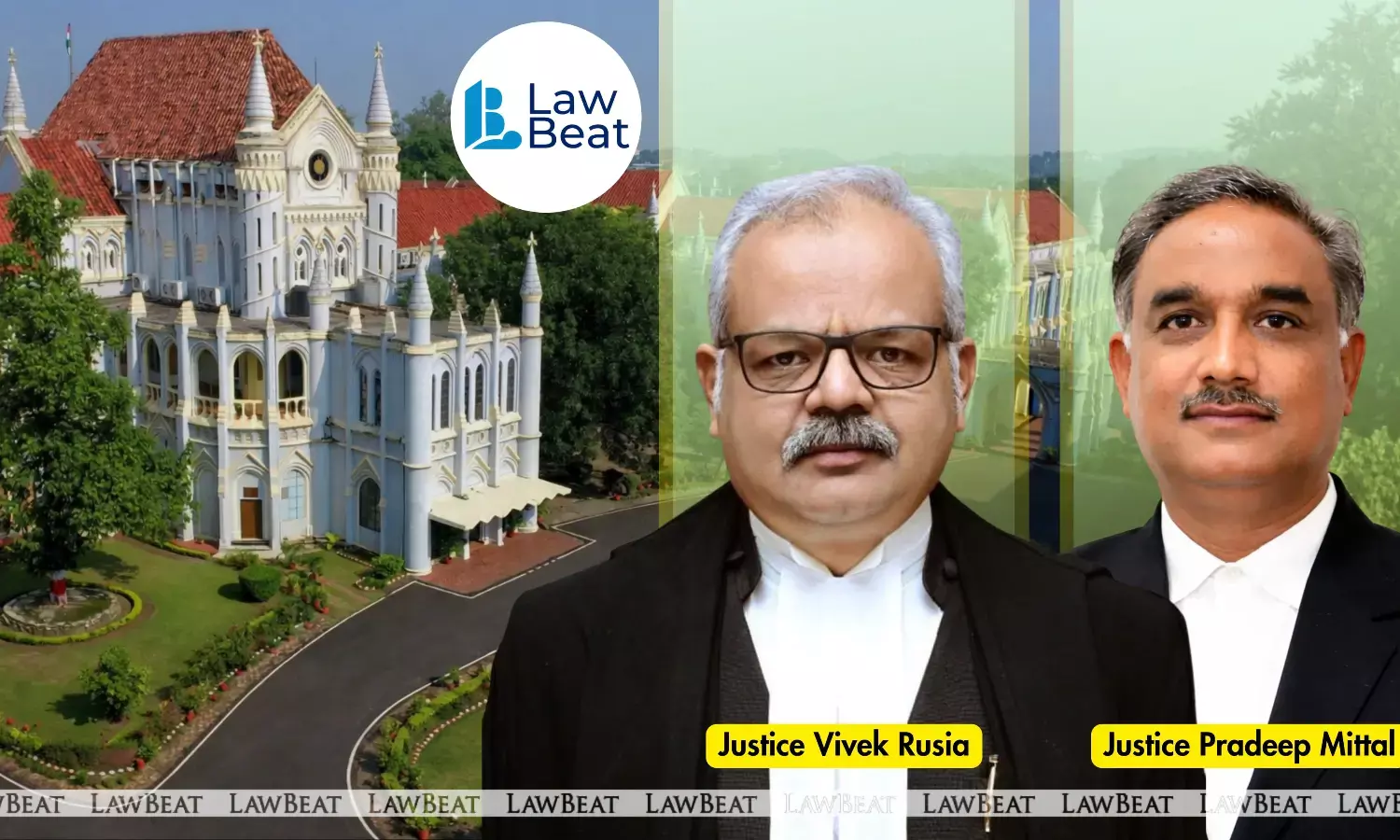
A Division Bench of Justice Vivek Rusia and Justice Pradeep Mittal was hearing a Miscellaneous Petition filed by Dev Prakash Dubey against the order of the Central Administrative Tribunal (CAT), Jabalpur Bench, which had earlier upheld his termination. The High court found no ground to interfere with the Tribunal’s decision dated March 20, 2025.
Dubey was appointed as a Watchman in July 2008 and joined duty in August 2008. His initial probation period of one year was extended first by another year and subsequently by six months. He contended that the repeated extensions were mala fide and beyond the permissible limit. According to him, he had completed the maximum probation period and ought to have been treated as a confirmed employee. He further alleged that his termination in August 2011 was punitive in nature and founded on false complaints after he refused to accede to illegal demands allegedly made by a superior officer.
Appearing for the petitioner, Shri Vijay Kumar Tripathi argued that the termination order was stigmatic and could not have been passed without conducting a departmental enquiry. He also submitted that the petitioner’s statutory appeal against the termination was never decided.
On behalf of the Union of India, Shri Sanjay Kumar Patel defended the termination and supported the Tribunal’s findings.
The High court examined the conditions of appointment, particularly clauses 2 and 3, which clearly stated that during probation, services could be terminated “at any time without giving any notice and without assigning any reason”. The court noted that the termination order dated August 26, 2011 invoked these very clauses.
Crucially, the bench recorded that an offence had been registered against Dubey in 1999 under Sections 324/34 IPC at Police Station Ranjhi and that a challan had been filed before the Judicial Magistrate First Class. Although the criminal case was later disposed of on the basis of compromise in 2002, the petitioner had submitted an affidavit at the time of appointment stating that no criminal case had ever been registered against him. The verification report revealed otherwise.
The court further observed that during probation, several complaints were received regarding the petitioner’s behaviour with co-workers. He was warned through a memo to improve his conduct. It also came on record that he had purchased immovable property without obtaining prior sanction from the competent authority and later admitted his mistake in writing.
Rejecting the argument that the termination was punitive, the bench relied on the Supreme Court’s judgment in Chaitanya Prakash v. H. Omkarappa (2010) 2 SCC 62, which held that termination during probation on the ground of unsuitability does not amount to punishment if no misconduct is formally alleged. The High court observed that the petitioner “did not successfully complete the probation period of service” and that his services were terminated before confirmation.
Addressing the contention regarding extension of probation beyond permissible limits, the court noted that the petitioner had relied upon a DoP&T Office Memorandum dated November 24, 2022. However, the circular was issued long after his termination in 2011 and therefore had no applicability to his case.
On the issue of the alleged pending departmental appeal, the court found that the petitioner had failed to demonstrate that any formal appeal had in fact been filed. No copy of the appeal memo was produced before the Tribunal or the High Court.
Concluding that there was no violation of Articles 14 and 21 of the Constitution, the Bench dismissed the petition, holding that there was “no ground to interfere” with the Tribunal’s order. No costs were imposed.
Case Title: Dev Prakash Dubey v. Director General and Others
Date of Order: February 23, 2026
Bench: Justice Vivek Rusia and Justice Pradeep Mittal