
‘Tarikh Pe Tarikh’ Not Judiciary Alone: Allahabad High Court Says UP Govt, Police Mainly Responsible for Huge Pendency
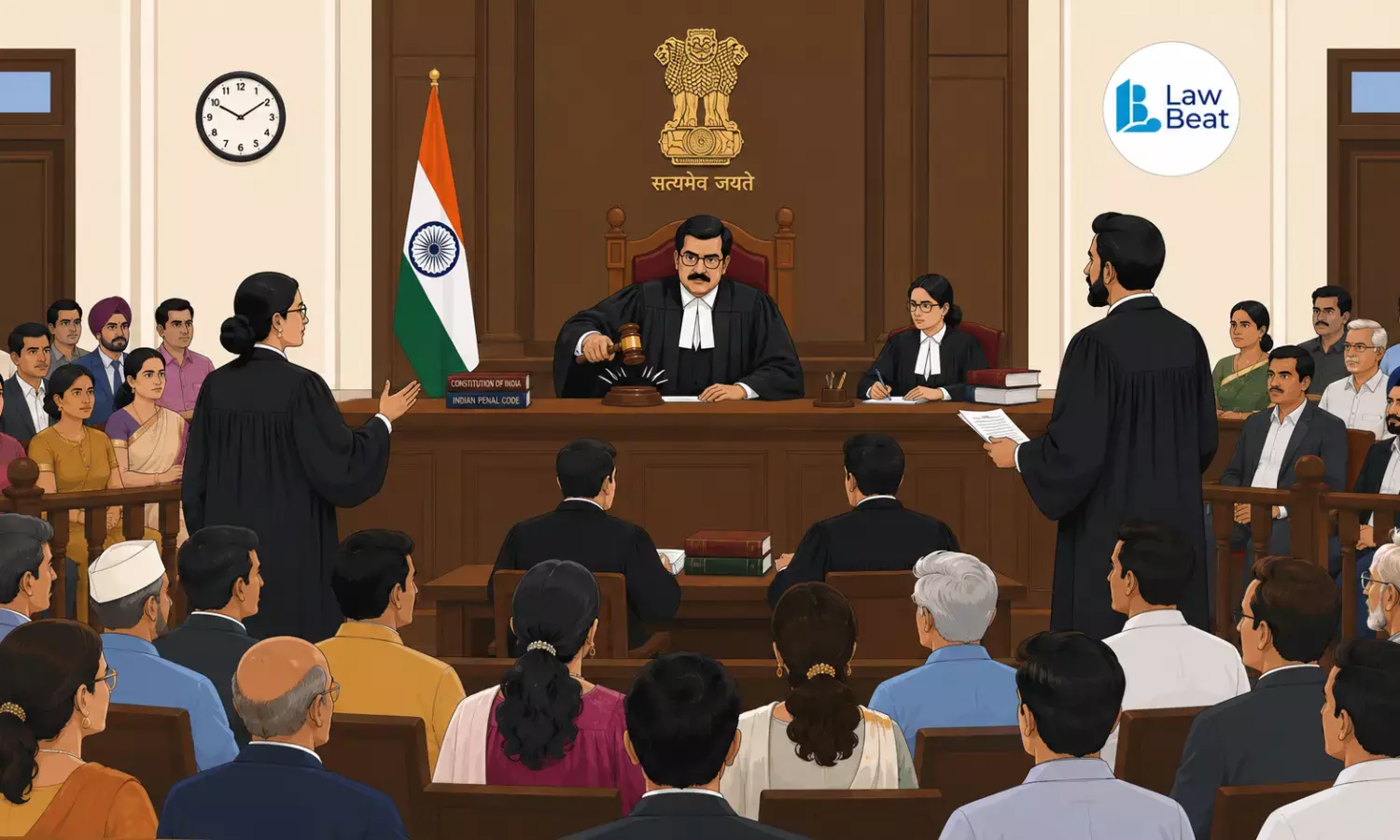
Allahabad High Court says State government and police are mainly responsible for delays in criminal trials in UP.
The Allahabad High Court, while rejecting a murder accused’s bail plea, said shortage of staff, delays by police in executing court processes and pending forensic reports are major reasons behind the pendency of criminal cases in Uttar Pradesh district courts, and held the State government and police largely responsible for the situation.
The bench of Justice Arun Kumar Singh Deshwal passed the order in a bail application filed by Mevalal Prajapati, accused in a Fatehpur murder case. During the hearing, court’s attention shifted from the merits of the bail plea to deficiencies in forensic investigation and broader institutional problems affecting criminal trials across the state.
Court noted that although a blood-stained screwdriver had been recovered and sent to the forensic laboratory, the investigating officer had failed to seek DNA matching to determine whether the blood belonged to the deceased. Finding the lapse significant, the bench summoned the Director of the Uttar Pradesh Forensic Science Laboratory.
The FSL Director informed the court that forensic laboratories in Uttar Pradesh were facing acute shortage of staff and modern equipment. The officer also stated that although 12 FSLs were functioning in the state, only eight had facilities to generate DNA profiles. It was further pointed out that the FSL continued to function as part of the police department and was not an autonomous body under the Home Department, limiting its administrative freedom in procurement and appointments.
Subsequently, court directed the Director General of Police and the Secretary (Home) to assist the court. During the proceedings, the DGP acknowledged negligence on the part of investigating officers in not seeking DNA matching queries from forensic laboratories and assured the court that necessary directions would be issued.
The judgment then expanded into an extensive examination of criminal case pendency in district courts. Relying on feedback collected from judicial officers and district judges in several districts including Ghaziabad, Agra, Mathura and Moradabad, court identified structural deficiencies responsible for delays in criminal trials.
Among the key reasons flagged were shortage of clerical staff, stenographers and deposition writers in courts, repeated non-execution of summons and warrants by police authorities, delays in forensic reports, shortage of prosecutors, witness non-appearance and repeated adjournments sought by lawyers.
In one of the sharpest observations in the judgment, court said the district judiciary was being unfairly blamed for delays despite lacking adequate staff and institutional support. “It is the State Government as well as Police who are mainly responsible for pendency of criminal cases in district courts,” the bench observed.
Court also raised concern over security threats faced by judicial officers in Uttar Pradesh, noting that judges were sometimes openly threatened by criminals after convictions. It observed that except district judges, first additional district judges and chief judicial magistrates, other judicial officers were not provided personal security officers.
Referring to the famous dialogue “Tarikh pe Tarikh, Tarikh pe Tarikh Milti Rahi hai..... lekin Insaf Nahi Mila My Lord, Insaf Nahi Mila ! Mili Hai to Sirf Tarikh” from the film “Damini”, court said the perception of endless adjournments was not solely because of judicial officers but due to inadequate staffing, poor police cooperation and defective investigations.
"A judicial officer can't decide the cases without sufficient staff and the cooperation of police to ensure the presence of the accused, witnesses and a proper FSL report, etc.," court said.
Court issued a series of directions to the State government and police authorities, including filling vacancies in FSLs within one year, considering autonomy for the forensic department, ensuring training of police personnel in collection of forensic evidence, and improving execution of electronic summons and warrants under the Bharatiya Nagarik Suraksha Sanhita framework.
On the merits of the case, however, court rejected the bail plea of the accused, citing mobile phone location evidence, recovery of the deceased’s e-rickshaw and recovery of the blood-stained screwdriver allegedly linked to the offence.
Case Title: Mevalal Prajapati vs. State of U.P.
Order Date: May 7, 2026
Bench: Justice Arun Kumar Singh Deshwal