
Tejo Mahalaya Suit: Allahabad High Court to Hear Fresh Plea for Taj Mahal's Court-Supervised Survey
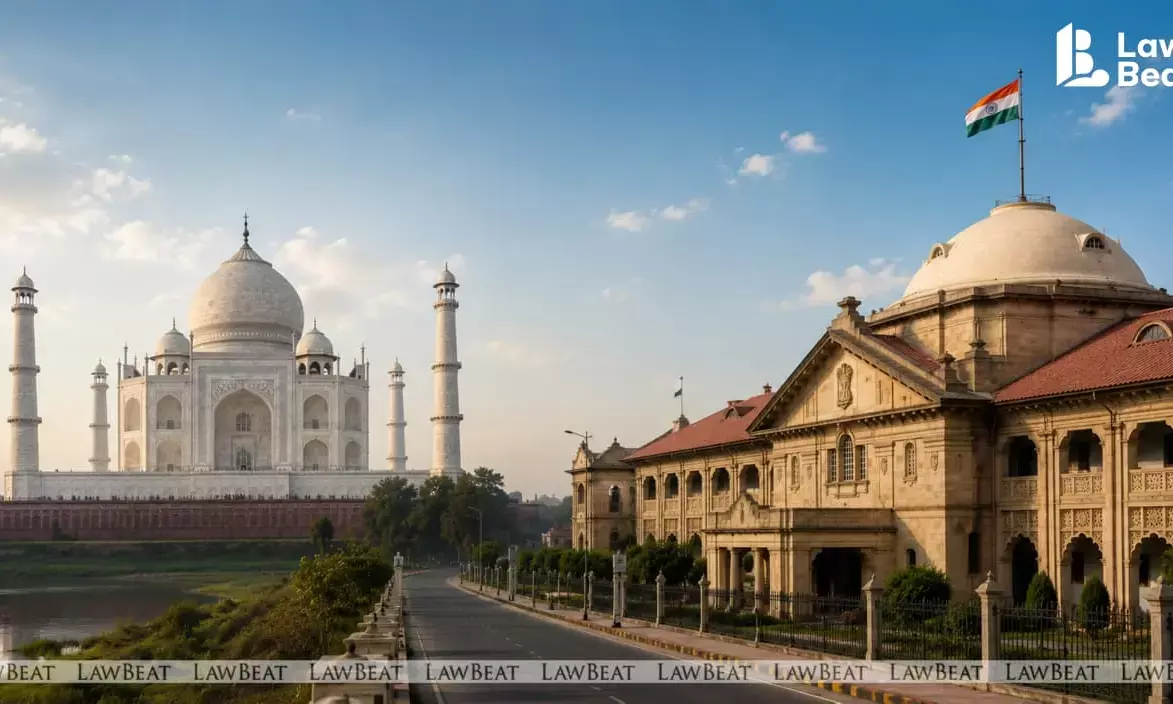
Allahabad High Court to hear Taj Mahal survey plea on July 6.
The Allahabad High Court is set to hear on Monday a petition challenging orders of two Agra courts that declined to appoint an advocate commissioner to inspect and document the Taj Mahal in connection with a long-pending civil suit claiming that the monument is an ancient Hindu temple known as "Tejo Mahalaya".
The petition has been filed on behalf of the deity, Lord Sri Agreshwar Mahadev Nagnatheswar Virajman, and 5 others, including Advocate Hari Shankar Jain and Ranjana Agnihotri. Advocate Saumya Srivastava will be representing the petitioners.
The petition assails orders passed by the Civil Judge (Senior Division), Agra, and the Additional District Judge, Agra, refusing to direct a court-appointed survey of the monument.
The dispute traces its origin to a civil suit instituted in 2015 before the Agra civil court. In that suit, the plaintiffs contend that the Taj Mahal was originally a Shiva temple known as "Tejo Mahalaya" and seek a declaration recognising it as a Hindu temple. They have also sought permission for Hindus to perform darshan and pooja within the monument, claiming protection under Article 25 of the Constitution.
During the pendency of the suit, the plaintiffs moved an application in 2019 seeking appointment of an Advocate Commissioner to inspect the monument and prepare photographs and videography of its structural features. The trial court, however, rejected the application, holding that the plaintiffs had failed to produce revenue records identifying the disputed property and noting discrepancies between the property's description in the suit and the defendants' records.
A revision filed against that order was subsequently dismissed by the Additional District Judge as not maintainable earlier this year, prompting the petitioners to approach the high court.
The petitioners have made the Union of India, the Archaeological Survey of India (ASI), and one Pankaj Kumar Verma respondents.
Also Read | Plea before Supreme Court seeks appointment of fact-finding committee to reveal real truth of Taj Mahal
The original suit relies on several historical and architectural assertions to support the claim that the Taj Mahal predates the Mughal period and was originally a temple dedicated to Lord Shiva.
The plaintiffs claim that the Taj Mahal was originally a temple allegedly constructed in 1212 AD by Raja Paramardi Dev. According to the suit, the structure later came under the ownership of Raja Man Singh and subsequently Raja Jai Singh of Jaipur before it was allegedly taken over by Mughal emperor Shah Jahan in 1632. The plaintiffs contend that after the death of Mumtaz Mahal, the structure was converted into her mausoleum and that certain portions of the complex were altered to incorporate Islamic architectural features.
The plea also refers to the long-standing debate surrounding the monument's origins, noting that similar claims were advanced by writer P.N. Oak in his book Taj Mahal: The True Story. However, the Supreme Court had, in 2000, dismissed Oak's petition seeking a declaration that the Taj Mahal was originally a Hindu temple.
The suit also alleges that several portions of the monument remain inaccessible to the public and that these areas require examination through a court-supervised exercise.
Also Read| Advocate Alleges Film ‘The Taj Story’ Plagiarised His Research on Taj Mahal’s 22 Sealed Rooms
In the present proceedings, the petitioners have sought quashing of the orders passed by the Agra courts and a direction to reconsider their application for appointment of an advocate commissioner on its merits. They have also sought interim directions requiring the ASI to undertake photography of the monument's interior and exterior in the presence of the petitioners and place the material before the court.
Case Title: Lord Sri Agreshwar Mahadev Nagnatheswar Virajman Tejo Mahalaya Temple And 5 Others vs Union Of India And 3 Others
Bench: Justice Rohit Ranjan Agarwal
Scheduled Hearing Date: July 6, 2026