
TVK MLA’s One-Vote Win Challenged: Madras High Court Seeks ECI's Response on DMK's Candidate's Plea
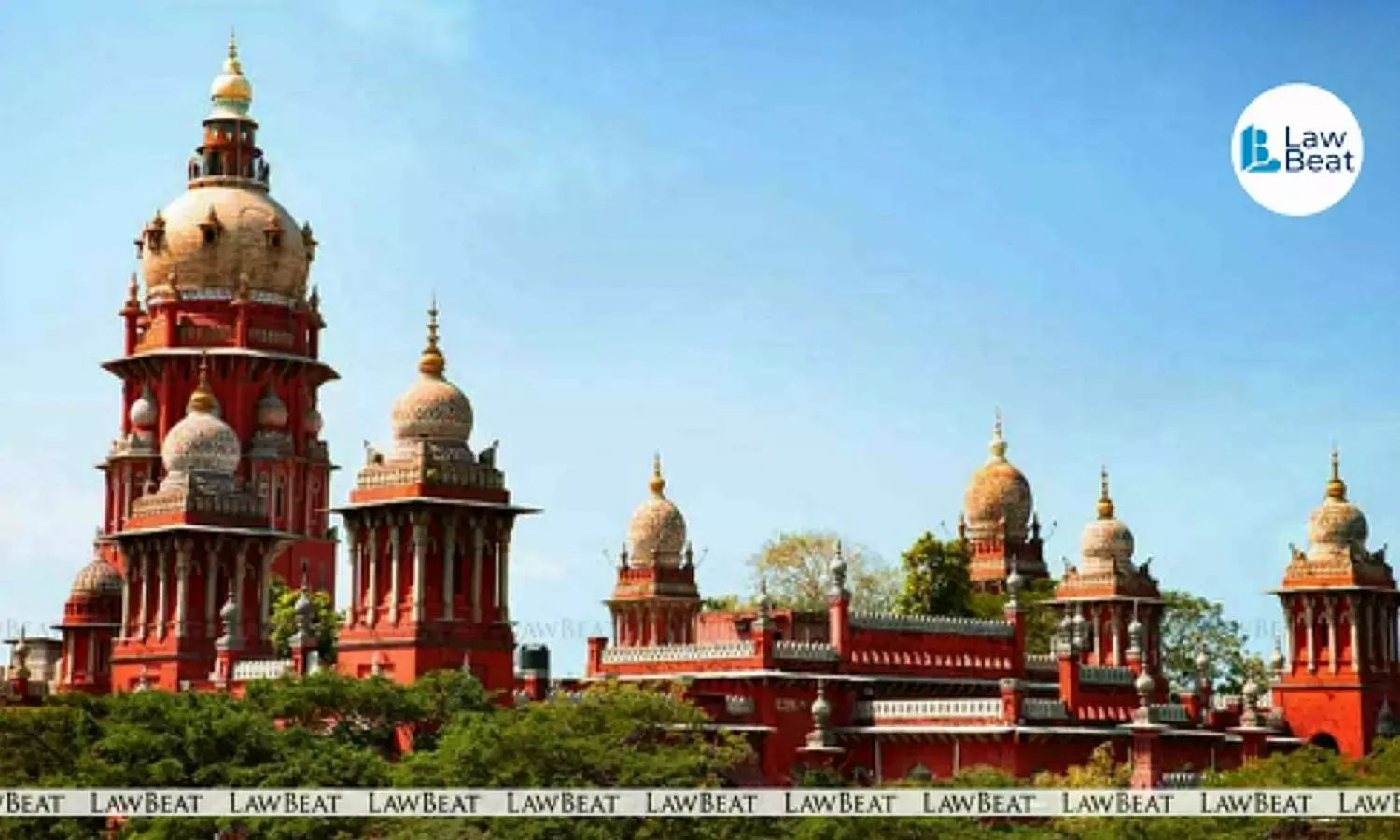
Madras High Court questions ECI over disputed one-vote winning margin in Tiruppattur Assembly election.
The Madras High Court on Sunday sought response from the Election Commission of India (ECI) over a disputed postal ballot in the Tiruppattur Assembly constituency election, where actor-turned-politician Vijay's Tamilaga Vettri Kazhagam (TVK) MLA Srinivasa Sethupathi defeated former Tamil Nadu minister and DMK leader K.R. Periyakaruppan by just one vote.
Today, the ECI submitted that since no objections were raised within the prescribed time, it was now powerless to intervene in the matter. Taking note of the submission, court reserved its order.
One-Vote Margin
According to the official election results, Sethupathi secured 83,375 votes while Periyakaruppan polled 83,374 votes in the Tiruppattur Assembly constituency in Sivaganga district.
Soon after the declaration of results, Periyakaruppan moved the high court, claiming that a postal ballot meant for his constituency was mistakenly sent to another Tiruppattur constituency located in Tiruppattur district.
Tamil Nadu has two Assembly constituencies with the same name, and the petitioner argued that this similarity led to confusion during the handling of postal ballots by election authorities.
The petitioner alleged that officials in the other constituency rejected the ballot instead of forwarding it to the correct returning officer for counting.
Election Commission’s Stand
The ECI argued before the court that once election results are declared, its role effectively ends and any challenge to the result can only be made through an election petition. In election law, this principle is often described using the term “functus officio,” meaning an authority has completed its official duty and no longer has jurisdiction over the matter.
Petitioner's Arguments
Senior Advocate Mukul Rohatgi, appearing for Periyakaruppan, argued that the present case involved exceptional facts because the result was decided by only one vote.
He contended that if the postal ballot had reached the correct constituency and was counted, it could have altered the result entirely. Rohatgi reportedly compared the situation to a “postman’s mistake,” arguing that officials should have redirected the ballot instead of rejecting it.
According to the petitioner’s side, if the ballot were found valid and counted in favour of Periyakaruppan, the election result would end in a tie. Under election rules, tied results are generally resolved through a draw of lots.
Senior Advocate N.R. Elango also argued that election laws do not specifically contemplate such an unusual factual scenario, thereby justifying judicial intervention under the high court’s extraordinary powers under Article 226 of the Constitution.
Winning Candidate Opposes Plea
Senior Advocate Abhishek Manu Singhvi, appearing for the winning candidate Sethupathi, opposed the petition and argued that the petitioner was attempting to bypass the statutory remedy available under election law.
He submitted that election disputes cannot be adjudicated through writ proceedings under Article 226 of the Constitution once results have been declared.
The counsel also opposed an interim request seeking to restrain Sethupathi from participating in Assembly proceedings, including any trust vote. Court did not pass any interim order on that plea.
High Court Questions Election Commission
The matter came up before a special Sunday sitting of a division bench comprising Justice L. Victoria Gowri and Justice N. Senthilkumar.
During the hearing, the bench questioned why the Election Commission had not responded to the petitioner’s representation regarding the disputed postal ballot even after the declaration of results.
The judges orally observed that the issue directly concerned the handling of a ballot paper and asked whether the commission could simply refuse to examine the matter on the ground that the election process had concluded.
Court subsequently directed the ECI to explain the action taken on the petitioner’s complaint.
Case Title: KR Periakaruppan v The Chief Election Officer and Others
Hearing Date: May 10, 2026
Bench: Justice L Victoria Gowri and Justice N Senthil Kumar