
Twisha Sharma Death Case: Former District Judge Giribala Singh Moves Madhya Pradesh HC For Bail
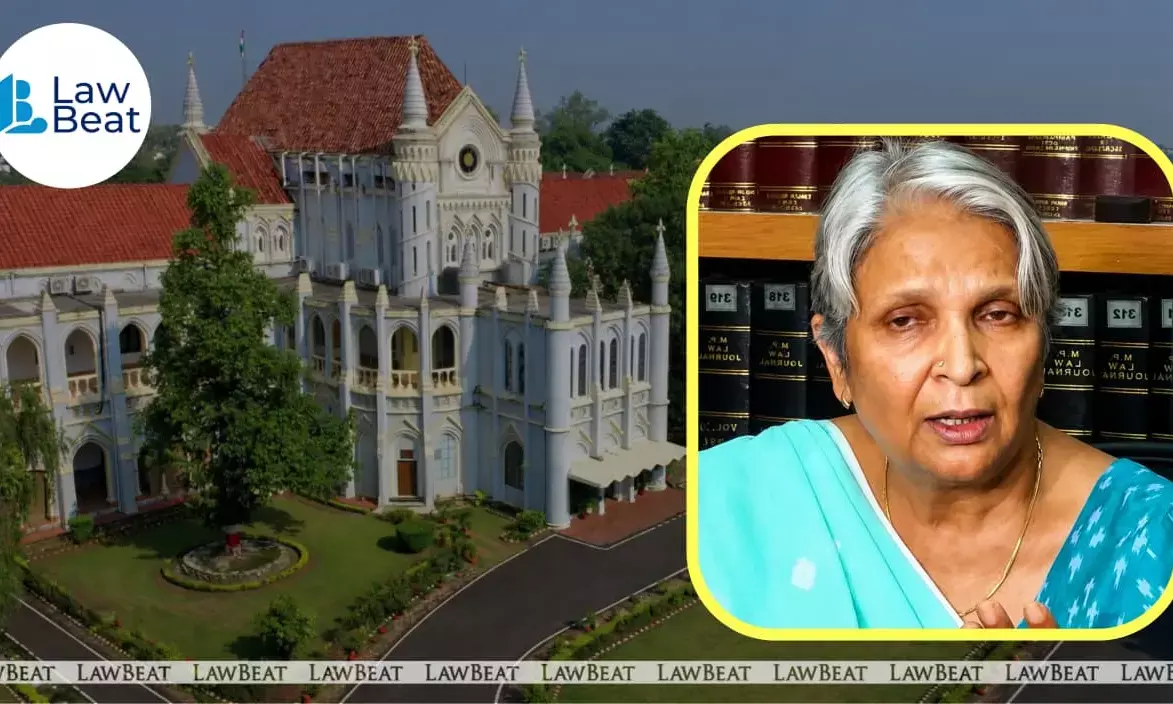
Former judge Giribala Singh seeks bail in Twisha Sharma case.
Retired District Judge Giribala Singh, an accused in the alleged dowry death of former model and actor Twisha Sharma, has moved the Madhya Pradesh High Court seeking regular bail after a special CBI court in Bhopal denied her relief last month. Sharma was found dead at her matrimonial home in Bhopal's Katara Hills on May 12, barely five months after marrying advocate Samarth Singh.
The matter is likely to be heard later this week.
On July 25, CBI Judge Ram Pratap Mishra rejected Singh's regular bail application, accepting the prosecution's submission that the investigation was at a sensitive stage and her release could compromise it. The court noted that Singh, a retired District and Sessions Judge held a position of institutional influence that made interference with witnesses or evidence a real possibility, not a remote one.
Twisha married Samarth Singh on December 9, 2025. Her family has alleged the marriage soured quickly, with her brother, Major Harshit Sharma of the Indian Army, claiming she faced continuous harassment over dowry, including a demand for roughly two lakh rupees and restrictions on her access to money.
Two days after her body was found, Madhya Pradesh Police registered an FIR naming both Samarth and Giribala Singh. Samarth was arrested in Jabalpur on May 22 after evading arrest for ten days.
The Supreme Court then took suo motu cognisance, citing concern that a judicial officer's involvement could dent public confidence in the justice system, following which the probe went to the CBI. Both accused have been in custody since June 2, facing charges of dowry death under the Bharatiya Nyaya Sanhita, 2023.
Opposing bail, the CBI told the court Singh had tried to influence the probe by reaching out to a CCTV technician and a salon operator, and had sent a representative to procure CCTV footage. The agency also pointed to her refusal to give a voice sample, citing call detail records, WhatsApp chats and witness statements as material already gathered against her. Advocate Ankur Pandey, representing Twisha's father Navnidhi Sharma, argued the material disclosed her apparent involvement.
The defence sought bail on humanitarian grounds, citing Singh's health in custody, the need to care for her nearly hundred-year-old mother, and rituals connected with Twisha's death. It was also argued that Singh, drawing a regular pension along with a war widow's pension, was financially secure, making a dowry demand improbable. The court held that none of these grounds outweighed the seriousness of the allegations or the evidence collected.
The case has an unusual procedural history. Special Judge Neelam Shukla first recused herself after disclosing that she had received judicial training under Giribala Singh while the latter served as an Additional District and Sessions Judge in Gwalior. The matter then went to Judge Mishra's court, where arguments were heard from the CBI, the defence, and counsel for Twisha's family before bail was refused.
Giribala Singh spent decades deciding bail pleas and criminal trials as a judicial officer, and her role as chairperson of a consumer disputes body has kept her connected to institutional authority. It was this proximity to the system that appears to have weighed on the court while assessing whether her release could realistically be monitored.
The Supreme Court's decision to take suo motu note of the case, and its transfer to the CBI, reflected similar unease that a former judge being probed by local police could raise questions of impartiality.