
UAPA Bail: Allahabad High Court Grants Bail to 2 After 5 Years in Jail, Trial Still Far From Over
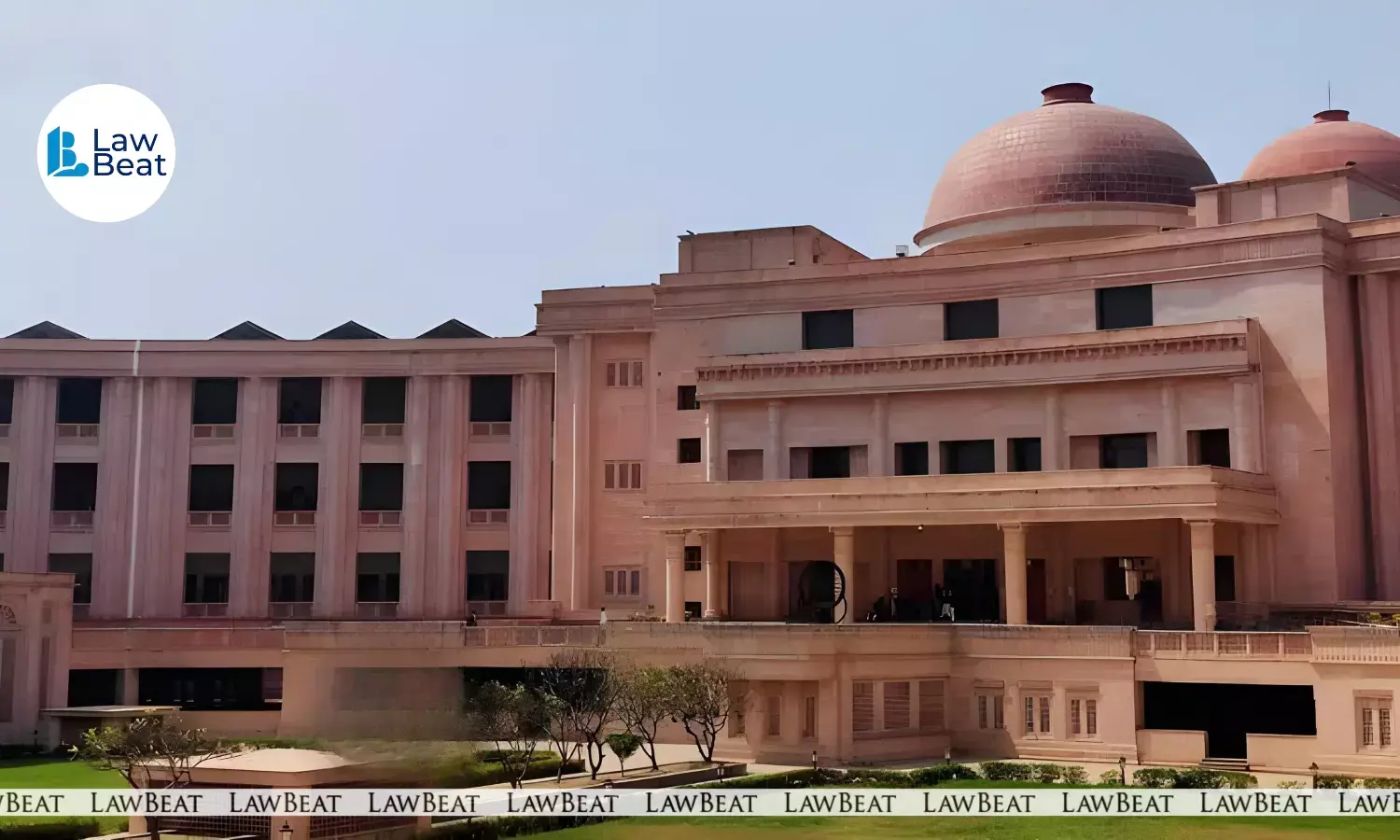
Allahabad High Court flags prolonged custody amid slow UAPA trial.
For an accused who has spent more than five years in jail without the trial nearing its end, the right to a speedy trial cannot become meaningless merely because the case is under a stringent anti-terror law, the Allahabad High Court recently held while granting bail to two men accused in a 2021 terror conspiracy case.
The bench of Justices Rajesh Singh Chauhan and Ram Manohar Narayan Mishra granted bail to Ansad Badruddin and Firoz Khan, who have been in custody since February 17, 2021, observing that there was “no likelihood” of the trial being concluded in the near future. Court said their prolonged incarceration, coupled with the poor progress of the trial, brought their fundamental right to speedy trial under Article 21 into play.
Why did the Allahabad HC find the trial unreasonably slow?
Court's concern centred on the prosecution's failure to complete the evidence despite repeated directions to expedite the trial.
The accused face charges under Sections 120B and 121A of the IPC (now Sections 61 and 148 of the BNS, respectively), Sections 13, 16, 18 and 20 of the Unlawful Activities (Prevention) Act, Sections 3, 4, 5 of the Explosive Substances Act and Sections 3, 25, 35 of the Arms Act. At the time of their arrest, the ATS claimed to have recovered explosives, a pistol, live cartridges, explosive devices, detonators, wires and other material. The explosives were subsequently reported to be PETN by the Forensic Science Laboratory.
The high court had rejected their first bail application in December 2022 but directed the trial court to conclude the case preferably within a year. In January 2024, it again directed that the prosecution witnesses be examined and cross-examined in accordance with the normal procedure and that the trial be concluded expeditiously.
Yet, by August 7 this year, the trial court reported that 95 dates had been fixed for examination of prosecution witnesses. Of the 18 prosecution witnesses, only five had been fully examined. Eleven had completed their examination-in-chief, but only five of them had also been cross-examined.
Court particularly noted the position of PW-2, the main prosecution witness. His examination-in-chief had been completed and his cross-examination had run into 35 pages, but it remained incomplete despite repeated dates, coercive orders and even an opportunity to conduct it through video conferencing.
What did the court say about the prosecution's role in the delay?
The bench expressed surprise that the prosecution had not taken proper steps to ensure that its witnesses were examined.
“For not examining the prosecution witness by the prosecution is nothing but to extend the help, indirectly, for the accused persons,” the court observed, pointing out the unusual situation created by the interaction between the delay and the stringent bail restrictions under Section 43-D(5) of the UAPA.
Court also questioned why the trial court had not invoked Section 309 CrPC, corresponding to Section 346 of the BNSS, which permits day-to-day proceedings in serious offences and allows coercive steps, including costs, when the prosecution fails to produce witnesses. It said that at least some cost should have been imposed on the prosecution for delaying the trial.
Can prolonged custody override the UAPA's strict bail conditions?
The high court said the Supreme Court's ruling in Union of India v K A Najeeb (2021) applied. That judgment holds that where incarceration has become prolonged, the trial is making little progress and there is no likelihood of its early conclusion, the accused's Article 21 right to speedy trial can justify bail even in a UAPA case.
The bench also relied on the Supreme Court's May 2026 ruling in Syed Iftikhar Andrabi v National Investigation Agency, which reaffirmed that Najeeb remains binding law in cases involving prolonged detention under the UAPA.
The high court accordingly set aside the May 14, 2024 order rejecting bail and ordered the release of Badruddin and Firoz Khan on furnishing bonds and sureties of Rs 5 lakh each. It directed them to report to the ATS police station every fortnight, remain present during the trial and not seek unnecessary adjournments. The trial court was again directed to expedite the proceedings and avoid unnecessary adjournments.
Case Title: Ansad Badruddin And Another vs. Anti Terrorist Squad Thru. Its Adg/Sp
Order Date: August 10, 2026
Bench: Justices Rajesh Singh Chauhan and Ram Manohar Narayan Mishra