
Why Delhi Court Acquitted Man Accused Of Telling Woman, 'Tum Hindu Log Ghar Khali Karo, Yahan Musalman Rahenge'
Court found unexplained delay in FIR, contradictions in witnesses' accounts and lack of corroborative evidence; it also held that Section 298 IPC could not be sustained on the alleged statement when it was directed at a class of persons
A Delhi Court has acquitted one Hafij Sartaj, who was accused of, among other allegations, telling a Hindu woman, "Tum Hindu log apne gharon ko khaali karo, yahan Musalman rahenge" (You Hindu people vacate your houses, Muslims will live here).
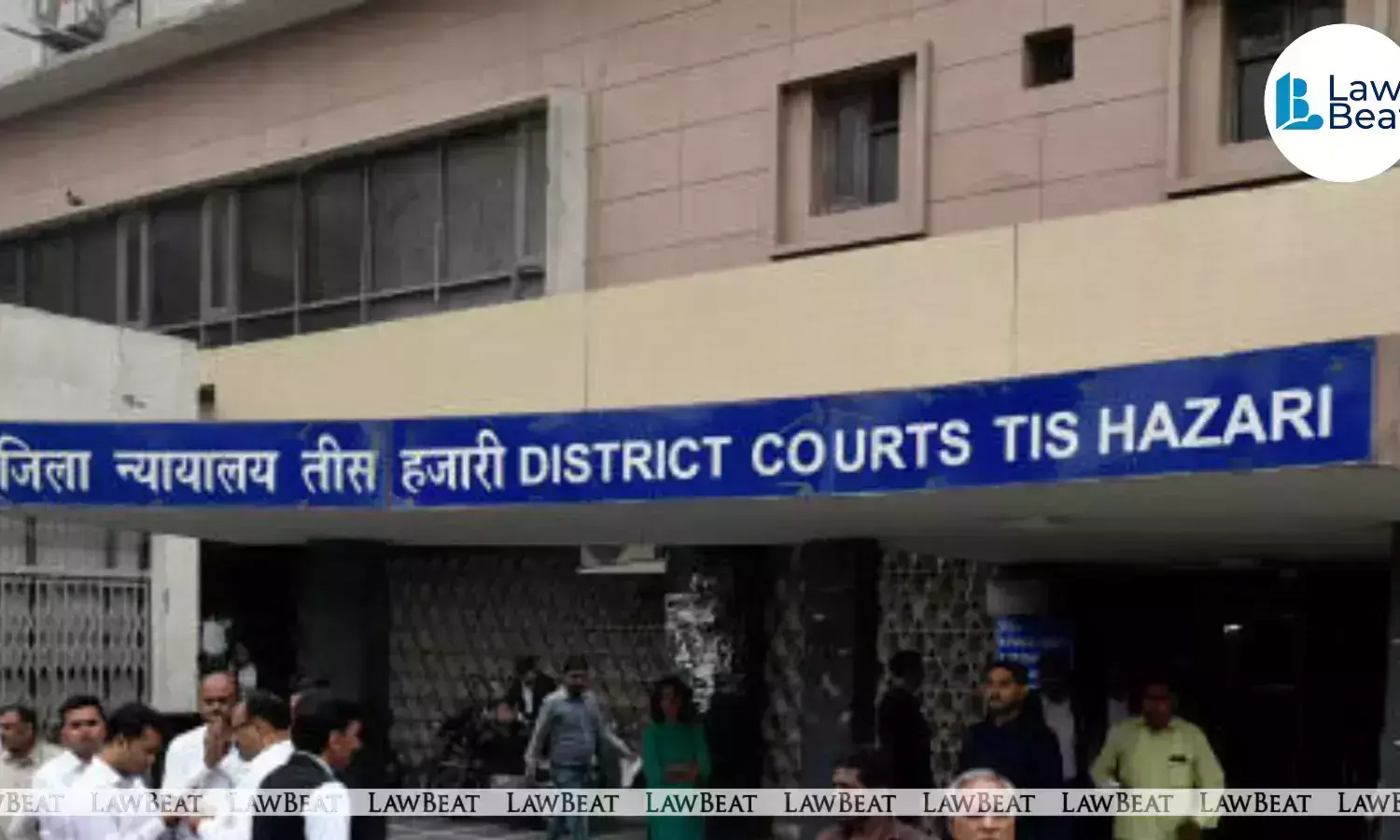
Additional Sessions Judge Yadvender Singh of the West District, Tis Hazari Courts , held that the prosecution failed to prove Sartaj's guilt beyond reasonable doubt and found several contradictions and investigative lapses in the prosecution case.
Sartaj was facing trial under Sections 326B, 354, 506, 509, 294 and 298 of the IPC in connection with an FIR registered at Ranhola Police Station in 2017.
The allegations included an attempted acid attack, assault, criminal intimidation, insulting the woman's modesty, obscene acts and words allegedly intended to wound religious feelings.
Why Was Hafij Sartaj Acquitted?
The Court identified several "major lacunas" in the prosecution evidence. The Court noted that although the prosecution case placed the alleged incident on May 12, 2017, the FIR was registered only on May 14, 2017 at 11 PM.
The complainant stated that police called on the date of the incident, but the Court found that the delay in lodging the complaint was not properly explained.
The Court also noted uncertainty about the date. The complainant said she did not remember the exact date, while another alleged eyewitness was confused about whether the incident occurred on May 12 or May 14. Further, the FIR and tehrir did not mention the date and time of occurrence.
Complainant made several improvements in her testimony
The Court found that several allegations made by the complainant during her testimony were absent from her original complaint or her statement under Section 164 CrPC.
For instance, the complainant subsequently alleged that Sartaj had threatened to rape her and abduct her daughters and later threatened to kill her children. The Court noted that these allegations were not contained in her earlier statements.
Similarly, the complainant's versions concerning the alleged assault and the manner in which the accused allegedly threw acid differed at different stages of the proceedings.
The Court held that these unexplained improvements created doubts regarding her testimony.
No physical evidence supporting the alleged acid attack
The prosecution alleged that Sartaj attempted to throw acid at the complainant and that some acid fell on her saree, burning it.
However, the Court noted that the allegedly burnt saree was never seized, there wass no broken bottle or acid residue was recovered from the spot and no earth sample was collected.
It further noted that no photographs showing acid stains were taken and the investigating officer did not investigate the alleged source of the acid bottle.
The Court also noted that the complainant herself said she had thrown the saree into the garbage.
The accounts of the alleged eyewitnesses regarding how the acid was thrown were also found to be contradictory.
CCTV footage was not collected
The Court noted that witnesses had indicated the presence of CCTV cameras near the place of occurrence. One witness stated that she had asked police to check the CCTV camera installed in the neighbourhood.
However, the investigating officer stated that no CCTV footage was found.
The Court observed that the alleged availability of CCTV footage, coupled with the failure to obtain it, created further doubt regarding the prosecution version.
One alleged eyewitness turned hostile
The Court also noted that PW-5 Babita, described as an eyewitness, did not support the prosecution case and turned hostile.
There were also discrepancies concerning whether statements of certain other witnesses had actually been recorded by the police.
The Court further observed that although the complaint bore the signatures of 28 persons, only six were examined by the investigating officer and prosecution.
The Court found no explanation for why the others were not examined, particularly given the delay and uncertainty surrounding the FIR.
What Did The Court Say About 'Tum Hindu Log Ghar Khali Karo...'?
The alleged statement formed the basis of the Section 298 IPC charge concerning deliberate wounding of religious feelings.
The Court held that this charge could not be sustained independently when the other allegations themselves were found doubtful.
Importantly, the Court observed that no other alleged eyewitness testified to hearing the accused utter those words or otherwise described any act by him showing a deliberate intention to wound the complainant's religious feelings.
It observed that Section 298 concerns religious feelings of an individual, whereas Section 295A concerns deliberate and malicious acts intended to outrage the religious feelings of a class of persons.
According to the Court, the alleged words :“Tum Hindu log apne gharon ko khaali karo, yahan Musalman rahenge”, were directed at the entire class of Hindus rather than merely the complainant as an individual.
The Court therefore held that, on the facts alleged, the ingredients of Section 295A IPC were attracted rather than Section 298 IPC.
It further noted the requirement of prior governmental sanction for cognizance of an offence under Section 295A IPC under Section 196 CrPC.
Court Notes Local Dispute Over Mosque
Another factor considered by the Court was the evidence concerning an existing dispute over the mosque in the locality.
The Court noted that PW-5 and PW-7 admitted during cross-examination that Hindu residents of the locality wanted the mosque to be shifted elsewhere.
Against the backdrop of the unexplained delay in the FIR, uncertainty regarding the date and time of the incident, contradictions among prosecution witnesses and other investigative lapses, the Court said the possibility of a “concocted prosecution story” could not be ruled out.
Ultimately, the Court held that the prosecution case “does not inspire the confidence of this Court” and that the prosecution had failed to prove Sartaj's guilt beyond reasonable doubt.
It concluded that the prosecution had failed to establish all the ingredients of the offences under Sections 326B, 354, 506, 509, 294 and 298 IPC and consequently acquitted Hafij Sartaj of all charges.
Next Story