
Wife's Demand For Separate Residence Without Reason Amounts To Cruelty: Kerala High Court Grants Divorce
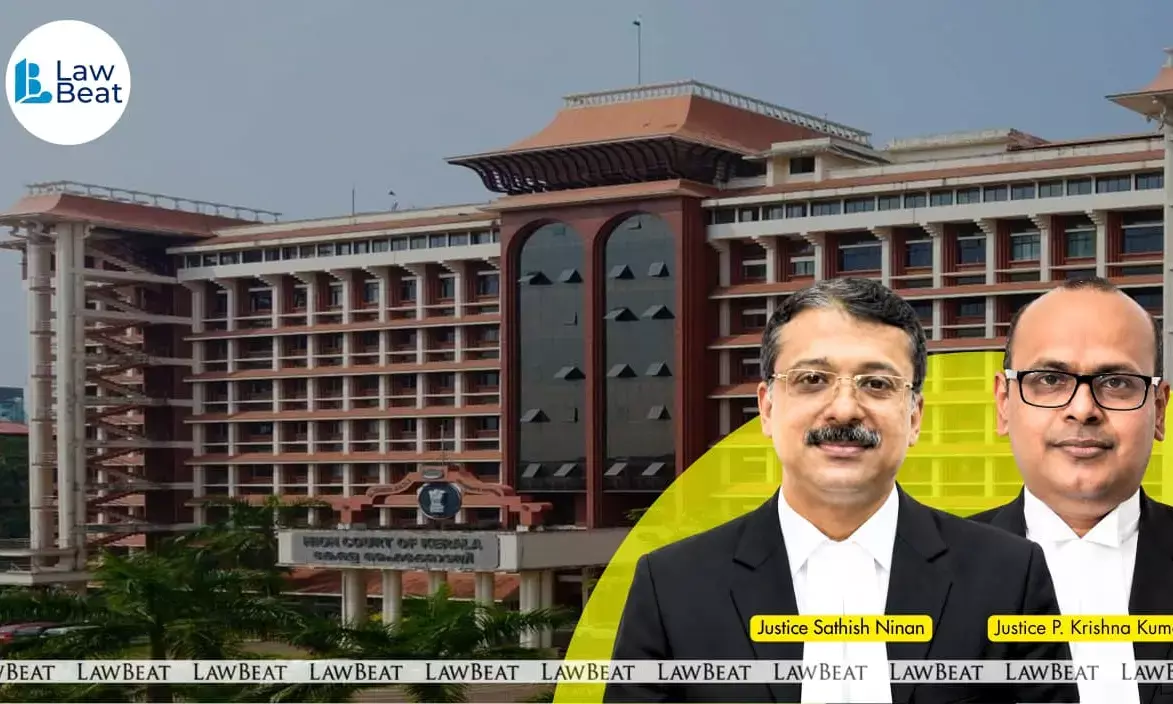
Kerala High Court Overturns Family Court, Grants Divorce Citing Wife's Unjustified Refusal To Return To Matrimonial Home
The Kerala High Court has recently granted a decree of divorce to a Dubai-based electrical engineer, holding that his wife's refusal to rejoin him unless he moved out of his parents' house, coupled with her prolonged separation from him, amounted to matrimonial cruelty.
A division bench of Justice Sathish Ninan and Justice P. Krishna Kumar set aside a Family Court, Kannur order dismissing the husband's divorce petition, and allowed his appeal, dissolving the marriage under Section 13(1)(ia) of the Hindu Marriage Act, 1956.
The couple married in May 2015 and moved to Dubai, where the husband worked and where his parents also lived with them. In June 2016, during the seventh month of her pregnancy, the wife returned to Kerala, and she gave birth to a daughter two months later. According to the husband, she never came back to Dubai despite repeated requests, insisting she would return only if he arranged a separate two-bedroom flat and agreed not to live with his parents. He said communication after this was routed through her brother, since she would not speak to him directly.
The wife denied ever placing such conditions or ill-treating her husband. She claimed she was always willing to resume married life, and that the only real friction stemmed from interference by her mother-in-law. The Family Court accepted this version, holding there was no serious dispute beyond the mother-in-law's interference, and dismissed the petition.
On appeal, the High Court took a different view after examining recorded telephone conversations produced by the husband, one between the wife and his father, and another between the husband and the wife's brother. During cross-examination, the wife admitted that a compact disc played in court did contain her genuine conversation with her father-in-law, in which she had repeatedly denied that either her father-in-law or her own parents had said anything against the husband, and denied that any problem existed between the two families. She also did not dispute the authenticity of the recorded conversation between the husband and her brother, in which the twin conditions for her return were allegedly conveyed.
The bench observed that this admitted conversation directly contradicted her later stand that she had suffered cruelty at the hands of her husband and mother-in-law. It noted that an attempt made during her re-examination to explain away those statements, as having been made only to avoid a divorce, was "too feeble to merit acceptance." The court also recorded that the wife's brother, despite being served summons to prove the conversation, did not turn up to depose, strengthening the husband's version of events.
"A demand for a separate residence away from the husband's family, without sufficient reason, by itself constitutes an act of cruelty," the bench held, adding that the wife's admission rendered her claim of ill-treatment improbable, leaving her demand without valid justification.
The court further invoked the principle that prolonged, unjustified desertion can itself amount to mental cruelty, citing the Allahabad High Court's ruling in Deepak Bose v. Shrabonee Bose. It noted that the couple had been living apart for at least nine years, a fact the Family Court had failed to weigh while deciding the case.
"None of the above aspects was taken note of by the trial court, and it consequently arrived at an erroneous conclusion, which is liable to be set aside," the bench recorded, before allowing the appeal and dissolving the marriage, with no order as to costs.
The judgment also noted a rift between the two families over the child's naming ceremony, fixed without consulting the husband, and the wife's lack of cooperation in arranging the child's visa. The husband had earlier filed a separate petition seeking restitution of conjugal rights, but withdrew it once he concluded the differences could not be resolved through mediation.
The husband was represented by Advocate C. Leena, while the wife was represented by Advocate T.V. Jayakumar Namboodiri.
Case Title: Nimeesh Kunhiraman vs. Rathna Dehannath Kottarath
Date of Judgment: July 29, 2026
Bench: Justice Sathish Ninan and Justice P. Krishna Kumar