
Wife’s Earning Not Ground to Deny Maintenance: Gujarat HC reiterates
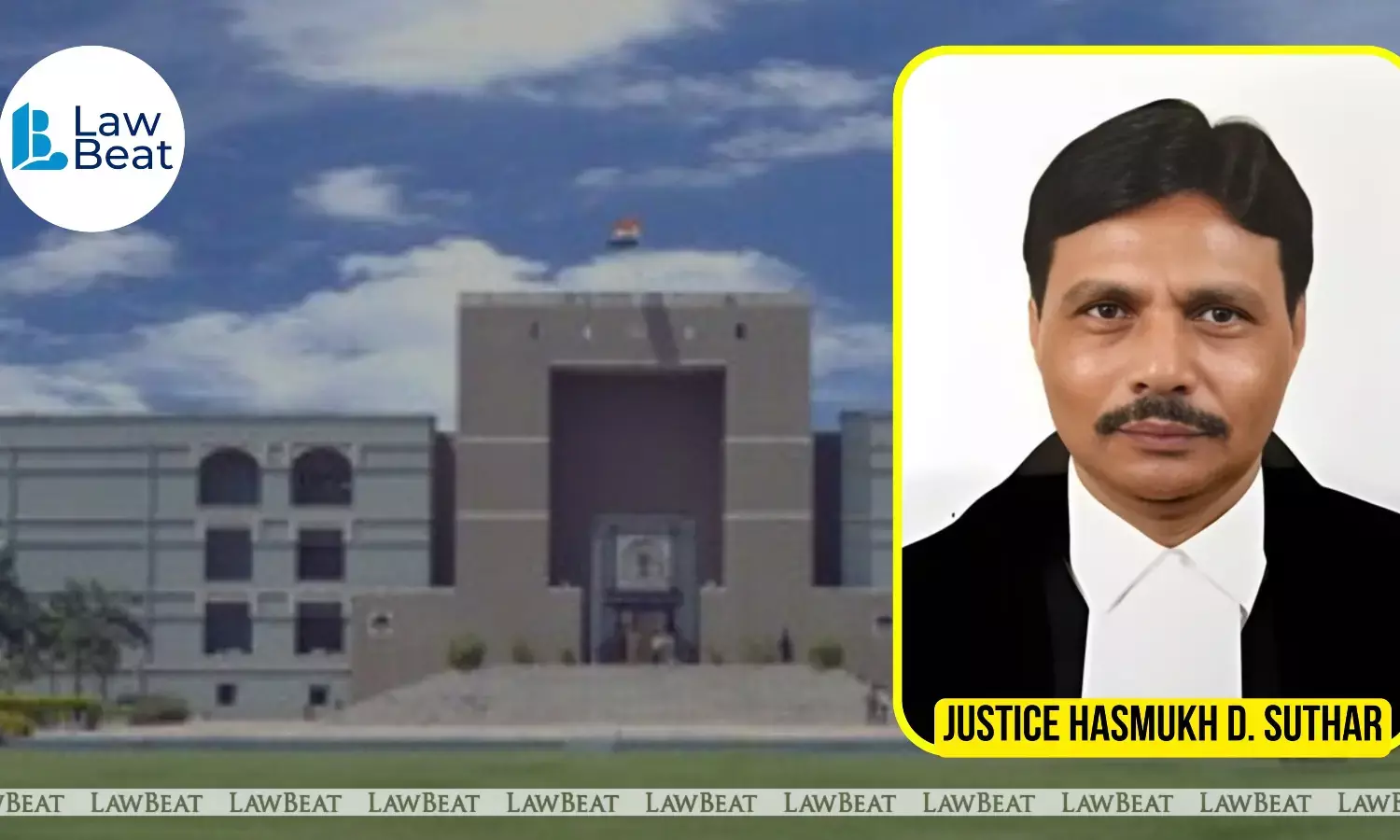
Gujarat High Court holds that a wife’s earning alone cannot deny maintenance, upholding enhancement based on the husband’s increased income and continuing obligation to maintain
The Gujarat High Court has upheld an order enhancing maintenance payable to a wife, reiterating that a woman’s earning capacity or occasional income cannot be the sole ground to deny or reduce maintenance, and emphasizing that the husband’s obligation to maintain his wife is both a legal and social duty rooted in the principle of social justice.
Justice Hasmukh D. Suthar, while dismissing a criminal revision application filed by the husband, affirmed the Family Court’s order enhancing maintenance from Rs.5,000 to Rs.15,000 per month, holding that no patent error or perversity was made out warranting interference in revisional jurisdiction and that the Family Court had correctly appreciated the evidence and applied settled principles of law.
The case arose from proceedings initiated by the wife under Section 127 of the Code of Criminal Procedure seeking enhancement of maintenance, where she asserted that the husband’s income had increased significantly and that she was unable to maintain herself.
The Family Court, upon considering oral and documentary evidence, partly allowed the application and enhanced maintenance to Rs.15,000 per month from the date of application.
Challenging this order, the husband contended that the Family Court had erred in appreciating the evidence and had granted an excessive and unjustified amount.
It was argued that the wife had suppressed material facts regarding her independent income and was engaged in tailoring work earning approximately Rs.15,000 per month.
The husband further submitted that he had significant financial obligations, including maintaining his parents, paying rent, and servicing loans, which had not been properly considered.
It was also argued that the earlier maintenance order had been passed after due consideration of prevailing circumstances and there was no sufficient change warranting enhancement.
The respondents, opposing the revision, submitted that the Family Court had rightly assessed the financial position of the parties and that the allegations regarding the wife’s independent income were unsubstantiated and unsupported by evidence.
It was contended that the wife had no sufficient means to maintain herself and that the husband had neglected his obligation to provide maintenance.
The respondents emphasized that the quantum awarded was reasonable and commensurate with the husband’s income and the standard of living enjoyed during the marriage. It was further argued that the proceedings under Section 127 CrPC are specifically meant to address changes in circumstances, and the increase in the husband’s salary justified enhancement of maintenance.
The Court, after hearing both sides, observed that the wife’s inability to maintain herself remains the foundational requirement for grant of maintenance, and that mere earning by the wife does not disentitle her from claiming maintenance.
Relying on the Supreme Court’s decision in Sunita Kachwaha v. Anil Kachwaha, the Court reiterated that even if a wife is earning or qualified, it does not automatically negate her entitlement to maintenance if she is unable to sustain herself in a manner commensurate with the marital standard of living.
The Court further underscored that maintenance provisions are intended to achieve social justice and protect economically vulnerable spouses, particularly women who may be left without adequate means of sustenance. It observed that the husband cannot evade his responsibility on the ground of the wife’s alleged income, especially when such claims are not substantiated by cogent evidence.
Referring to the decision in Bhuwan Mohan Singh v. Meena, the Court reiterated that it is the legal and moral duty of the husband to maintain his wife and ensure that she enjoys a standard of living similar to that during the subsistence of marriage.
The Court emphasized that maintenance is not merely a statutory obligation but also a recognition of social and constitutional values.
On the issue of enhancement under Section 127 CrPC, the Court held that a change in circumstances, particularly an increase in the husband’s income, is a valid ground for modification of maintenance.
In the present case, the Court noted that the husband’s salary had increased substantially over time and that he did not have significant additional liabilities that would justify denial of enhanced maintenance.
The Court also observed that his family members were financially independent, thereby reducing the burden claimed by him.
The Court also referred to precedents including Bhagwan Dutt v. Kamla Devi and Lalita Toppo v. State of Jharkhand, noting that maintenance provisions must be interpreted in a manner that balances the needs of the wife with the financial capacity of the husband, and that such relief must be adequate and realistic.
Conclusively, the Court held that the Family Court had exercised its jurisdiction properly and had assigned cogent reasons for enhancing maintenance. It added that no ground was made out for interference under revisional jurisdiction, particularly in light of the limited scope of such jurisdiction as laid down in Amit Kapoor v. Ramesh Chander.
The revision application was accordingly dismissed.
Case Title: Lalitkumar Jivrajbhai Vaghela v. State of Gujarat & Anr.
Bench: Justice Hasmukh D. Suthar
Date of Judgment: 17.03.2026