
Will DGCA Extend Fatigue Norm Exemption to IndiGo? Madras High Court Seeks Clarification
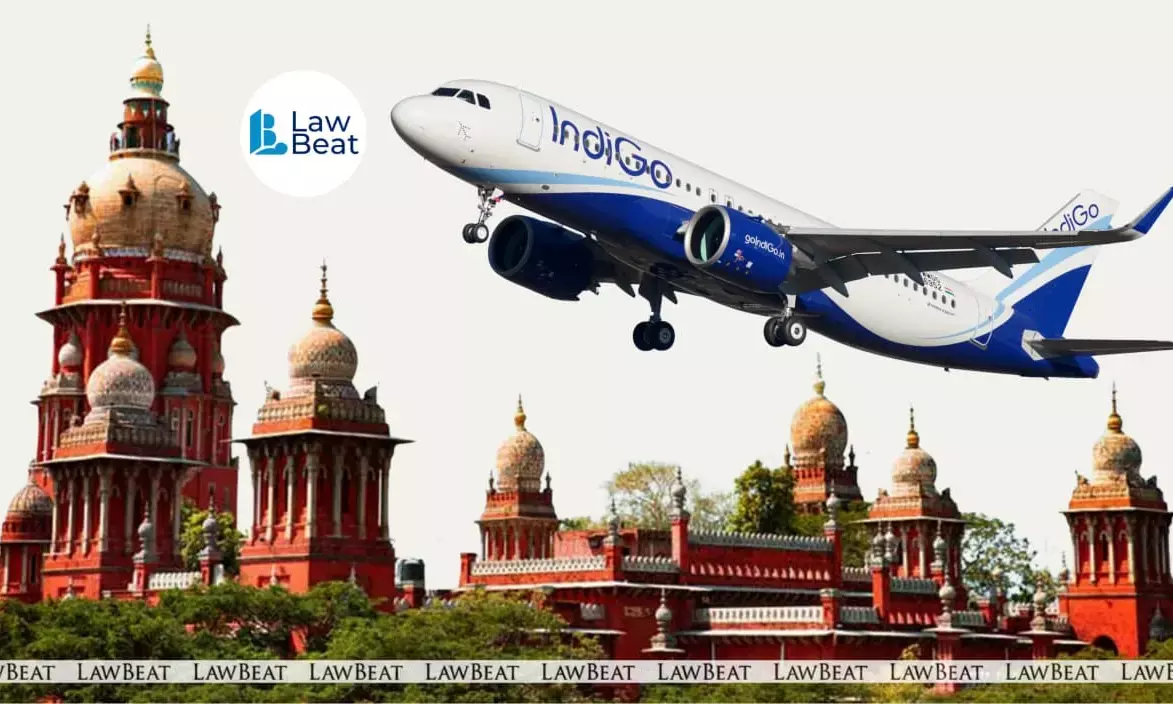
Madras High Court orders DGCA to clarify IndiGo pilot fatigue safety exemption
The Madras High Court has asked the Director General of Civil Aviation (DGCA) to clarify whether it intends to extend the exemption granted to IndiGo from complying with key fatigue-management norms, while admitting a plea challenging the regulator’s decision to relax mandatory Civil Aviation Requirements governing pilot duty and rest periods.
A writ petition, filed by Y.R. Rajaveni, questions the legality of the DGCA’s order dated December 5, 2025, by which the regulator granted InterGlobe Aviation Limited, the operator of IndiGo airlines, additional time to comply with specific provisions of the Civil Aviation Requirements (CAR).
These provisions, contained in Paragraphs 3.11 and 6.14 of the CAR, relate to operational and regulatory obligations applicable to a particular class of aircraft operated by the airline. The provisions outline fatigue-management and flight duty limitations for flight crews, including restrictions on night operations, maximum flight duty periods, and minimum rest requirements between duties. These norms, which are part of the revised CAR framework notified in 2024, are intended to align India’s flight crew safety standards more closely with international benchmarks.
Compliance with the revised norms earlier this winter coincided with widespread operational disruption at IndiGo, India’s largest carrier. Reportedly, the airline cancelled thousands of flights in early December 2025 after it struggled to meet the more stringent duty-time and rest requirements, particularly caps on night landings and weekly rest hours.
Against this backdrop, the DGCA issued an exemption on December 5, 2025, relieving IndiGo from complying with the specific CAR provisions for a defined class of aircraft. The regulator described the measure as a temporary step to stabilise airline operations and mitigate large-scale flight cancellations.
Before the high court, the petitioner's counsel argued that the DGCA’s action went beyond regulatory discretion and effectively rewrote statutory safety mandates without authority from the parent legislation. According to the petitioner, Rule 133A of the Aircraft Rules empowers the DGCA to issue exemptions, but only to the extent consistent with the Aircraft Act and not in a way that undermines the statute’s core safety objectives.
During the hearing, the Additional Solicitor General representing the DGCA defended the exemption, telling the court that the regulator was working with the airline to ensure eventual compliance. The ASG also pointed out that the safeguards under other CAR clauses remained in force to protect crew and passenger safety.
The bench of Justice V. Lakshminarayanan noted the submissions and issued a Rule Nisi, asking the DGCA to justify the exemption and its exercise of power.
Crucially, court directed the DGCA to file a counter affidavit by January 5, 2026, specifically stating whether it proposes to extend the exemption granted on December 5 for any further period.
Court also observed that Rajaveni’s request for interim relief, including a stay on the exemption’s operation, would be considered only after hearing the second respondent, IndiGo, which has been impleaded in the case but has not yet entered appearance.
The matter has been listed for further hearing on January 6, 2026.
Case Title: Y.R.Rajaveni vs. Director General Of Civil Aviation and connected matters
Order Date: December 26, 2025
Bench: Justice V. Lakshminarayanan