
Arbitral Award Unsupported by Any Evidence May Warrant Interference, Supreme Court Clarifies
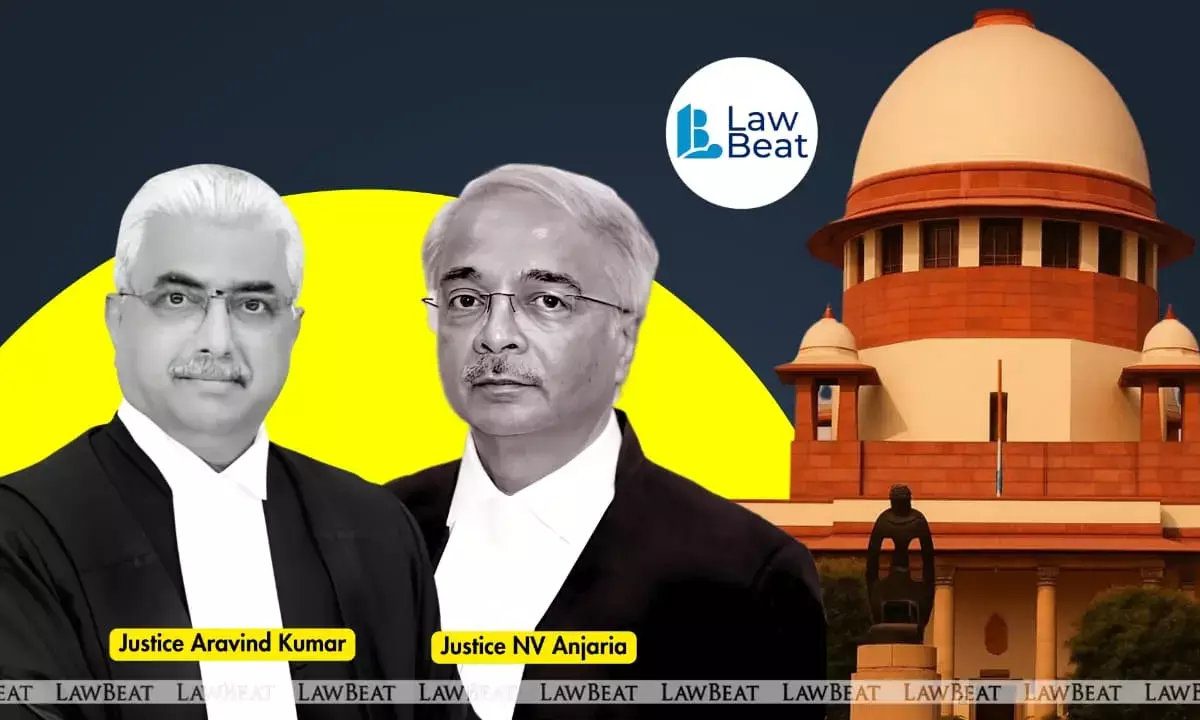
Supreme Court clarifies patent illegality and evidence standards for arbitral award
The Supreme Court of India has held that if a crucial finding in an arbitral award is unsupported by any evidence, or if the arbitrator has ignored vital evidence placed on record, it may justify interference with the award.
At the same time, the court cautioned that this test must be applied carefully. A bench of Justices Aravind Kumar and N V Anjaria clarified that “no evidence” means a complete absence of relevant material, and not merely weak or insufficient evidence.
The bench said that if there is some evidence on record, even the testimony of a single witness or a set of documents, on which the arbitrator has relied to reach a conclusion, the court cannot label the finding as patently illegal simply because the evidence carries limited probative value. According to the court, this fine line is crossed only when the arbitral tribunal’s conclusion cannot be reconciled with any reasonable view of the evidence.
The court further explained that where a contract is silent on a legitimate claim that naturally flows from the contractual obligations of the parties, the arbitrator is within his authority to interpret the contract using settled principles of contractual law and apply equity to address such a situation.
Explaining the scope of “patent illegality,” the bench said the expression covers situations where the arbitrator’s findings shock the judicial conscience, where irrelevant matters are considered, or where vital issues are ignored, resulting in an unjust outcome. It also includes cases where the decision is so irrational that no reasonable person would arrive at such a conclusion on the same facts. A classic example, the court said, is when an award is based on “no evidence,” as arbitrators cannot conjure facts or figures out of thin air.
Referring to Section 70 of the Indian Contract Act, 1872, the bench noted that the provision creates a statutory right independent of any contract, commonly described as a quantum meruit or unjust enrichment remedy. It applies where one party confers a benefit on another without intending to do so gratuitously and outside the scope of a contract. In such circumstances, the party receiving the benefit is bound to compensate the other, and courts, including arbitral tribunals, are empowered to award such compensation if the conditions under Section 70 are satisfied.
The court was dealing with an appeal filed by Ramesh Kumar Jain against a May 3, 2023 judgment of the Chhattisgarh High Court, which had set aside a 2017 order of the Commercial Court. The Commercial Court had earlier upheld an arbitral award dated July 15, 2012, passed by a sole arbitrator, granting Rs 3.71 crore along with statutory interest to the appellant.
The Supreme Court examined whether the High Court was justified in interfering with the arbitral award under Section 37 of the Arbitration and Conciliation Act, 1996, on the ground of patent illegality.
As per the facts, the respondent, Bharat Aluminum Company Limited, had invited tenders for mining and transporting 3.70 lakh metric tonnes of bauxite from the Mainpat mines to its Korba alumina plant. The appellant submitted the lowest bid at Rs 697 per metric tonne. Following negotiations, the parties entered into an agreement in 1999 for mining and transporting 2.22 lakh metric tonnes of bauxite at a revised rate of Rs 634.20 per metric tonne.
The appellant carried out the work until 2002, after which disputes arose over payment for additional work performed. This led to invocation of the arbitration clause. After hearing both sides, the sole arbitrator passed an award in 2012 in favour of the appellant.
The respondent challenged the award under Section 34 of the Arbitration and Conciliation Act before the Commercial Court, which declined to interfere and upheld the award. However, the High Court, exercising appellate jurisdiction, overturned both the Commercial Court’s order and the arbitral award.
After hearing the parties, the Supreme Court observed that the 1996 Act aims to provide a speedy, cost-effective and efficient dispute resolution mechanism, with minimal judicial interference. It reiterated that court intervention is limited to statutorily prescribed remedies under Sections 34 and 37 of the Act.
The bench noted that interference is permitted only when an award is contrary to public policy, violates the fundamental policy of Indian law, or offends basic notions of morality or justice. It reiterated that courts hearing challenges under Section 34 do not sit in appeal over arbitral awards and are not expected to reassess the correctness or reasonableness of factual or legal findings unless the statutory grounds are clearly made out.
The court also referred to the 2015 amendment to the Act, which introduced Section 34(2A), formally recognising patent illegality as a ground to set aside domestic arbitral awards. It explained that ignoring binding precedents or clear contractual prohibitions could amount to patent illegality, as could findings based on no evidence. However, where some evidence exists and a plausible inference has been drawn, courts should ordinarily refrain from substituting their own views for those of the arbitrator.
Applying these principles to the present case, the bench observed that the appellant’s claims were not accepted blindly by the arbitrator but were assessed on the basis of evidence. It held that the arbitral award did not reflect any arbitrary exercise of power or findings based on lack of evidence that would attract the ground of patent illegality.
In conclusion, the court held that the High Court had examined the award using a stricter standard of proof than arbitration law requires and had interfered in a matter that fell within the normal bounds of arbitral adjudication.
Case Title: Ramesh Kumar Jain Vs Bharat Aluminum Company Limited (Balco)
Bench: Justices Aravind Kumar and N V Anjaria