
Article 136: SC Says High Court Interim Orders Warrant No Interference Unless Perverse Or Patently Illegal
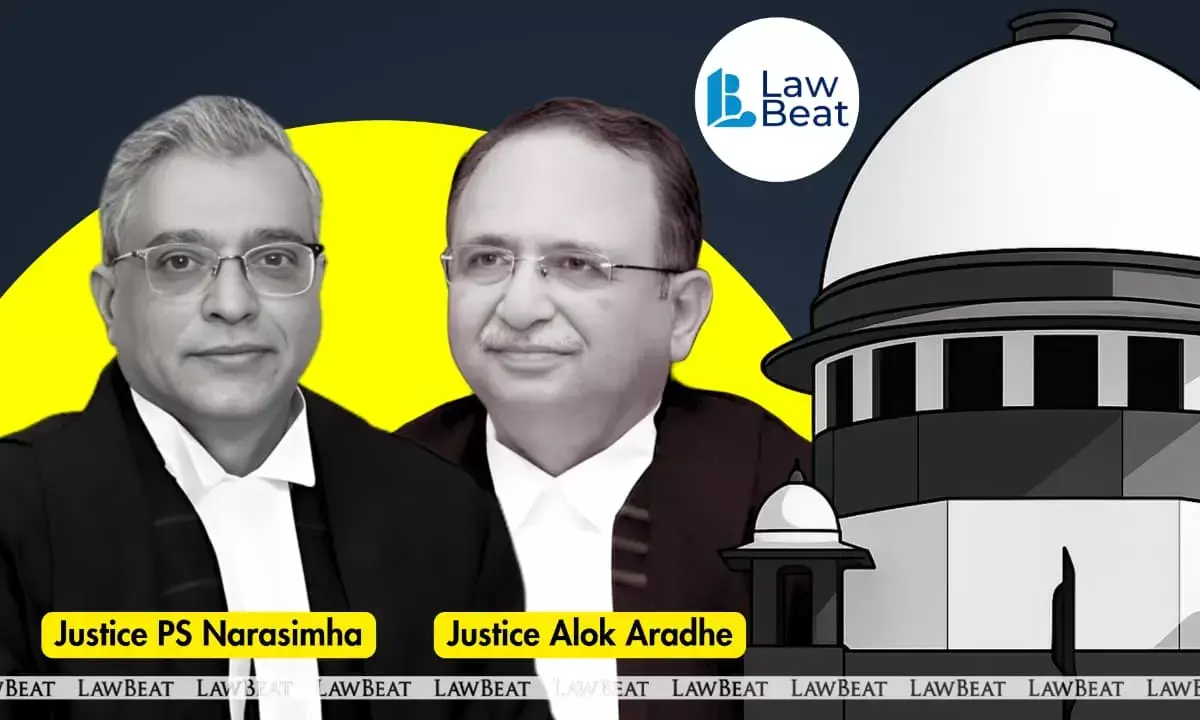
Supreme Court allows scrutiny of alleged unauthorised power supply.
The Supreme Court recently refused to interfere with an interim order of the Jharkhand High Court that allowed Energy Watchdog, a third party to an agreement between M/s Amalgam Steels and Power Ltd and Jharkhand Bijli Vitran Nigam Ltd (JBVNL), to participate in an inquiry into the alleged unauthorised supply of electricity.
A Bench of Justices P S Narasimha and Alok Aradhe held that the high court had adopted the measure in the peculiar facts of the case to ensure that all relevant facts were brought before JBVNL before it took a decision. The interim direction could not be termed perverse or patently illegal and, therefore, did not warrant interference under Article 136 of the Constitution, Court held.
What led to the dispute between Amalgam Steels and Energy Watchdog?
Amalgam Steels had entered into an agreement with JBVNL in 2012 for the supply of surplus power from its captive power plant. The agreement was subsequently renewed in 2017 and 2023.
In 2024, Energy Watchdog complained to the Additional Chief Secretary, Department of Energy, Government of Jharkhand, alleging that the power generated from the captive power generation unit was being used without maintaining a valid 'captive user' status as required under Rule 3 of the Electricity Rules, 2005.
Energy Watchdog sought action against the petitioners under Section 135 of the Electricity Act, 2003. According to the complaint, the Jharkhand government and JBVNL thereafter initiated a fact-finding inquiry into the allegations.
Energy Watchdog subsequently filed a Public Interest Litigation (PIL) before the Jharkhand High Court, seeking a declaration that the supply of electricity without Open Access Approval and without fulfilling the statutory conditions for captive status under the Electricity Act and the Rules was illegal and unauthorised.
It also sought directions to the State authorities to conduct a detailed investigation into the alleged unauthorised power supply and recover the loss allegedly caused to the state utility due to the illegal sale of electricity.
During the proceedings, JBVNL issued demand notices to the petitioners seeking payment of cross-subsidy surcharge of Rs 176.74 crore from petitioner no. 1 and Rs 108.17 crore from petitioner no. 2.
Why did the Jharkhand High Court allow Energy Watchdog to participate?
The Jharkhand High Court, in its interim order dated February 5, 2026, rejected the petitioners' objection to the maintainability of the PIL. It observed that JBVNL's affidavit disclosed, prima facie, some substance in the allegations and that the averments in the PIL were sufficient to reject the objection.
The high court also found it necessary to bring the complete facts to JBVNL's notice through a party other than the petitioners so that the utility could arrive at an appropriate decision.
The Supreme Court noted that JBVNL had already initiated proceedings against the petitioners for alleged violation of the Captive Power Plant (CPP) Agreement. It also noted that Energy Watchdog was not a party to that agreement.
However, the Bench observed that the facts placed before the high court appeared to have created an impression that "all is not well" with the inquiry being conducted by JBVNL. The high court had also considered the circumstances in which no action was taken against the petitioners despite the complaint having been pending for a considerable period.
"In the peculiar facts and circumstances of the case, the high court has found it compelling to adopt an interim measure which, in our opinion, cannot be termed as perverse, warranting any interference at this stage under Article 136 of the Constitution of India," the Supreme Court said.
The Bench therefore declined to interfere with the high court's interim direction.
What did the Supreme Court say about the Electricity Act and third-party intervention?
The Supreme Court emphasised that the Electricity Act, 2003 is a comprehensive and self-contained statutory framework governing matters concerning the electricity sector.
Referring to the Constitution Bench judgment in PTC India Ltd. v. Central Electricity Regulatory Commission (2010), the Bench noted that the Electricity Act is an exhaustive code for matters concerning electricity.
Court also referred to its 2026 judgment in Southern Power Distribution Company of Andhra Pradesh Ltd & Anr. v. Green Infra Wind Solutions Ltd & Ors., which reiterated that following the unbundling of the electricity sector and the constitution of Central and State Regulatory Commissions, there is no unallocated regulatory residue outside the regulatory bodies.
The Bench said the high court would have to consider this regulatory framework before passing its final order, including the scope of third-party intervention in proceedings arising under the Electricity Act.
Court also referred to Section 94(3) of the Electricity Act, which empowers the appropriate Commission to authorise any person it considers fit to represent the interests of consumers in proceedings before it. Such a provision, Court noted, ensures transparency and accountability in the regulatory process.
The Supreme Court said JBVNL should take its own decision on the basis of the material placed before it by Energy Watchdog, after due deliberation and caution.
It clarified that the direction for an oral hearing should not be treated as converting JBVNL's proceedings into those of a court or tribunal, but only as a means of collecting information to enable it to take necessary action.
Disposing of the plea, the Supreme Court clarified that it had not expressed any opinion on the merits of the matter. It said that at the time of final hearing, the high court would consider all aspects of the case, including the scope and ambit of third-party intervention under the Electricity Act.
Case Title: M/s Amalgam Steels and Power Ltd And Anr Vs Energy Watchdog And Ors
Bench: Justices P S Narasimha and Alok Aradhe
Date of Judgment: September 3, 2026