
'Bail Is Rule, Jail Exception' Cannot Be Applied In Isolation in Murder Cases: Supreme Court
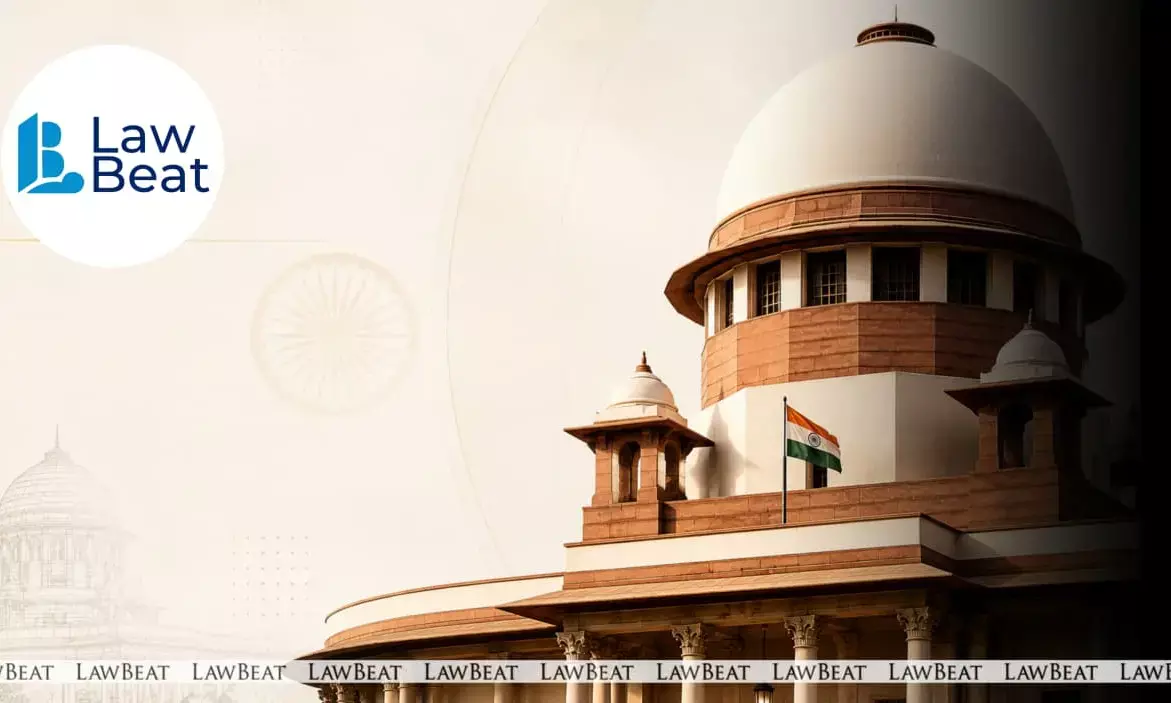
Supreme Court says courts must balance the "bail is the rule" principle with statutory restrictions.
The Supreme Court has said that in serious offences such as murder and criminal conspiracy, where Section 437(1) of the Code of Criminal Procedure [now outlined under Section 480(1) of the Bharatiya Nagarik Suraksha Sanhita (BNSS)] bars the grant of bail if there are reasonable grounds to believe that the accused has committed an offence punishable with death or life imprisonment, courts cannot apply the principle that "bail is the rule and jail is the exception" in isolation.
Holding that the principle is a guiding rule rather than an absolute one, Court refused bail to four accused in a Jammu murder case while granting relief to two elderly co-accused on account of their age and other circumstances.
A Bench of Justices Dipankar Datta and Satish Chandra Sharma held that while "bail is the rule and jail is an exception" remains a cardinal principle of bail jurisprudence, it must be applied alongside the facts of each case and any statutory restrictions governing the grant of bail.
Court said the principle must be balanced against factors such as the existence of a prima facie case, the gravity of the offence, the nature of the evidence, the accused's antecedents, differentiation of roles, parity with co-accused, delay in conclusion of trial, age of the accused and medical grounds.
It further emphasised that bail may be refused where the offence is heinous and premeditated, and there exists a grave apprehension of witnesses being influenced, evidence being tampered with, or the accused absconding and evading trial.
The observations came while deciding appeals filed by Sheikh Mehmood and others seeking bail in a murder case arising out of an alleged land dispute in Jammu.
According to the prosecution, on April 30, 2024, complainant Jagir Singh lodged a complaint at Police Station Gangyal, Jammu, alleging that several persons had attempted to dispossess his brother, Balbir Singh, of a 33-marla parcel of land in the Greater Kailash (Chowadi) area with the intention of grabbing it.
It was alleged that Parshottam Singh, Ravinder Kumar Gupta, Rakshat, Sheikh Mehmood and others, along with their associates, attacked Balbir Singh and his son. An FIR was initially registered under Sections 307, 323, 447 and 147 of the Indian Penal Code, 1860 [now Sections 109, 115(2), 329(3) and 191(2) of the BNS, respectively]. Following the death of Balbir Singh's son, Avtar Singh, the police invoked Sections 302, 506 and 120B of the IPC [now Sections 103, 351, and 61(2) of the BNS, respectively].
All the appellants were arrested on May 3, 2024. During the investigation, a total of 12 accused were arrested.
The chargesheet relies on CCTV footage of the incident, call recordings allegedly exchanged among the accused and statements of several eyewitnesses. The prosecution proposes to examine 44 witnesses.
Senior Advocate Sidharth Luthra, appearing for 73-year-old Sheikh Mehmood, contended that no eyewitness had attributed any role to him and that his presence at the scene was not established by the CCTV footage.
With respect to Ravinder Kumar Gupta alias Gola Shah, it was argued that neither he nor his son had entered the disputed plot during the incident and that neither appeared in any of the videos relied upon by the prosecution. It was further submitted that, given his advanced age, incarceration since May 3, 2024 and the fact that the allegations against him were confined to conspiracy, he deserved to be released on bail.
After hearing the parties, the Bench observed that, at this stage, it could not be said that there was no overt act leading to the homicidal death, no material linking the death to the alleged conspiracy or no shared intention among the accused.
"Rejection of the prayers for bail of the appealing accused should follow as a matter of course," Court said.
However, the Bench found that Sheikh Mehmood and Ravinder Kumar Gupta stood on a different footing. It noted that both were septuagenarians, one required regular medical care owing to poor health, while the evidence against the other was, to a certain extent, prevaricating and inconsistent.
Bearing these circumstances in mind, court directed that Sheikh Mehmood and Ravinder Kumar Gupta be released on bail upon furnishing bail bonds to the satisfaction of the trial court and subject to such conditions as may be imposed to ensure an unhindered trial.
The bail pleas of Parshottam Singh, Suraj Singh, Vikas Singh and Sandeep Charak were rejected at this stage.
At the same time, the Bench encouraged the Sessions Judge to expedite the trial by rescheduling witness examination, in his discretion, so that the evidence of all prosecution witnesses is recorded by the end of March 2027. It observed that thereafter, Parshottam Singh, Suraj Singh, Vikas Singh and Sandeep Charak would be at liberty to renew their bail pleas before the appropriate court.
Case Title: Sheikh Mehmood Vs Union Territory of Jammu And Kashmir & Ors
Bench: Justices Dipankar Datta and Satish Chandra Sharma
Date of Judgment: June 01, 2026