
'Brevity Can’t Replace Completeness': Supreme Court on Court Orders
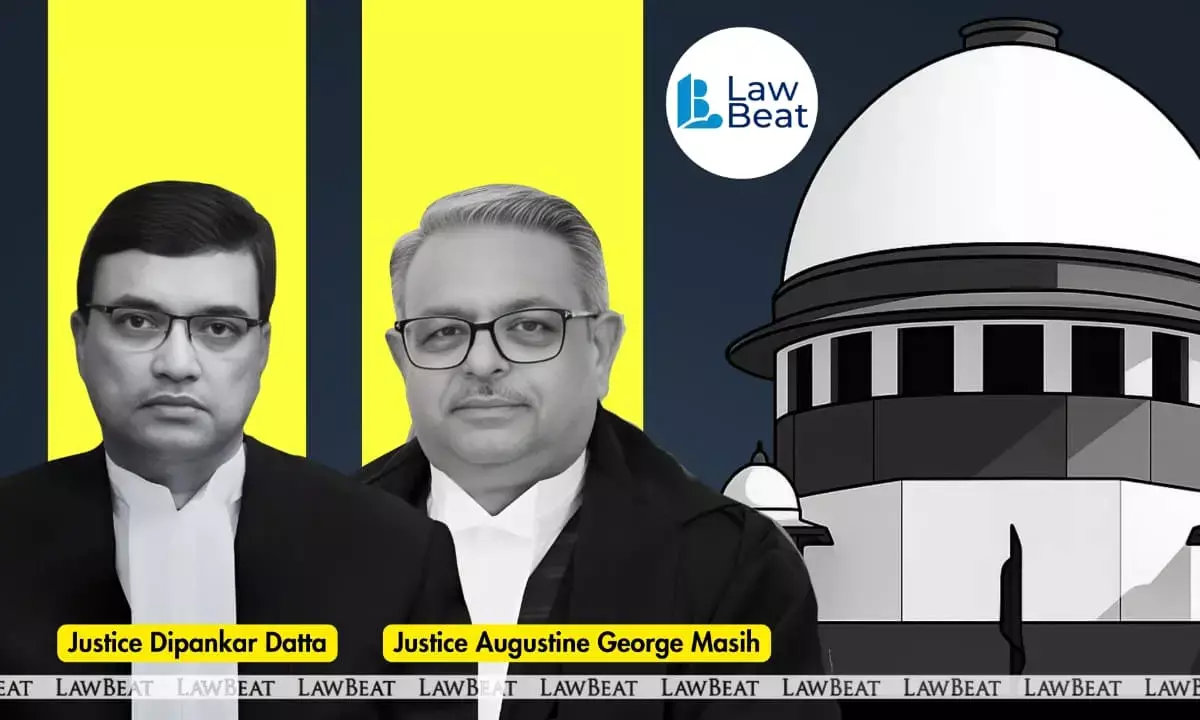
Supreme Court criticises the Allahabad High Court for dismissing a writ petition without adequate reasoning, stressing that brevity must not compromise clarity.
The Supreme Court has said that while brevity may aid precision, it cannot come at the cost of completeness, as it allowed an appeal against an Allahabad High Court order that had dismissed a writ petition through a brief and cryptic ruling.
A Bench of Justices Dipankar Datta and Augustine George Masih set aside both the high court’s order dismissing the writ petition and the subsequent order rejecting the review petition.
The Court said it was not satisfied with how the writ petition had been dismissed, noting that the high court neither discussed the facts nor clearly explained how the issues of fact and law in the case were similar to those in another petition it relied upon. It reiterated that while brevity is important, it should not lead to lack of clarity or completeness.
The appellant, Ramesh Chandra Bhagchandaka, through counsel, submitted that the pending writ petition before the Allahabad High Court would not be pressed. Recording this statement, the Supreme Court directed that the high court close the proceedings once it is informed of the order.
Examining the matter, the Supreme Court noted that the high court had dismissed the writ petition on April 27, 2023 through a short order, without assigning independent reasons, and merely referred to the dismissal of another writ petition and the Supreme Court’s refusal to interfere with that earlier case.
It also noted that the appellant’s review petition was dismissed on April 10, 2024. Interestingly, the court observed that the order dismissing the review petition was longer and contained some reasoning, unlike the original order dismissing the writ petition.
The Bench clarified that although an order rejecting a review petition is generally not open to challenge in appeal, the appellant had challenged both orders before it.
Taking exception to the manner in which the writ petition was dismissed, and without expressing any view on the merits of the case, the Supreme Court set aside the April 27, 2023 order and restored the writ petition to the file of the high court.
It requested the high court to decide the matter afresh in accordance with law, without being influenced by its earlier order, and clarified that all questions of fact and law remain open for the parties to argue.
Court also invoked its powers under Article 142 of the Constitution to set aside the April 10, 2024 order dismissing the review petition.
The civil appeals were accordingly disposed of.
Case Title: Ramesh Chandra Bhagchandaka Vs The State of Uttar Pradesh & Ors
Bench: Justices Dipankar Datta and Augustine George Masih
Date of Judgment: February 17, 2026