
Can a Sarpanch Award Contracts to Family? Supreme Court Says Probity Must Prevail
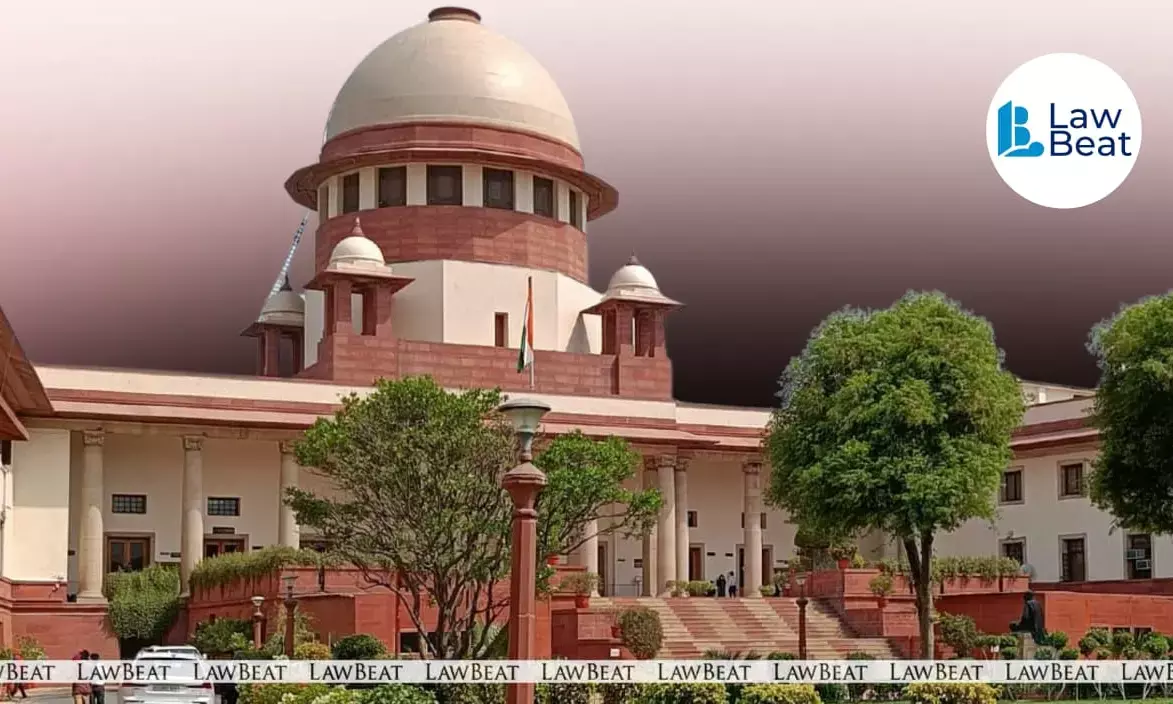
Supreme Court upheld a sarpanch's removal for awarding a panchayat contract to her husband's firm.
The Supreme Court has held that provisions disqualifying panchayat members who have a direct or indirect financial interest in contracts must be interpreted broadly to uphold probity in local governance.
A Bench of Justices Manoj Misra and Vipul M Pancholi said giving an unduly narrow interpretation to such disqualification provisions would defeat the very purpose for which they have been incorporated in the law.
Court dismissed a petition filed by Rekhaben Abhalbhai Bambhaniya against the Gujarat High Court's March 3, 2025 judgment upholding her removal from the post of sarpanch under Section 57(1) of the Gujarat Panchayats Act, 1993.
She was removed mainly on the allegation that contracts were awarded to a firm in which her husband was a partner.
Can a sarpanch award a panchayat contract to a family member?
The petitioner was served with a show cause notice containing six charges of misuse of authority, including awarding a panchayat contract to a firm in which her husband was a partner.
She contended that the contract had been awarded after inviting public tenders and only because the firm's bid was the lowest.
However, the district development officer, after considering her representation, concluded that she had misused her authority and secured a personal benefit for her husband.
Before the Supreme Court, her counsel argued that neither the Gujarat Panchayats Act, 1993 nor the rules framed under it expressly prohibited a sarpanch or panchayat member from awarding a contract to a family member. It was further submitted that the contract was awarded through a transparent public tender process and approved by a panchayat resolution after finding the firm's bid to be the lowest. Therefore, it could not be said that the petitioner had misused her position as sarpanch.
Was there a violation of natural justice?
The petitioner also argued that the district development officer had relied on a report submitted by the taluka development officer without supplying a copy of it to her.
According to her, the report was adverse material and should have been furnished before it was relied upon, so that she could effectively respond to it. Since that was not done, the order removing her was liable to be set aside for violating the principles of natural justice.
The Gujarat High Court rejected this contention, observing that the petitioner had never denied the allegation that the contract had been awarded to her husband's firm. It held that merely because some additional material had been considered, no prejudice had been caused to her.
The high court also observed that the principles of natural justice cannot be applied mechanically. If non-supply of a document causes no prejudice and the decision can be sustained on admitted facts, there is no reason to interfere with the final order.
Why did the Supreme Court uphold the sarpanch's removal?
The respondent relied on Section 30(1)(g) of the Gujarat Panchayats Act, which disqualifies a person from being or continuing as a panchayat member if they directly or indirectly, by themselves or through a partner, have any share or interest in any work done by order of the panchayat or in any contract with or on behalf of the panchayat.
It was also pointed out that a similar provision had been interpreted by the Supreme Court in Virendrasing v. Additional Commissioner (2023). In that case, the Court held that disqualification provisions should not be interpreted narrowly, as their purpose is to maintain purity in public administration.
The Court had then observed, "We believe that probity in such financial transactions should be the rule rather than the exception".
Applying the same principle, the Bench noted that although the petitioner claimed the contract had been awarded through a public tender, there was nothing on record to show any separation between her and her husband.
"In such circumstances, too restrictive an interpretation to the disqualification clause would frustrate the very object for which it is incorporated in the statute," the Bench said.
Court clarified that it was not deciding the issue of disqualification under Section 30. However, considering the admitted facts, it found no reason to interfere with the authorities' conclusion that the petitioner had misused her position as sarpanch by awarding contracts to her own family.
Accordingly, it upheld the Gujarat High Court's judgment and dismissed the appeal.
Case Title: Rekhaben Abhalbhai Bambhaniya Vs The State of Gujarat & Ors
Bench: Justices Manoj Misra and Vipul M Pancholi
Date of Judgment: May 18, 2026