
Can a Waiting List Candidate Claim Appointment? Supreme Court Explains
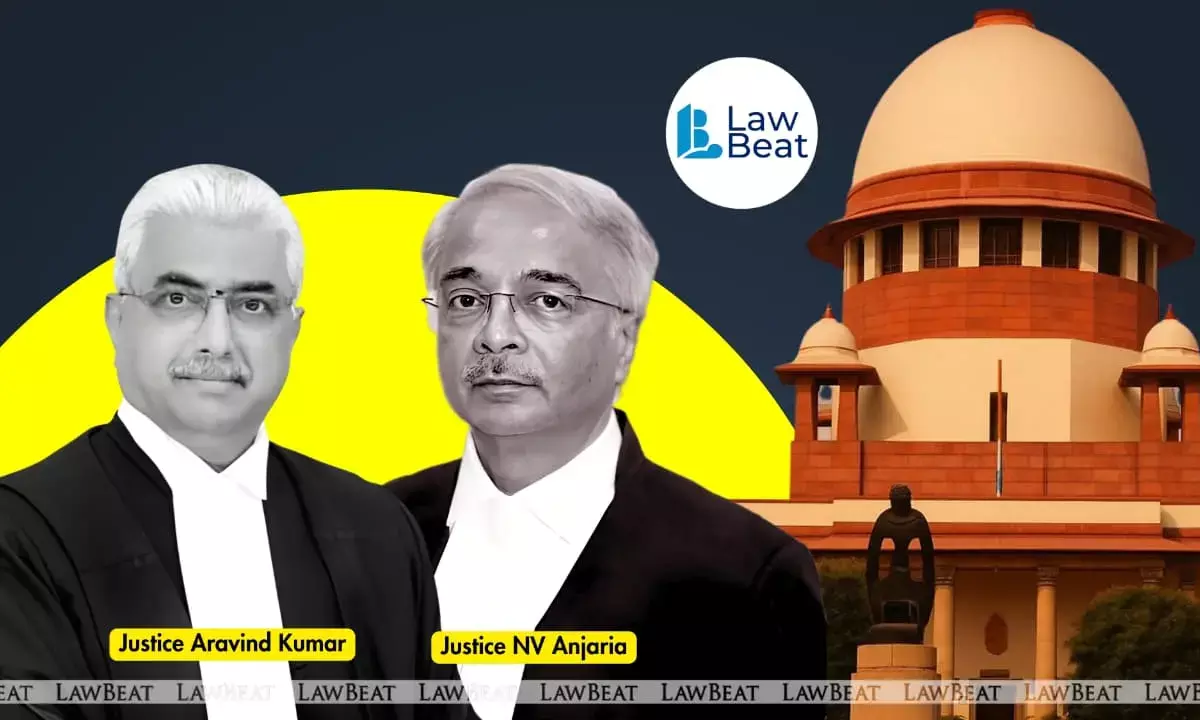
Supreme Court clarifies waiting list rules for Cochin University as communal rotation dictates new appointment
The Supreme Court has said that a waiting list is not a ready source for recruitment. However, if a waiting list is made operative for a fixed period under any provision, rule or circular, it must be acted upon in situations where a selected candidate does not join or an appointee resigns.
A bench of Justices Aravind Kumar and N V Anjaria observed that a waiting list is meant to enable the appointment of the next ranked candidate when a vacancy arises due to such contingencies.
Court clarified that a waiting list by itself does not create a right to appointment and that a candidate placed on the waiting list cannot claim appointment as a matter of right. At the same time, when a waiting list is made valid for a stipulated period, it must operate during that period.
The case arose from a dispute relating to the appointment of an Associate Professor in the Cochin University of Science and Technology, Kalamassery. Appellant Radhika T, a Scheduled Caste candidate, had applied for the post, which was reserved for the Scheduled Caste category. She was placed second in the rank list, while Dr Anitha C Kumar, who ranked first, was appointed.
Dr Anitha later resigned from the post on March 30, 2022, after securing appointment as Professor in the School of Chemical Sciences at Mahatma Gandhi University, Kottayam. Following her resignation, Radhika sought appointment from the waiting list.
Her request was rejected by the university on the ground that Dr Anitha had a lien on the post and, therefore, the vacancy could not be offered to her. Even after the High Court directed reconsideration, the university again rejected the request, stating that Dr Anitha’s resignation had resulted in a fresh vacancy which had to be filled by applying the rule of communal rotation. According to the university, the vacancy had fallen to the Latin Catholic category.
Radhika’s writ petition, appeal and review petition were all dismissed by the High Court, leading her to approach the Supreme Court.
The Supreme Court examined whether, during the two-year validity of the rank list under Section 31(10) of the Cochin University of Science and Technology Act, a candidate from the waiting list could claim appointment when a vacancy arose, or whether the university was justified in applying the rule of communal rotation under Section 31(11) during the same period.
Explaining the concept of lien in service law, court said that lien represents the right of an employee to hold a post substantively. It pointed out that once an employee is appointed to another post, the lien on the earlier post automatically comes to an end without the need for a formal order.
Court noted that under the University Act, the rank list remains valid for two years. During this period, every appointment must comply with the communal rotation requirement, provided the vacancy has already been filled in substance by a candidate belonging to the reserved category.
The bench held that interpreting the law to mean that communal rotation would apply only after the expiry of the rank list would render Section 31(11) meaningless. It stressed that courts must avoid interpretations that make any statutory provision redundant and must instead adopt a harmonious construction of apparently conflicting provisions.
Applying this principle, court observed that Dr Anitha, a Scheduled Caste candidate, had worked in the post for over a year. After her resignation, both Section 31(10) and Section 31(11) became applicable and had to be read together. Consequently, the university was justified in applying communal rotation and assigning the vacancy to the Latin Catholic/Anglo Indian category.
Since Radhika did not belong to that category, she could not be appointed from the waiting list. The Supreme Court therefore dismissed the appeals and upheld the judgments of the High Court.
Case Title: Radhika T Vs Cochin University of Science And Technology & Ors
Bench: Justices Aravind Kumar and N V Anjaria