
Can Bail Be Cancelled for Violating Victim’s Right to Be Heard? Supreme Court Explains Section 15A(5) of SC/ST Act
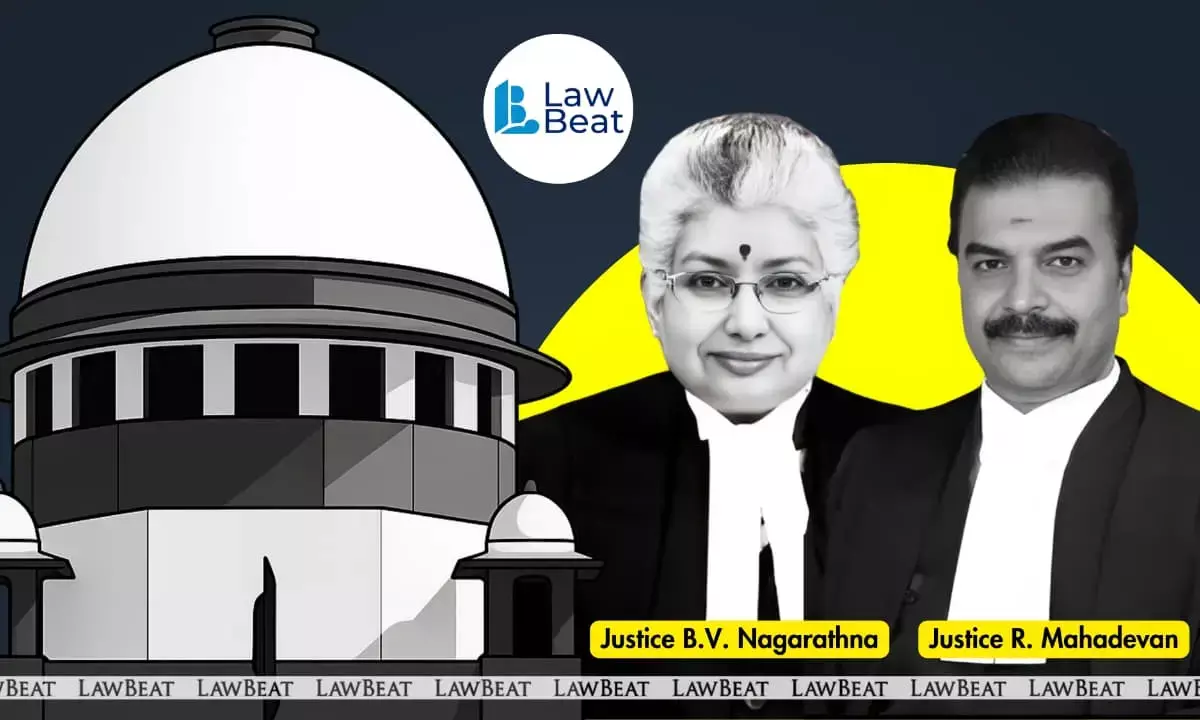
Supreme Court says SC/ST Act victims must get hearing before bail decision
The Supreme Court of India recently observed that bail can be cancelled for violation of Section 15A(5) of the SC/ST (Prevention of Atrocities) Act, but such cancellation is justified only when there is a complete denial of the victim’s statutory right to be heard.
A bench of Justices B V Nagarathna and R Mahadevan explained that Section 15A(5) gives a mandatory procedural right to the victim or their dependent to participate in bail proceedings. The provision incorporates the principle of audi alteram partem by requiring courts to hear the victim, either personally or through counsel, including the Special Public Prosecutor.
The bench clarified that the right to be heard presupposes that the victim is informed of the proceedings and not excluded from them. At the same time, the court said the scope of Section 15A(5) must be correctly understood. The provision guarantees an opportunity to be heard, but it does not create a right to a favourable outcome or require the court to give detailed reasons addressing every objection raised by the victim.
“Once the victim has been notified, permitted to participate, and allowed to place objections on record, the statutory mandate stands satisfied,” the bench said.
Court was hearing an appeal filed by Lakshmanan against a judgment of the Madras High Court dated April 9, 2025, which had granted bail to the accused in a case relating to an assault on Lakshmanan and his friend Suresh over a fencing dispute concerning agricultural land in Sambiranipatti Village of Melur Taluk in Madurai District. Suresh, who was an injured witness in the case, was later killed.
The case was registered under several provisions of the Indian Penal Code, including Sections 147, 148, 447, 341, 294(b), 323, 324, 307 and 379, along with Section 3(2)(va) of the SC/ST (Prevention of Atrocities) Act, against multiple accused, including the respondents.
The Supreme Court emphasised that cancellation of bail for violation of Section 15A(5) is warranted only where no notice of bail proceedings was served on the victim, the victim was completely excluded from the proceedings, or the victim was denied any opportunity to be heard.
“In such circumstances, the violation strikes at the root of jurisdiction and renders the bail order legally unsustainable,” the bench said. However, it clarified that bail cannot be cancelled merely because the court did not accept the victim’s submissions, failed to specifically deal with each objection, or because the victim alleges that the hearing was “mechanical” despite being given an opportunity.
The bench further observed that at the stage of bail, courts are only required to form a prima facie view, and bail orders are not expected to contain elaborate or exhaustive reasoning. Section 15A(5) does not mandate a detailed analysis or express rejection of every submission made by the victim.
Applying these principles to the present case, the bench noted that the victim was admittedly aware of the bail proceedings. Objections to the grant of bail were raised by the appellant and were recorded in the High Court’s bail order. There was no allegation that notice was not served, that the appellant was excluded from the proceedings, or that an opportunity of hearing was denied.
The appellant’s grievance was essentially about the manner in which the High Court dealt with the objections, namely that they were not analysed or individually addressed.
“This pertains to the quality of reasoning, not to the absence of hearing. Such a grievance does not amount to a violation of Section 15A(5),” the bench said.
Since the victim was heard and allowed to participate, the core requirement under Section 15A(5) stood complied with. In the absence of procedural illegality, perversity, or complete denial of the right of audience, the bail order could not be cancelled on this ground alone, the court held.
Accordingly, the Supreme Court concluded that no violation of Section 15A(5) was made out and that the High Court’s failure to expressly engage with each objection did not render the hearing illusory or illegal.
However, the bench found fault with the High Court on other grounds. It pointed out that the High Court ignored the fact that the accused had earlier been granted bail by the trial court, which was subsequently cancelled due to grave supervening circumstances. These included the death of Suresh, a material witness in the 2020 case, and the registration of a fresh case in 2022, indicating witness intimidation and attempts to derail the trial.
“These facts went to the root of the issue of misuse of liberty and threat to the fairness of trial. The High Court failed even to advert to these aspects,” the bench said, adding that the omission rendered the bail order manifestly perverse.
Court also noted that the High Court appeared to have been influenced by the existence of a civil dispute between the parties. It reiterated that pendency of civil litigation does not dilute criminal liability or override considerations of gravity, antecedents, or witness safety. Reliance on the civil nature of the dispute without addressing the serious criminal allegations amounted to a misdirection in law.
The bench further observed that there was no explanation as to how release on bail, in the backdrop of prior cancellation, death of a material witness, and allegations of witness intimidation, could be consistent with a fair and uninfluenced trial.
Holding the High Court’s judgment to be vitiated by perversity, arbitrariness and non-application of mind, the Supreme Court set aside the bail granted to the accused. It also held that the High Court’s direction for a joint trial in both cases was legally unsustainable and contrary to settled law.
Accordingly, court allowed the criminal appeals, cancelled the bail granted to the accused, and directed them to surrender before the jurisdictional trial court within two weeks.
Case Title: Lakshman Vs State Through The Deputy Superintendent of Police & Ors Etc
Bench: Justices B V Nagarathna and R Mahadevan