
Can Courts Reject Pleading Amendments on Technical Grounds? Supreme Court Says No
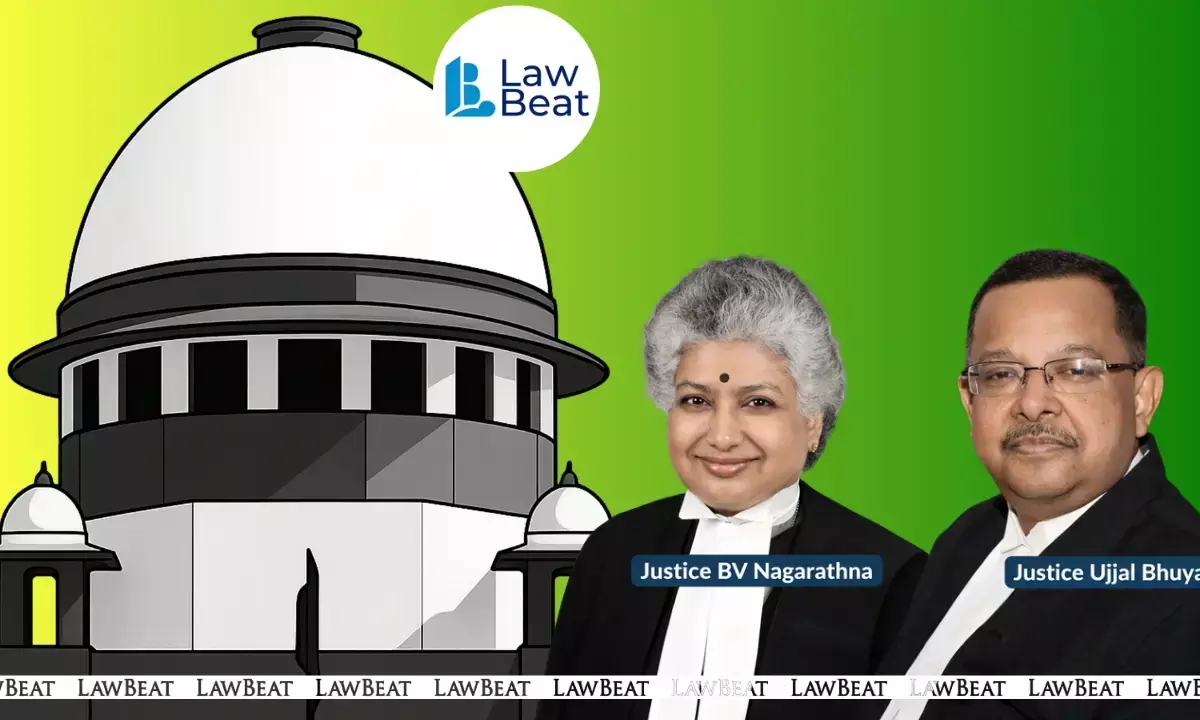
Supreme Court restores trial court order permitting amendment of plaint schedule in Telangana land dispute.
The Supreme Court recently observed that courts have the discretion under Order VI Rule 17 of the Code of Civil Procedure (CPC) to allow amendments to pleadings if such amendments are necessary for determining the real question in controversy between the parties and do not cause injustice or prejudice to the other side.
Court further said that while deciding applications seeking amendment of pleadings, courts should not get entangled in legal technicalities. Instead, they should adopt a liberal approach since the purpose of allowing amendments is to avoid multiplicity of litigation.
Also Read| Oversight & Mistake, no ground to seek amendment of plaint at fag end of trial: SC
A Bench of Justices B V Nagarathna and Ujjal Bhuyan made these observations while allowing an appeal filed by Akkiraju Panduranga Rao and another against a June 12, 2023 order of the Telangana High Court.
What was the dispute before the Court?
The appellants were owners in possession of agricultural land situated in Nadigudem village and mandal in Nalgonda district, Telangana. According to them, the respondent, whose land was located on the northern boundary of the suit property, started interfering with their possession.
They therefore filed a suit before the Principal Junior Civil Judge at Kodad seeking a permanent injunction to restrain the respondent and his agents from interfering with their possession. Along with the suit, they also sought an ex parte temporary injunction, which was granted by the trial court.
Subsequently, the appellants filed an application seeking amendment of the plaint schedule boundaries. They contended that due to an inadvertent error, only the boundaries of Survey No. 19/2 had been mentioned, while the boundaries of Survey No. 18/5 were omitted. According to them, this mistake came to light only after the respondent filed his written statement.
Also Read| 'Succession can't go forward without determination of the Will': SC allows amendment to plaint
The trial court, by an order dated March 28, 2019, allowed the amendment application. It noted that incorrect boundaries had been mentioned in respect of the suit lands and observed that no prejudice would be caused to the respondent, who would have the opportunity to file an additional counter and written statement. The respondent subsequently did so.
Why did the Telangana High Court reject the amendment?
The high court set aside the trial court's order, holding that the proposed amendment would alter the nature of the property and introduce a new cause of action.
It also noted that the amendment application was filed only after the respondent pointed out in his written statement that the schedule of the suit properties was incorrect. The respondent had claimed that the lands in the survey numbers mentioned by the appellants were not part of a single compact block and were separated by a stream. In these circumstances, the High Court held that the amendment application did not appear to be bona fide.
Why did the Supreme Court restore the trial court's order?
Examining the matter, the Supreme Court considered whether the proposed amendment was necessary for determining the real question in controversy and whether it could be allowed without causing injustice to the opposite party.
Referring to Order VI Rule 17 CPC, the Bench noted that the appellants had sought amendment of the suit schedule property because the boundary of Survey No. 18/5 had been omitted due to an inadvertent error.
The Court held that the trial court had rightly allowed the amendment since it was necessary for determining the real dispute between the parties, including whether the appellants were entitled to a decree of permanent injunction in respect of the suit property.
"It is also pertinent to note that the application seeking amendment was preferred by the appellants, although after the filing of the written statement by the respondent, but before the commencement of the trial. We therefore find that the trial court, by allowing the said application, had rightly held that no prejudice would be caused to the respondent, as he would have an opportunity to file an additional counter and additional written statement," the Bench observed.
Holding that the high court had erred in interfering with the trial court's order, the Supreme Court set aside the impugned judgment and restored the order permitting amendment of the plaint.
Case Title: Akkiraju Panduranga Rao & Anr Vs Gundlapally Ranga Rao
Bench: Justices B V Nagarathna and Ujjal Bhuyan
Date of Judgment: April 16, 2026