
Can Courts Rely on the Credible Part of a Hostile Witness's Testimony? Supreme Court Explains
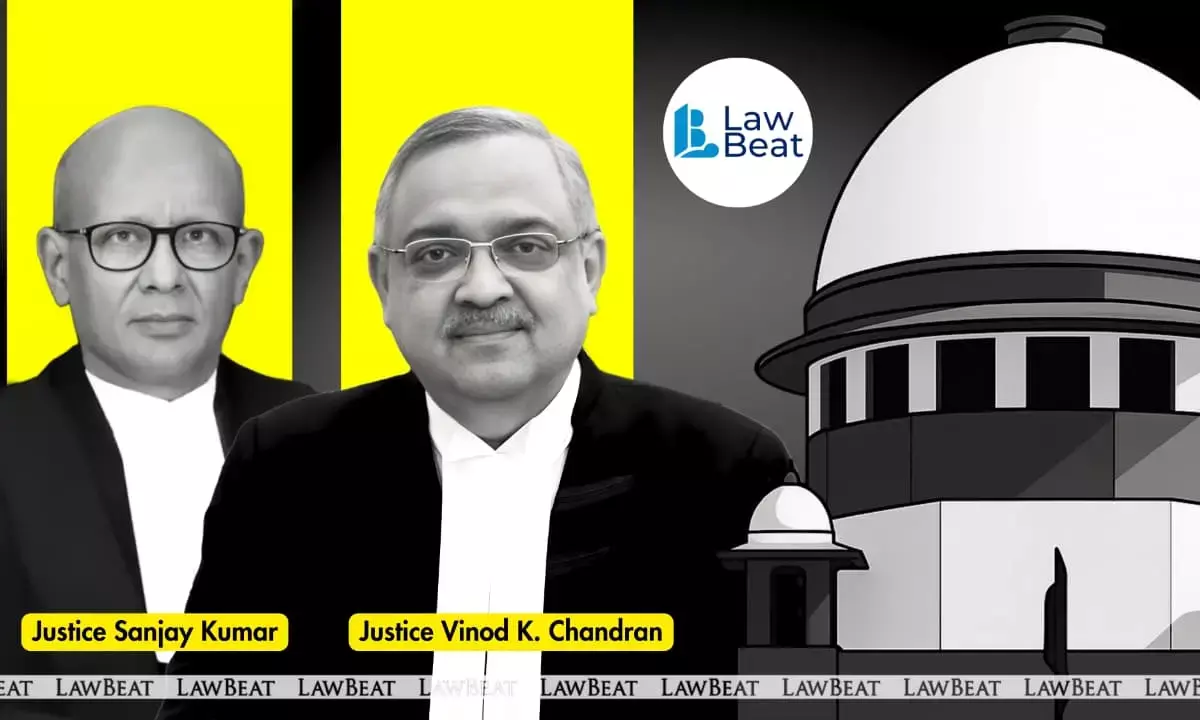
Supreme Court held that courts must assess the credible portions of a hostile witness's testimony.
The Supreme Court has held that even when a witness turns hostile or gives inconsistent statements, courts are not required to discard the entire testimony. Instead, they must carefully examine the deposition and determine whether any part of it remains credible enough to prove the prosecution's case.
A Bench of Justices Sanjay Kumar and K. Vinod Chandran said that as a matter of prudence, every court considering the deposition of a hostile witness has to assess the extent to which the testimony is trustworthy and capable of proving the case set up by the prosecution.
Court made the observation while allowing an appeal filed by the Kerala government against a high court judgment that had acquitted K.A. Abdul Rasheed, then working as a Taluk Supply Officer, in a bribery case involving an authorised ration dealer.
The trial court had convicted Rasheed under Section 7 and Section 13(1)(d) read with Section 13(2) of the Prevention of Corruption Act and sentenced him to two years' imprisonment under both provisions, to run concurrently, along with a fine of Rs 10,000.
However, the high court later acquitted him, holding that the complainant's inconsistent testimony failed to establish the essential ingredients of the offences, particularly the demand for a bribe. Relying on the Constitution Bench judgment in Neeraj Dutta v. State (NCT of Delhi) (2023), the high court concluded that the prosecution had failed to prove its case.
What Did the Supreme Court Say About Hostile Witnesses?
The Supreme Court noted that the Constitution Bench in Neeraj Dutta had specifically addressed the evidentiary value of hostile witnesses. Referring approvingly to Sat Paul v. Delhi Administration (1974), the Bench reiterated that if the credibility of a witness has not been completely destroyed, a court may accept those portions of the testimony that it finds trustworthy after reading the evidence as a whole and in light of other material on record.
Examining the facts of the present case, the Bench noted that the complainant never denied approaching the vigilance department. He had consistently maintained that he approached the authorities because he was unwilling to pay a bribe for obtaining the required counter-signature.
Court further found that the acceptance of the marked currency note from the complainant by the accused stood established beyond doubt. Other witnesses had also spoken about the pre-trap and post-trap proceedings.
Regarding the demand for the bribe, Court acknowledged that the complainant had given inconsistent statements during his deposition. However, it noted that the complaint itself specifically alleged a demand of Rs 500 for counter-signing the relevant document.
The Bench observed that the complainant had affirmed the contents of the complaint. In that context, his later statements about personal inferences, feelings, and denial of certain portions of his Section 161 CrPC statement were of little significance.
"So much of the evidence is creditworthy and despite the complainant having accepted every suggestion made by the defence in cross-examination, the credible portion cannot be eschewed," Court said.
According to the Bench, the prosecution evidence, when properly appreciated, clearly established that a demand had been made by the accused. The court added that the earlier demand stood proved even though another independent witness was not examined.
Why Did the Supreme Court Restore the Conviction?
Court emphasised that the acceptance of the Rs 500 note was not only proved by evidence but was also admitted by the accused.
The accused claimed that the money was not a bribe but repayment of a loan allegedly taken from an office attendant. However, the bench found no reason why the complainant would have borrowed money from the attendant in the first place.
Rejecting the defence, Court observed that while an accused is entitled to take inconsistent stands, the explanation offered in this case could not rebut the prosecution's evidence. Court also noted that the person from whom the alleged loan was said to have been taken had given evidence inconsistent with the defence version.
"The false explanation given by the accused insofar as the acceptance is another compelling circumstance pointing to the guilt of the accused," the Bench said.
Court ultimately held that the High Court had erred in concluding that there was no proof of demand.
"The evidence of the complainant was pock marked with inconsistent versions, but it is for the court to scrutinize the same and find out whether there is anything creditworthy enabling proof of the allegation raised, which was done by the trial court," the bench observed.
Accordingly, the Supreme Court set aside the high court's judgment and restored the conviction and sentence imposed by the trial court.
"Considering the fact that the sentence awarded is the statutory minimum for the offences we find no reason to tinker with the same," the Bench said.
Case Title: The State of Kerala Vs K.A. Abdul Rasheed
Bench: Justices Sanjay Kumar and K Vinod Chandran
Date of Judgment: April 15, 2026