
Can DNA Evidence Override Presumption of Legitimacy? Supreme Court Explains While Denying Maintenance
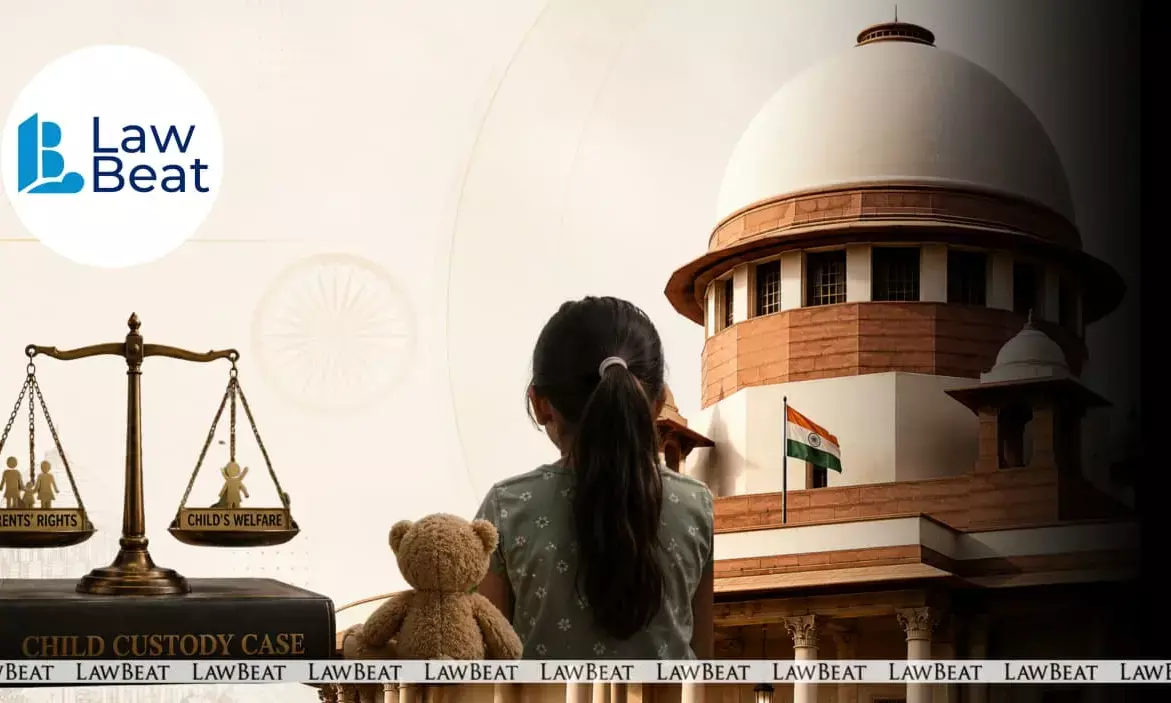
Supreme Court rules DNA test excluding paternity defeats maintenance claim.
While reaffirming the presumption of legitimacy under Section 116 of the Bharatiya Sakshya Adhiniyam the Supreme Court has held that a child cannot claim maintenance from a man whose paternity has been conclusively ruled out through a DNA test that was conducted with the mother's consent and remained unchallenged.
At the same time, Court underlined that the legal presumption that a child born during a marriage is legitimate continues to be retained in law to protect children from the stigma of illegitimacy despite rapid technological advancements.
Observing that the legislative intent behind retaining such a presumption is clear, a Bench of Justices Sanjay Karol and N Kotiswar Singh dismissed a woman's appeal against a Delhi High Court order which had upheld the denial of maintenance to her daughter after a DNA report established that the respondent was not the child's biological father.
Court noted that in the present case, the appellant had consented to the DNA test and had never disputed its findings. Since the DNA report had attained finality, Court found no reason to interfere with the High Court's decision refusing maintenance for the child from the respondent.
According to the case records, the appellant worked as a domestic help at the respondent's residence for about three years. She alleged that the respondent established a physical relationship with her on the promise of marriage. The parties eventually married on March 2, 2016, and a child was born on April 1, 2016.
Their relationship soon deteriorated, following which the woman filed a complaint under Section 12 of the Protection of Women from Domestic Violence Act, 2005 on July 14, 2016, seeking interim maintenance of Rs 25,000 per month. The respondent denied the allegations and sought a DNA test to determine the paternity of the child.
The trial court allowed the request and directed that a DNA test be conducted. The report dated May 8, 2017 concluded that the respondent was not the biological father of the child. Based on the report, both the trial court and the appellate court rejected the child's claim for interim maintenance.
The Delhi High Court, while examining the presumption of legitimacy under Section 112 of the Indian Evidence Act, 1872, held that the benefit of the provision would have been available had the DNA test not been conducted. Since the DNA report had attained finality, the court held that the presumption could not assist the appellant's case. The high court also noted that the validity of the marriage itself was under dispute and therefore declined maintenance for the child. However, it found that the trial court had erred in denying interim maintenance to the woman and remanded that issue for fresh consideration.
Law on DNA tests and presumption of legitimacy
The Supreme Court examined Section 112 of the Indian Evidence Act and its corresponding provision, Section 116 of the Bharatiya Sakshya Adhiniyam, 2023. Referring to earlier decisions, the Court noted that in Goutam Kundu v. State of W.B. (1993), primacy was given to the statutory presumption of legitimacy. Later, in Nandlal Wasudeo Badwaik v. Lata Nandlal Badwaik (2014), the Court recognised the superiority of a DNA test result over a legal presumption.
The Bench further noted that in Aparna Ajinkya Firodia v. Ajinkya Arun Firodia (2024), court held that even a DNA report would not automatically dislodge the presumption in the absence of proof of non-access between the spouses, recognising the child's right to privacy. It also referred to Ivan Rathinam v. Milan Joseph (2025), which called for balancing the potential stigma of illegitimacy against a person's interest in knowing biological parentage.
"The common thread that has run through all these judgments is a well-placed hesitation to order or to give an imprimatur to orders directing DNA test to be conducted. We entirely agree with this position," the Bench observed.
However, Court stressed that the present case stood on a different footing because the DNA test had already been conducted, the appellant had consented to it and had never challenged its outcome.
"We are of the considered view that no error could be pointed out by the appellant in the high court's decision denying the grant of maintenance to her daughter. The appeal is bereft of merit and, therefore, dismissed," Court held.
At the same time, to safeguard the interests of the child, court directed the Secretary, Women and Child Development, Government of the NCT of Delhi, to appoint an experienced officer to ascertain the family's living conditions and assess the child's well-being, including education, nutrition, healthcare and access to basic necessities.
Court said that wherever deficiencies are found, the department should step in and take remedial measures to ensure the child's welfare.
Case Title: Nikhat Parveen @ Khushboo Khatun Vs Rafique Shillu
Bench: Justices Sanjay Karol and N Kotiswar Singh
Date of Judgment: April 21, 2026