
Can Suppression of Arrest Lead to Dismissal from Service? Supreme Court Says No, Converts Penalty to Compulsory Retirement
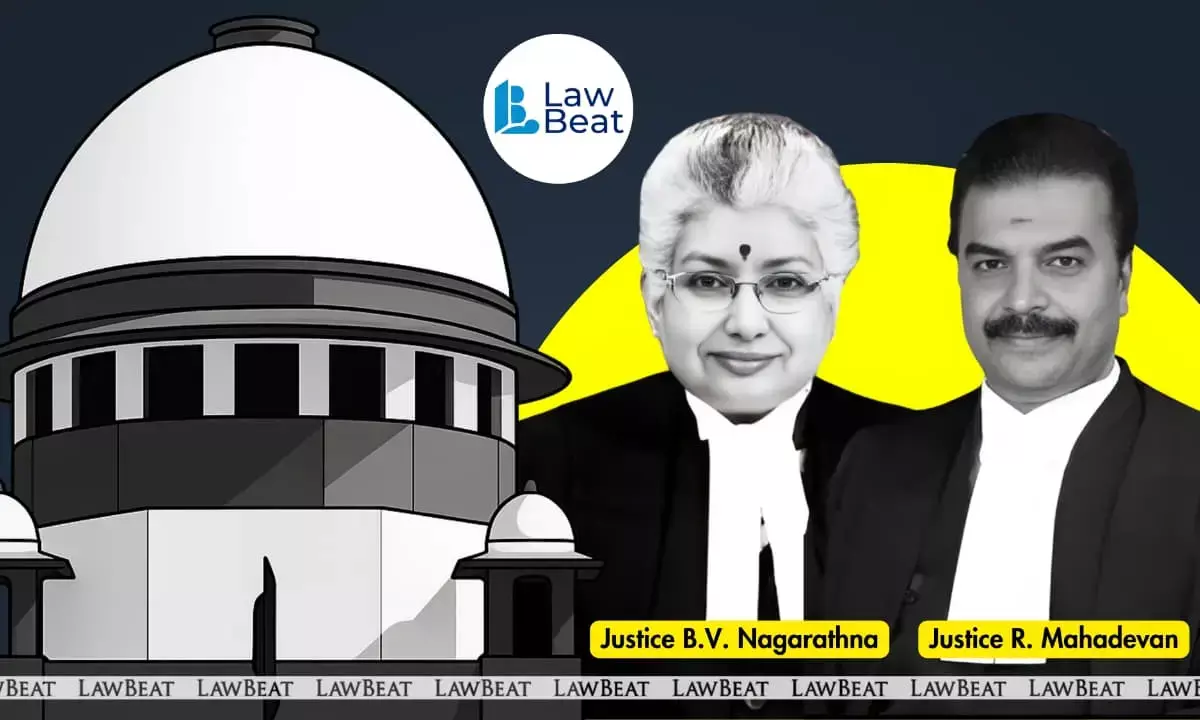
Supreme Court directs pension for RPF constable's family, calling his dismissal a disproportionate punishment
The Supreme Court of India recently set aside the dismissal of a constable of the Railway Protection Force (RPF) for concealing his arrest in a criminal case during service, and directed that pensionary benefits be paid to his family members. The constable died during the pendency of his appeal and had meanwhile been honourably acquitted in the criminal case instituted against him and two of his family members.
A bench of Justices B V Nagarathna and R Mahadevan noted that the misconduct against the appellant had indeed been proved in the disciplinary inquiry. The misconduct related to suppression of his involvement in a criminal case, and the further suppression of his arrest and detention, which he was required to disclose to the authorities under the Central Civil Services (Conduct) Rules, 1964.
However, the bench held that this lapse could not have resulted in the extreme punishment of dismissal from service. “Any other penalty could have been imposed on the appellant. In the circumstances, we hold that the punishment of dismissal from service was disproportionate, particularly when the appellant had already completed approximately seventeen years of service and was entitled to further career progression and monetary benefits on his retirement if any other punishment could have been imposed on him,” the court said.
The Supreme Court accordingly converted the punishment of dismissal into one of compulsory retirement, with pension payable in accordance with law.
The appeal had been filed by Sahab Singh against a July 29, 2015 judgment of the Delhi High Court, which had rejected his challenge to the dismissal order.
Sahab Singh was recruited as a constable in the RPF on August 1, 1994. On March 13, 2007, an FIR was lodged in Muzaffarnagar against five persons, including the appellant, his father and his brothers, alleging the abduction of a girl. While the main allegation was against his brother Rajeev, the appellant was accused of abetting and assisting him.
The police initially filed a charge-sheet only against the main accused, Rajeev. However, in 2010, on an application moved by the complainant under Section 319 of the Code of Criminal Procedure, 1973, the Sessions Court summoned the appellant as an accused. Charges were framed against him on August 8, 2010.
Thereafter, due to his non-appearance, non-bailable warrants were issued, and he was taken into judicial custody on November 29, 2010. He was released on bail on January 1, 2011.
Subsequently, the department issued a charge-sheet against him for concealing the criminal case and for failing to inform the authorities about his arrest and detention. Although the inquiry report specifically recorded that on the date of the alleged criminal incident the appellant was on duty at his post in Delhi, the Senior Circle Security Commissioner, RPF, Northern Railway, dismissed him from service on June 24, 2011.
His revision petition and departmental appeal were rejected. He then approached the high court seeking reinstatement.
In 2013, the trial court acquitted the appellant, observing that on the date of the incident he was performing his official duties in Delhi and was not present at the place of occurrence. Despite this finding, and despite the acceptance of his plea of alibi, the high court dismissed his writ petition. It held that the acquittal was on technical grounds and found no reason to interfere with the departmental action arising from his failure to disclose his detention and prosecution.
After hearing the parties, the Supreme Court held that, considering the nature of the charges against the appellant, the punishment of dismissal was wholly disproportionate. Court therefore modified the penalty to compulsory retirement with pension payable in accordance with law.
Court further held that the appellant, and now his legal representatives, would be entitled to arrears of pension and family pension with effect from June 24, 2011, the date of dismissal, and upon his demise. It directed that the pensionary benefits be calculated and released to the legal representatives within six weeks.
Case Title: Sahab Singh (D) Through LRs Vs Director General RPF, Rail Bhawan & Others
Judgment Date: November 26, 2025
Bench: Justices B V Nagarathna and R Mahadevan