
Clear Court Orders Cannot Be Ignored Based on Own Interpretation: Supreme Court
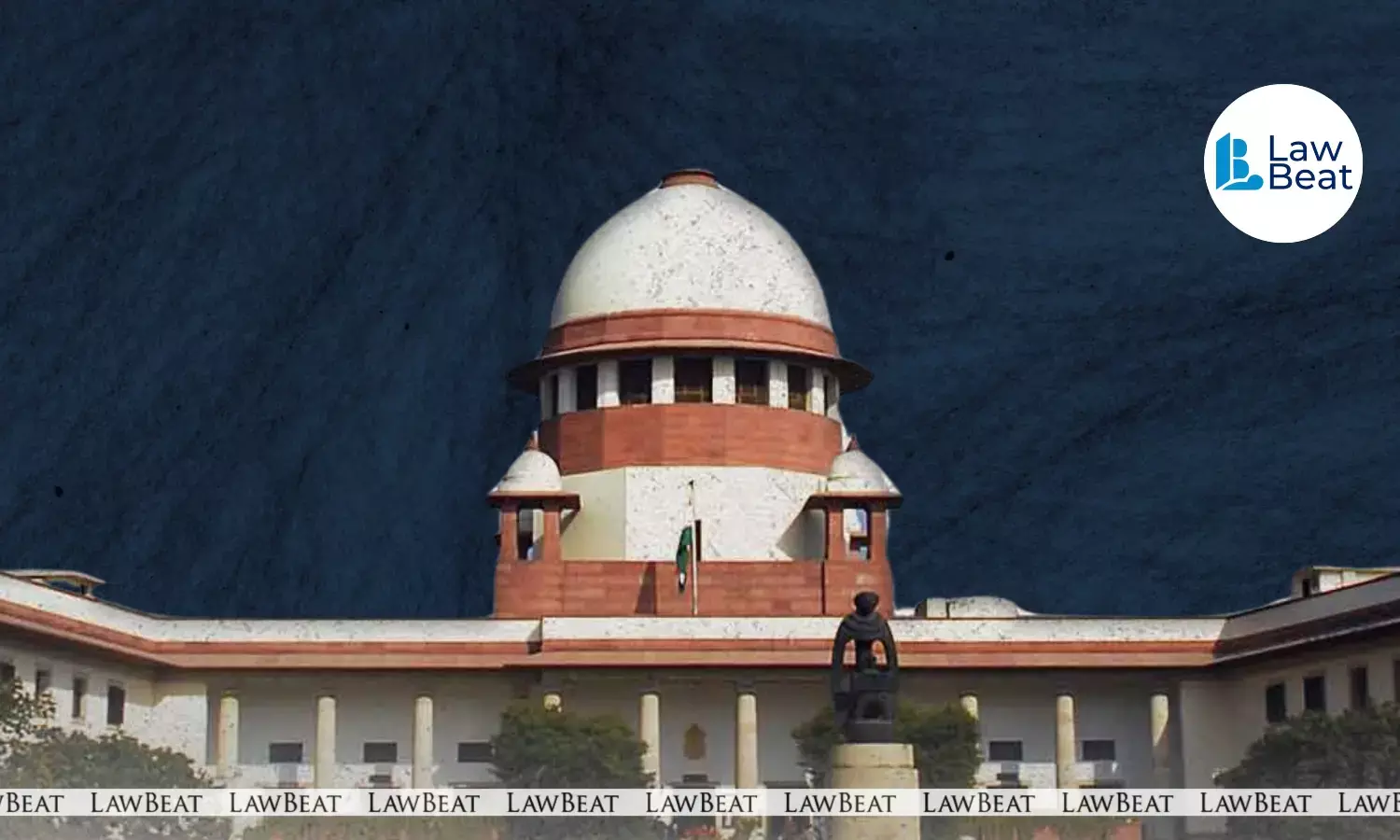
Supreme Court raps UP govt over non-compliance with high court order.
The Supreme Court has held that once a competent court passes a clear and unambiguous order, its implementation cannot be made conditional upon a party's subjective understanding of the directions.
A Bench of Justices J K Maheshwari and Atul S Chandurkar held that the State of Uttar Pradesh had willfully misread and failed to implement the Allahabad High Court's clear and final directions granting preference in appointment to long-serving Auxiliary Nurses and Midwives (ANMs) for the post of Basic Health Worker (Female).
"Willful disobedience signifies an act done voluntarily with the intent to disregard the law. The principle that an 'error of judgment' by an authority regarding legal position does not constitute willful disobedience has its proper application where the direction of the court is itself ambiguous or capable of multiple interpretations, and the authority has, in good faith, chosen one of them," the Bench said.
Court clarified that this principle cannot be invoked where the court's direction is clear and unambiguous, and the authority merely adopts a different course by misunderstanding the nature of the direction.
The Bench further observed that where a party has taken bona fide, substantive and comprehensive steps to remedy the initial non-compliance and has carried out the judicial mandate in both letter and spirit, courts should acknowledge compliance rather than resort to punishment.
"The power of contempt is a means to an end, the end being compliance. Once compliance is secured, the punitive arm of the court's contempt jurisdiction ordinarily yields," the Bench said.
Court also emphasised that the power to punish for civil contempt is a potent mechanism designed to secure public confidence in the administration of justice.
Why did the Supreme Court hold Uttar Pradesh guilty of willful disobedience?
The case arose from the State's persistent failure to comply with directions issued by the Allahabad High Court's Lucknow Bench on February 1, 2013.
The high court had directed that Reena Kumari and other appellants be considered for appointment against existing vacancies for the post of Basic Health Worker (Female). It also directed that they be granted relaxation if they had not completed the required one-and-a-half-year training from departmental divisional training centres or did not possess the required qualification of Intermediate with Science.
The State was directed to consider the appellants for regular appointment to the post.
These directions, along with a subsequent order dated October 21, 2013, attained finality after the Supreme Court dismissed the State's special leave petitions.
However, despite the orders attaining finality, the State failed to implement them. The appellants thereafter initiated contempt proceedings, which were dismissed by the high court in 2018.
Allowing the appeals against that order, the Supreme Court held that there was no room for doubt that the high court had directed the State to give the appellants "preference" over outside candidates while making appointments.
"It is unambiguous that the State [was] to make appointment, against existing vacancies, first considering the appellants and similarly situated candidates, and for outside candidates only if any vacancy remained unfilled. This sequence is not open to interpretation differently, it provides directions in explicit wording," the Bench observed.
Court said the purpose of the High Court's directions, read as a whole, was to recognise and protect the legitimate claim of experienced, long-serving ANMs before vacancies were opened to outsiders.
The Bench found that the State's explanation was based on a wrong reading of the court's directions and therefore did not amount to actual compliance.
It also held that the high court had applied an incorrect standard while deciding the contempt petitions.
"The understanding of the State that outside candidates could be preferred over insiders is a misreading and departure from the real intent, unexpectedly from the highest hierarchy of the executive be observed as willful and not termed as erroneous," the Bench held.
The Supreme Court also disapproved of the high court's direction asking the appellants to seek relief by filing fresh writ petitions.
The Bench said the contempt jurisdiction exists precisely to ensure compliance with judicial directions that have already attained finality after dismissal of the special leave petitions.
Supreme Court on delay in implementing Allahabad High Court order
During the hearing, the Court was informed that pursuant to its order dated May 21, 2026, appointment letters had finally been issued to the appellants.
Even so, the Bench held that the State's conduct fell far short of what was expected and that it had made an unsuccessful attempt to comply with the directions based on its own misunderstanding.
"It is a matter of concern that clear and final judicial directions could remain unimplemented for thirteen years, compelling persons of modest means to pursue litigation up to this court. Every year of delay meant a year of lost seniority, lost emoluments, and lost dignity for these women. The human cost of institutional non-compliance is rarely counted, but it is real and it is heavy," the Bench observed.
Calling for systemic reforms, Court urged the State of Uttar Pradesh, as well as all State governments and public authorities, to treat compliance with judicial directions not as a burden to be resisted or delayed but as a constitutional obligation, particularly where service rights of employees are involved.
"Institutional introspection in this regard is not optional; in fact it is necessary. Appropriate administrative mechanisms must be put in place to ensure that directions of courts are monitored, tracked, and complied with within the time prescribed by the court," the Bench said.
Court further said the State should establish a framework to fix accountability on erring officials whose non-compliance obstructs access to justice.
"Therefore, this order be communicated to the highest administrative authorities for introspection, and the immediate development of the necessary compliance mechanism," it directed.
Accordingly, the Supreme Court allowed the appeals and imposed a symbolic cost of Rs 1 lakh on the State, directing that the amount be deposited with the State Legal Services Authority within eight weeks for utilisation for the welfare of children and women in the State.
Case Title: Reena Kumari & Ors Etc Vs Praveer Kumar & Ors Etc
Bench: Justices J K Maheshwari and Atul S Chandurkar
Date of Judgment: May 27, 2026