
Compassionate Appointment Is Welfare Measure, Not Violation of Open Competition: Supreme Court
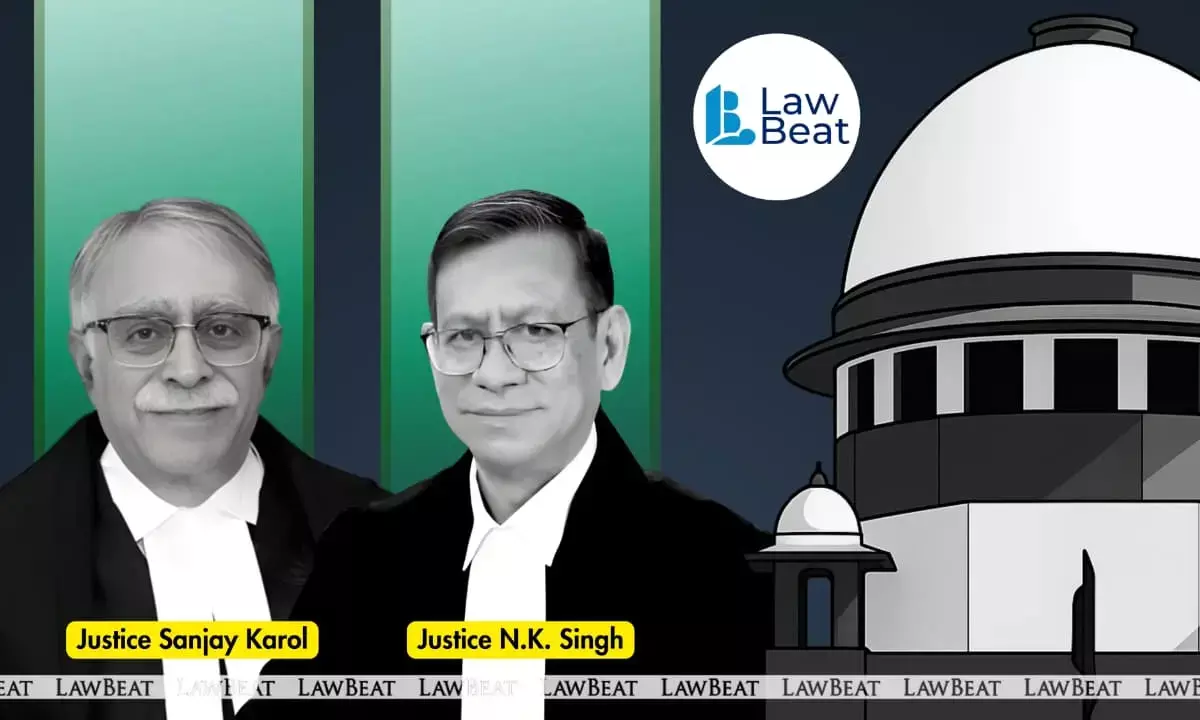
Supreme Court orders compassionate appointment to a Class-IV post for son of deceased employee
The Supreme Court recently observed that compassionate appointment is a narrowly tailored welfare measure that operates on a distinct footing and does not violate the principles of open competition in public employment.
A bench of Justices Sanjay Karol and N. Kotiswar Singh observed that compassionate appointment is not a concession, largesse or an act of mercy extended to the dependents of a deceased employee. Instead, it is a structured response by the State to ensure that the death of an employee does not push the surviving family into economic hardship.
Court emphasised that the rules governing compassionate appointment should not be interpreted in a narrow or mechanical manner so as to defeat the welfare-oriented purpose of the scheme. It noted that when procedural rigidity stops serving the humanitarian objective of the policy and instead becomes an obstacle to its implementation, such procedures must be interpreted liberally so that justice is not sacrificed at the altar of technicality.
The observations came while dealing with an appeal filed by the Managing Director, MP State Agricultural Marketing Board and others. The Supreme Court upheld the April 7, 2025 order passed by the High Court in a writ appeal and directed the appellants to consider the case of Respondent No. 1, Harpal Singh, for compassionate appointment to a Class IV post within six weeks.
Earlier, the High Court had upheld the January 24, 2025 order of the single judge, which directed the competent authorities to sympathetically consider Singh’s appointment to a lower post (Class IV), subject to his willingness to serve in that capacity.
Singh is the son of Ramjilal Kushwah, who died in harness on February 28, 2019, while working as a peon in the Krishi Upaj Mandi Samiti, Alampur, District Bhind, Madhya Pradesh.
Under the 2014 policy, Singh was appointed on compassionate grounds to a Class III post of Assistant Grade III in the Krishi Upaj Mandi Samiti, Morena. This appointment was conditional upon clearing the Computer Proficiency Certification Test (CPCT) within three years of joining service.
Despite being granted an additional one-year extension after the initial three-year period, Singh failed to clear the CPCT and submit the required scorecard. As a result, his services were terminated on September 30, 2024.
Singh then approached the High Court. While the High Court did not interfere with the termination order, it took note of the welfare purpose behind compassionate appointments. The single judge directed the authorities to sympathetically consider his appointment to a lower Class IV post, where CPCT qualification was not mandatory, provided Singh expressed his willingness to serve in such a post.
While examining the challenge to the division bench order affirming this direction, the Supreme Court highlighted the underlying principles of compassionate appointment, stating that courts cannot ignore the human realities involved in such disputes.
The bench observed that the sudden loss of a breadwinner does not merely end a life but often destabilises the economic condition of the entire family. In cases where the deceased was the sole source of income, death brings not only emotional devastation but also the risk of deprivation, insecurity and social marginalisation.
Court held that a welfare State, committed to constitutional ideals of justice, reduction of inequality and social welfare, cannot allow bereaved families to slip into destitution through the mechanical application of procedural formalities. It pointed out that Article 39 of the Directive Principles of State Policy places a responsibility on the State to function as a welfare State.
Reiterating that the humanitarian purpose of compassionate appointment has been consistently recognised in earlier judgments, the bench held that both the single judge and the division bench of the High Court were right in directing the authorities to consider Singh’s appointment to a Class IV post, which does not require CPCT qualification.
Court noted that Singh’s undertaking to accept a lower Class IV post, similar to the one held by his deceased father, did not involve any relaxation of eligibility norms or confer any undue advantage upon him.
While the appellants argued that Singh, having participated in the selection process with full knowledge of the conditions, could not later challenge them, the court rejected this contention. It clarified that had this been a case of direct recruitment, such a course would not have been permissible. However, compassionate appointment operates within a different framework.
Taking into account the humanitarian objective of the scheme, the surrounding circumstances, the fact that Singh fulfilled all other essential qualifications, and that he had rendered unblemished service for nearly four years, court held that directing consideration of his appointment to a Class IV post did not violate any statutory or policy conditions.
The bench further noted that such a measure would cause no prejudice to the administration or to any other candidate. On the contrary, it would align with the institutional responsibility to implement welfare policies in a manner that preserves their beneficial character.
Court clarified that Singh was not seeking a second or fresh compassionate appointment. Instead, he was seeking a downward adjustment to a Class IV post, which was akin to reallocation within the same establishment to ensure the object of the welfare scheme is not defeated.
Emphasising the need for a humane and purposive approach, the bench observed that procedures in welfare schemes are meant to provide structure and should not become gaps through which the most vulnerable are left unprotected. When interpretation widens those gaps instead of narrowing them, the scheme ceases to serve its purpose.
Court also stressed that compassionate appointments are made against posts earmarked under the scheme and do not encroach upon vacancies meant for regular recruitment. In the absence of any demonstrated prejudice to others, directing consideration of Singh’s appointment did not violate Articles 14 or 16 of the Constitution.
Finding no merit in the appeal, the Supreme Court dismissed it.
Case Title: Managing Director, MP State Agricultural Marketing Board And Ors Vs Harpal Singh And Ors
Bench: Justices Sanjay Karol and N Koriswar Singh