
‘Damages Can’t Be Based On Whims’: Supreme Court Sets Aside Rs 2 Crore Compensation To Model Over Faulty Haircut
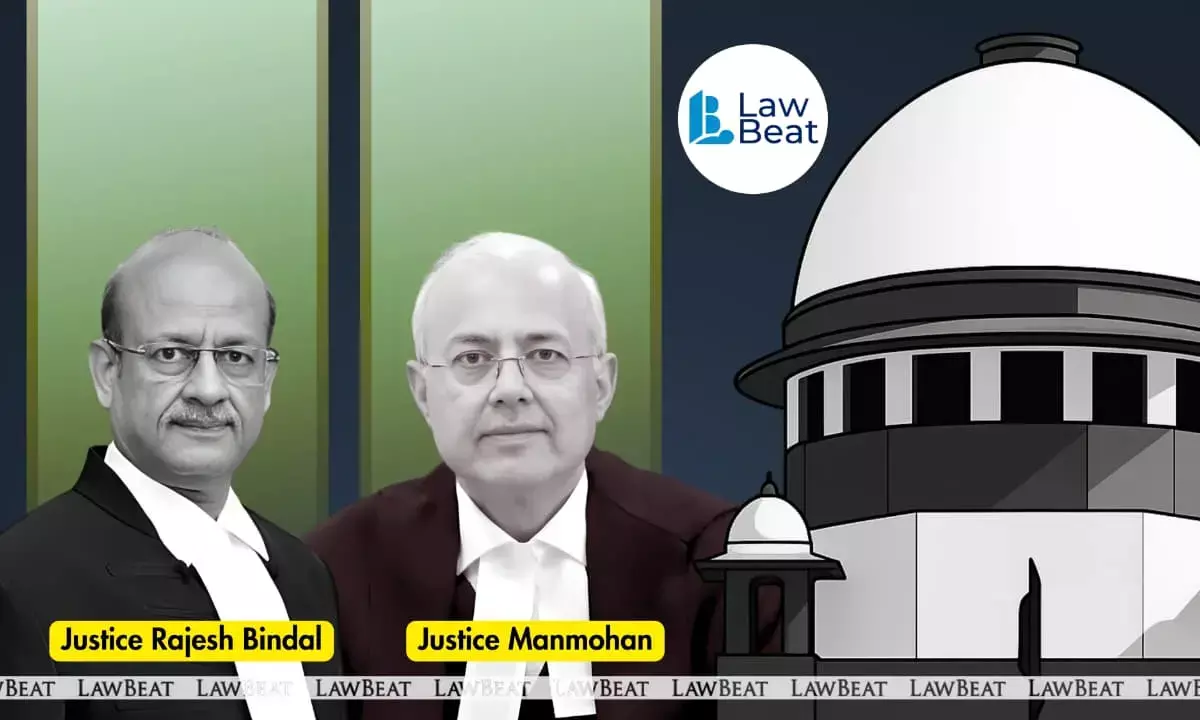
Supreme Court sets aside Rs. 2 crore compensation for faulty haircut
The Supreme Court recently held that damages cannot be awarded merely on the basis of presumptions or the whims and fancies of a complainant.
The Court set aside the National Consumer Disputes Redressal Commission’s April 25, 2024 order which had directed ITC Limited to pay Rs 2 crore to model Aashna Roy. She had alleged deficiency in service after a faulty haircut at the beauty salon of ITC Maurya hotel in April 2018, claiming it led to loss of job opportunities and assignments.
A Bench of Justices Rajesh Bindal and Manmohan partly allowed ITC Limited’s appeal against the compensation order.
"The Commission has committed an error in awarding huge amount of compensation of Rs 2,00,00,000, which in our view cannot be justified,'' the Bench said.
Court noted that the documents produced by Roy along with her affidavit were only photocopies. None of the authors of those documents was summoned, nor was any commission issued to examine them. The Bench said that if such witnesses had been produced, ITC would have had the opportunity to cross-examine them to verify the authenticity of the documents and their contents.
It reiterated that when compensation running into crores is claimed, the complainant must produce trustworthy and reliable evidence. “Damages cannot be awarded merely on presumptions or whims and fancies of the complainant,” the Bench observed.
Court said this was not a minor dispute where compensation could be fixed using a thumb rule. Since the claim was for Rs 2 crore, the respondent was required to establish the actual loss suffered due to deficiency in service. This, the Bench said, could not be done merely by filing photocopies.
The judges also disagreed with the Commission’s view that because of the trauma suffered, the respondent may not have preserved original documents and therefore photocopies could be relied upon. Such reasoning, Court held, cannot justify awarding such a large amount of compensation.
The Bench clarified that even if photocopies were to be relied upon, there are established ways to prove them. Although the Code of Civil Procedure does not strictly apply to consumer proceedings, the Commission had not properly assessed how the respondent suffered a loss of Rs 2 crore. A general discussion in the judgment, Court said, was not enough to justify such compensation.
Court pointed out that while the provisions of the Indian Evidence Act, 1872 (now the Bharatiya Sakshya Adhiniyam, 2023) are not strictly applicable to proceedings under the Consumer Protection Act, 1986, the Commission is still bound by the principles of natural justice, except as provided under Section 13(4) of the 1986 Act.
In an earlier round of litigation, ITC had deposited Rs 25 lakh. At that stage, Court had already observed that “quantification of compensation has to be based upon material evidence and not on the mere asking.”
Modifying the Commission’s order, the bench held that the respondent would be entitled only to the amount already released in her favour.
Case Title: ITC Limited Vs Aashna Roy
Bench: Justices Rajesh Bindal and Manmohan
Date of Judgment: February 6, 2026