
Each Dishonoured Cheque Gives Rise to Separate Cause of Action, Even From Same Transaction: Supreme Court
Supreme Court orders trials for multiple cheque bounces arising from the same property transaction
The Supreme Court on January 8, 2026 clarified that every dishonour of a cheque gives rise to a separate cause of action, provided the statutory steps of presentation, dishonour, issuance of notice and failure to pay are completed. Court made it clear that merely because multiple cheques arise out of the same transaction, they do not merge into a single cause of action.
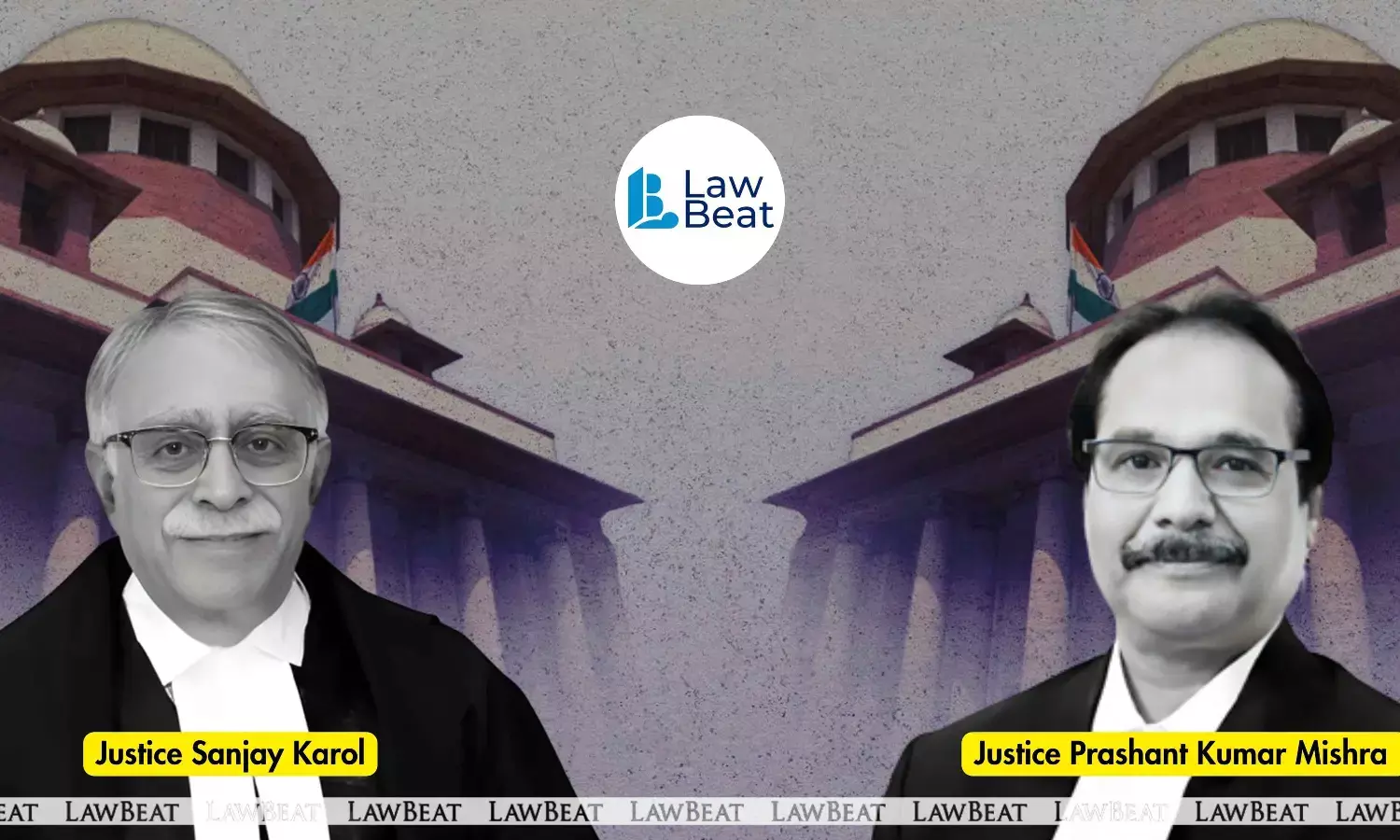
A bench of Justices Sanjay Karol and Prashant Kumar Mishra allowed appeals filed by Sumit Bansal challenging a Delhi High Court judgment which had quashed his complaints relating to dishonour of separate cheques issued by M/s MGI Developers and Promoters. The cheques were issued after the developer failed to hand over commercial units booked by the complainant for a sale consideration of Rs 1,72,21,200.
At the same time, the court dismissed appeals filed by the developer against other High Court judgments which had refused to quash similar complaints.
The bench emphasised that a statutory presumption attaches to the issuance of a cheque, namely that it is issued towards discharge of a legally enforceable debt or liability. This presumption, the court said, must be given due weight.
It observed that when an accused approaches the court seeking quashing of proceedings even before the trial begins, courts must act with caution and avoid prematurely stopping prosecution at the threshold, especially by ignoring the legal presumption that operates in favour of the complainant.
In the present case, five complaint cases were filed against the same accused, with each complaint relating to a distinct cheque and separate dates of presentation and dishonour.
In one judgment dated April 17, 2025, the High Court had held that the complainant could not maintain two separate complaints for the same debt or liability merely because different sets of cheques, one issued by the firm and another by its proprietor, were dishonoured.
However, in another judgment passed the same day on separate pleas by the respondents, the High Court noted that those cheques were issued later on different dates and gave rise to independent and fresh causes of action upon successive dishonours. On that basis, the High Court refused to quash those complaints, observing that whether the cheques were issued towards a legally enforceable debt was a matter to be examined during trial.
After hearing the parties, the Supreme Court reiterated that while exercising inherent powers under Section 482 of the CrPC, the High Court must avoid taking over the role of the trial court or conducting a mini trial, especially when disputed questions of fact are involved.
The bench said that although the powers under Section 482 are wide, they must be exercised with greater caution. While examining a complaint or FIR, the High Court cannot go into the genuineness of allegations and must only see whether there is sufficient material to proceed against the accused, court said.
Referring to its ruling in Neeharika Infrastructure Private Limited (2021), court noted that quashing is permissible only when the complaint on its face does not disclose any offence or where unimpeachable material clearly shows abuse of the process of law.
In the present case, court noted that the cheques involved were distinct instruments drawn on different accounts, presented on different dates, dishonoured separately, and followed by independent statutory notices. The scheme of Section 138 of the NI Act does not bar prosecution in such circumstances, it held.
Whether the cheques were issued as alternative or supplementary instruments, or represented fresh undertakings, the bench said, were disputed questions of fact that require evidence during trial and cannot be decided at the threshold.
Court further noted that questions such as whether the firm’s cheques were issued in substitution of personal cheques, whether they were treated as alternative securities, or whether both were meant to be enforceable at the same time, were mixed questions of fact. Such issues, the court said, cannot be decided by invoking inherent powers under Section 482 of the CrPC.
The bench therefore held that the High Court had exceeded its jurisdiction in quashing Complaint Case No. 3298 of 2019 and the summoning order dated March 6, 2019. It held that the complaint disclosed the ingredients of an offence under Section 138 of the NI Act and must proceed to trial.
On the criminal appeals filed by the respondent, court noted that in three complaints, the cheques were issued and dishonoured on different dates in 2018 and 2019, each followed by separate statutory notices and complaints. It was also an admitted position that these cheques were issued over and above cheques covering the principal amount of Rs 1,72,21,200 and an appreciation amount of Rs 35,00,000.
The bench observed that the record clearly showed dishonour of cheques, service of statutory notices, return of cheques, and issuance of summons thereafter. On this material, the complaints prima facie stood, it said. Any disputed question of fact or defence raised by the accused must be examined during trial.
The respondents argued that the cheques were illegally presented by the complainant despite full payment having already been made. On this issue, court said that the burden of proving whether a debt or liability existed must be discharged during trial.
It noted that under Section 139 of the NI Act, once a cheque issued in discharge of liability is dishonoured, a presumption arises in favour of the complainant. The accused is required to rebut this presumption by showing that no debt or liability existed, that the cheque was not issued towards discharge of liability, or that statutory notice was not properly served.
Court held that the High Court was justified in refusing to quash Complaint Case No. 2823 of 2019, Complaint Case No. 13508 of 2019 and Complaint Case No. 743 of 2020. These complaints disclosed the ingredients of an offence under Section 138 of the NI Act and must proceed to trial.
Court also clarified that none of its observations would affect the merits of the trial, and that the trial court would decide the matter independently based on the evidence placed before it.
Case Title: Sumit Bansal Vs M/s MGI Developers And Promoters And Another
Judgment Date: January 8, 2026
Bench: Justices Sanjay Karol and Prashant Kumar Mishra