
Employer Can't Deny Compassionate Appointment Over Its Own Delay: Supreme Court
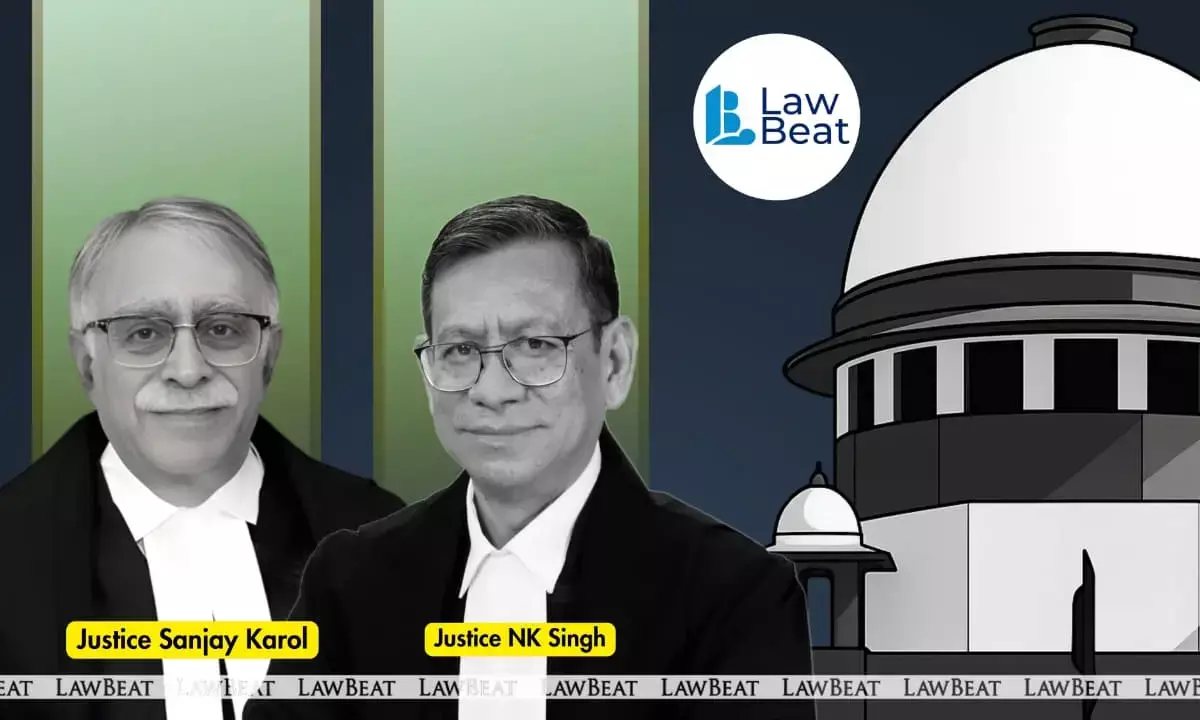
Supreme Court bars employers from defeating compassionate appointment through delay.
The Supreme Court has held that an employer cannot rely on its own delay in processing a timely submitted application for compassionate appointment to invoke an age-based disqualification that arose solely because of that delay.
Court was dealing with a case where the appellant sought compassionate appointment after his father had applied for voluntary retirement on medical grounds before attaining the prescribed age of 55 years. A Bench of Justices Sanjay Karol and N Kotiswar Singh said the employer was duty-bound to act with reasonable promptitude and communicate any procedural deficiencies, if there were any, on time.
Court emphasised that the administration of a beneficial scheme must be fair and reasonable and cannot allow an employer to frustrate the very object of the scheme through administrative inaction.
It held that an employer cannot defeat a claim for compassionate appointment by delaying the processing of an application submitted before the prescribed age limit and then reject it on the ground that the employee crossed that age during the period of administrative delay.
Referring to Articles 14 and 16 of the Constitution, the Bench observed that public employment must ordinarily be based on merit and open competition.
"Compassionate appointment serves as a narrow, humanitarian exception to this general rule, intended to provide immediate relief to families facing sudden financial crisis due to the death or medical incapacitation of the sole breadwinner, and must be strictly construed according to the governing policy," Court said.
Why did the Supreme Court allow the compassionate appointment?
The appeal was filed by Rahul against an August 19, 2023 judgment of the Bombay High Court's Nagpur Bench, which had dismissed his plea seeking compassionate appointment with The New India Assurance Company Limited.
Rahul's father had applied for voluntary retirement on medical grounds before attaining the age of 55 years. Along with the application, he submitted a certificate issued by the Civil Surgeon, General Hospital, Gondia, certifying that he was permanently incapacitated for further service.
However, the respondent company neither rejected the certificate nor informed him before he turned 55 that a certificate from a duly constituted Medical Board was required. It sought such a certificate only after he crossed the age limit and later rejected the claim for compassionate appointment on the ground that he had retired after completing 55 years.
The high court had relied on Clause 1.1 of the 2014 Scheme for Compassionate Appointment in Public Sector General Insurance Companies and held that the Civil Surgeon's certificate did not satisfy the requirement of certification by a duly appointed Medical Board.
Employer Cannot Benefit From Administrative Delay
The Supreme Court found that Rahul's father had not remained inactive after submitting his application. The record showed that he had sent reminders before crossing the age threshold. By then, the respondent company already had his voluntary retirement application, the Civil Surgeon's certificate and the reminders requesting action.
Despite this, the company neither decided the application nor informed him that a Medical Board certificate was necessary.
"Clause 1.1 cannot be construed in a manner that enables the employer to control eligibility through delayed processing. The purpose of the age condition is to identify cases where an employee is medically incapacitated before the prescribed age. The purpose is not to enable the employer to defer scrutiny until the age condition expires and thereafter reject the dependent's claim on that basis," the Bench said.
Court held that after remaining silent despite receiving the application and the Civil Surgeon's certificate, the company could not later deprive the family of the benefit available under the scheme.
"Such a technical construction adopted by the respondent-company would place the benefit of the Scheme at the mercy of administrative delay and would defeat the fairness inherent in the administration of a beneficial scheme," Court observed.
It also said it could not agree with the high court's approach in accepting what it described as the respondent company's "tenuous self-serving plea".
"Once the very basis of rejection is found unsustainable, the denial of compassionate appointment cannot be upheld," the Bench said.
Accordingly, the Supreme Court set aside the high court's judgment as well as the company's order rejecting the claim for compassionate appointment.
Court directed The New India Assurance Company Limited to appoint the appellant within eight weeks by granting age relaxation. However, it did not interfere with the high court's direction to release the father's unpaid service dues.
Case Title: Rahul S/o Ramnarayan Madankar & Anr Vs The New India Assurance Company Ltd & Ors
Bench: Justices Sanjay Karol and N Kotiswar Singh
Date of Judgment: July 16, 2026