
Explained: How Supreme Court Expanded Maternity Rights Of Adoptive Mothers
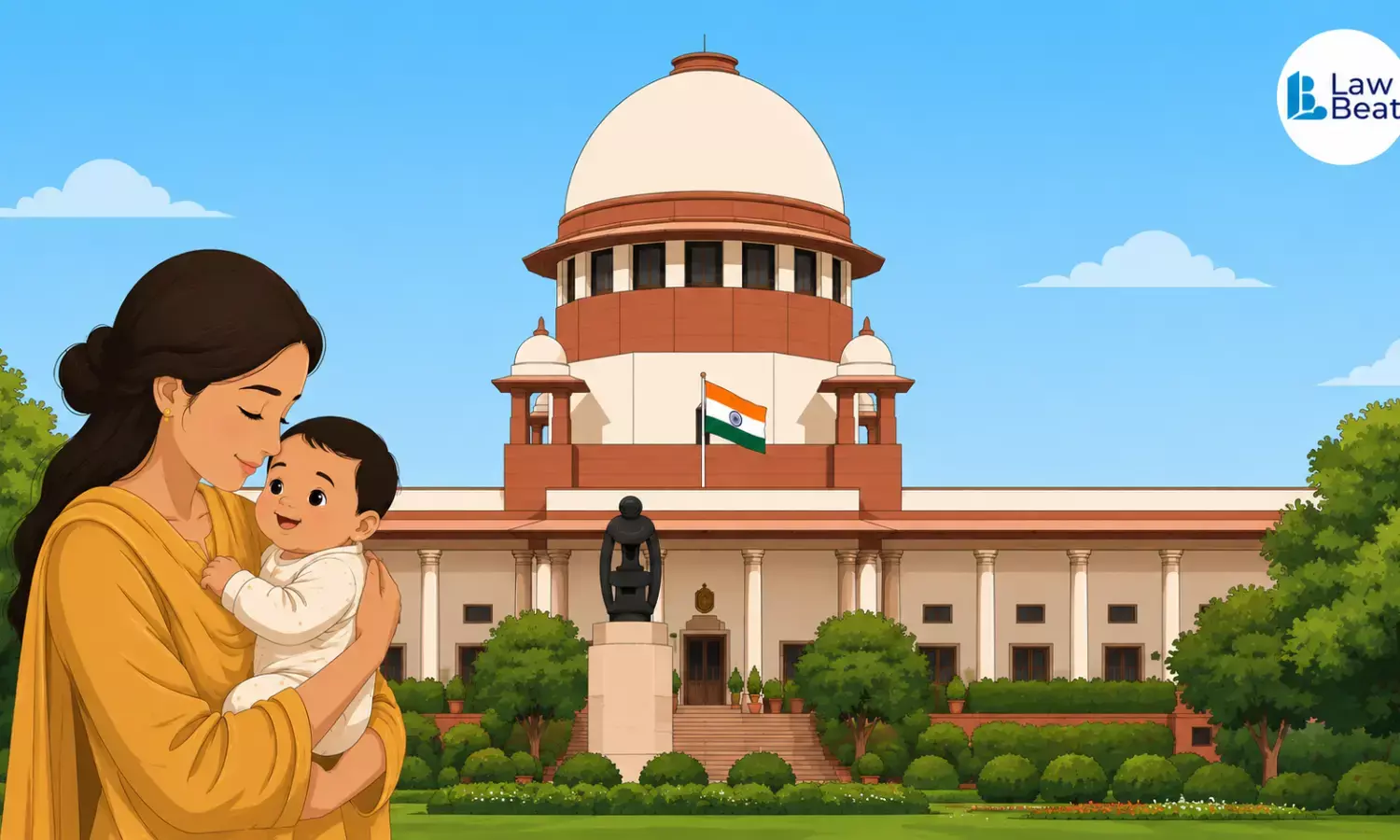
Supreme Court expands maternity rights for adoptive mothers.
The Supreme Court has held that denying maternity benefits to women adopting children above the age of three months is unconstitutional, observing that motherhood cannot be confined to biological childbirth alone.
A Bench of Justices J.B. Pardiwala and K. V. Vishwanathan declared unconstitutional the portion of Section 60(4) of the Social Security Code, 2020, which restricted 12 weeks’ maternity leave only to women adopting children below three months of age. Court held that the provision violated Articles 14 and 21 of the Constitution.
Court held that the sub-section (4) of Section 60 of the 2020 Code should now be meaningfully read as:-
"(4) A woman who legally adopts a child or a commissioning mother shall be entitled to maternity benefit for a period of twelve weeks from the date th child is handed over to the adopting mother or the commissioning mother, as the case may be."
What was the challenge before the Court?
Court was dealing with a petition filed by Hamsaanandini Nanduri, an adoptive mother of two children, who argued that the law created an arbitrary distinction between adoptive mothers based solely on the age of the child adopted.
The provision, originally introduced through the 2017 amendment to the Maternity Benefit Act, 1961 and later incorporated into the Social Security Code, granted maternity benefit only where the adopted child was below three months old.
The petitioner argued that the restriction defeated the very object of maternity protection because the legal adoption process under the Juvenile Justice (Care and Protection of Children) Act, 2015 and Central Adoption Resource Authority (CARA) Regulations itself often takes months to complete, making it practically impossible for many adoptive parents to qualify.
What did the Union government argue?
The Centre defended the provision by contending that children older than three months do not require the same degree of intensive caregiving as newborns.
It also argued that the law sought to balance the rights of adoptive mothers with employer concerns and pointed to crèche facilities available under labour laws.
How did the Supreme Court respond?
Rejecting the government’s stand, the Court held that the purpose of maternity leave extends far beyond physical recovery after childbirth.
The Bench said maternity protection includes emotional bonding, caregiving, and helping a child integrate into a family environment. While physical recovery may not apply in adoption cases, the other aspects of motherhood remain equally relevant, the Bench said.
“Motherhood is not merely a biological function but a deeply personal and emotional experience,” Court observed while emphasising that parenthood is defined by care and responsibility rather than childbirth alone.
The Bench added that adoptive mothers and biological mothers may not form the same category, but the constitutional validity of the law had to be tested against the actual purpose of maternity leave.
Why did the Court find the law discriminatory?
Court held that the three-month cutoff created an unreasonable and under-inclusive classification.
Relying on earlier constitutional precedents on equality, the Bench said the law excluded women who were similarly situated in terms of caregiving responsibilities and child welfare concerns.
Court noted that children adopted after three months also require emotional stability, attachment, and parental care. It further held that excluding such mothers from maternity benefits had no rational nexus with the object of the legislation.
The Bench also recognised adoption as an aspect of reproductive autonomy protected under Article 21.
The Bench said parenthood is defined by “care and responsibility” rather than the physical act of giving birth and recognised adoption as an equally valid expression of motherhood.
Court said the distinction commonly drawn between biological mothers and adoptive mothers views motherhood “through the narrow lens of biology” and ignores the emotional bond that develops outside the womb.
"We have no hesitation in saying that an adoptive mother like the petitioner would have the same rights and obligations towards the child as the natural mother," the Bench held.
Broader observations:
The judgment contains extensive observations on gender justice and unpaid care work.
Court described maternity protection as a basic human right linked to dignity, workplace equality, and social justice. The Bench observed that maternity leave is not merely about physical recovery after childbirth but also about emotional bonding and caregiving.
Court noted that although adoptive mothers may not require physical recovery, the second and third components remain equally important in adoption cases.
It referred to international conventions including the Convention on the Elimination of All Forms of Discrimination against Women (CEDAW) and the Convention on the Rights of the Child while discussing the obligation of the State to support caregiving.
"Maternity benefits are meant to ensure that women do not have to choose between employment and caregiving responsibilities. It recognised maternity leave as institutional support enabling women to participate meaningfully in the workforce without compromising motherhood," Court held.
The Bench also highlighted the “institutional invisibility” of household and caregiving labour performed by women.
Paternity leave:
The judgment also contains significant observations on paternity leave and shared parenting responsibilities.
The Bench observed that society has historically assigned caregiving roles almost exclusively to mothers while fathers have been viewed primarily as financial providers.
Court said the absence of paternity leave reinforces gender stereotypes and deprives fathers of a meaningful opportunity to participate in caregiving during the child’s formative years.
Referring to existing Central Civil Services Rules granting 15 days’ paternity leave to government employees, including adoptive fathers, the court said the concept of paternity leave is “not alien, but less recognized".
In its concluding direction, the Supreme Court urged the Union government to introduce paternity leave as a recognised social security benefit and said its duration should be responsive to the needs of both the parent and the child.
Case Title: Hamsaanandini Nanduri Vs Union of India & Ors
Bench: Justices J.B. Pardiwala and K. V. Vishwanathan
Date of Judgment: March 17, 2026