
False Election Affidavit: Supreme Court Says Voters Can File Private Complaint Against Candidates Under Section 125A RoP Act
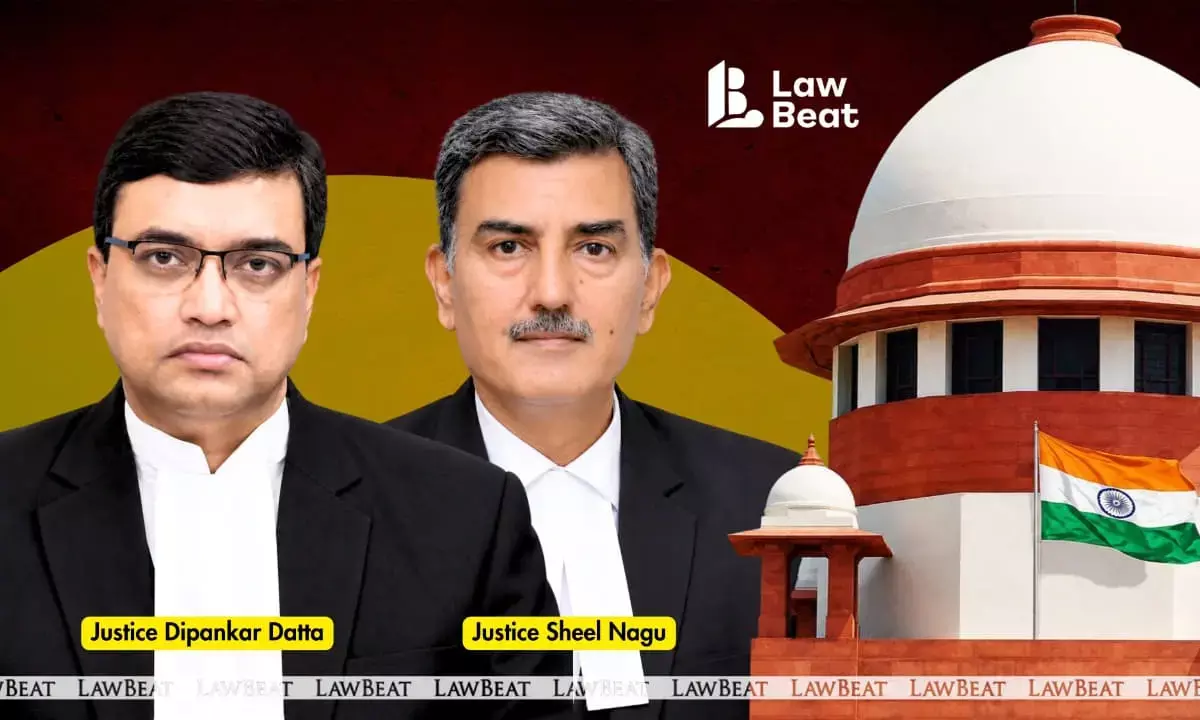
Voters can file complaints over false election affidavits, says Supreme Court.
The Supreme Court has held that a private complaint alleging an offence under Section 125A of the Representation of the People Act (RoP Act), 1951, including for filing a false affidavit, is maintainable and does not require a complaint by a public servant under Section 195 of the Code of Criminal Procedure, 1973 (CrPC) [Section 215 of the new Bharatiya Nagarik Suraksha Sanhita (BNSS)].
Section 125A of the RoP Act prescribes penalties for candidates who provide false information, conceal facts, or fail to furnish mandatory details in their nomination papers or election affidavits.
Section 195 of the CrPC places restrictions on courts taking cognizance of certain specific categories of offenses. It dictates that a court cannot take notice of these crimes unless a written complaint is filed by the proper authority rather than through a standard police report or private complaint.
A Bench of Justices Dipankar Datta and Sheel Nagu observed that Section 195 CrPC restricts a court from taking cognizance only of the offences specifically enumerated in that provision. Since Section 125A of the RoP Act is not included, courts cannot extend the restriction to that offence by implication.
The Bench was dealing with an appeal filed by Rajkumar Madki against a March 7, 2025 judgment of the Karnataka High Court, which had quashed his complaint against Karnataka MLA Dr Shailendra Beldale.
The complaint, filed under Section 200 CrPC before an Additional Chief Metropolitan Magistrate at Bengaluru, alleged that Beldale, who was elected from the Bidar constituency in 2023, had made a false disclosure regarding his residential address in the affidavit accompanying his nomination papers.
The high court had held that an offence under Section 125A of the RoP Act should also be subjected to the requirements of Section 195(1) CrPC. It therefore concluded that only the Election Commission could initiate a complaint for such an offence.
The high court had also observed that a voter’s remedy was to file an election petition and not a private criminal complaint, and that initiating criminal proceedings was a matter for the Election Commission.
The Supreme Court, however, said the question of whether Section 125A had to satisfy the requirements of Section 195(1) was a substantial question of law of general public importance that had not previously been decided by the Court.
What does Section 195 CrPC actually prohibit?
The Bench noted that Section 195(1)(a) CrPC bars a court from taking cognizance of offences, among others, punishable under Sections 172 to 188 of the Indian Penal Code, unless there is a complaint by the concerned public servant or another public servant authorised by him.
Court said the provision does not include Section 125A of the RoP Act.
“Should we read into Section 195, CrPC a prohibition in respect of Section 125A of the RoP Act also, apart from those expressly included?” the Bench asked.
It said that if Parliament intended prosecution for furnishing false information by a candidate in an affidavit under Section 125A to be initiated only by a public servant, it could have amended Section 195 CrPC to expressly include the provision.
The legislative omission, the Court held, was deliberate.
Court further relied on the non-obstante clause in Section 125A, under which the prescribed penalty operates “notwithstanding anything contained in any other law for the time being in force”.
It also noted that there is no provision in any enactment stipulating that a complaint concerning an offence under Section 125A can be lodged only by a public servant.
The Bench therefore held that the restrictions under Section 195 CrPC do not apply to a private complaint filed under Section 200 CrPC (Section 223 BNSS) alleging an offence under Section 125A.
“Courts cannot read additional offences into this provision by implication,” the Bench said, adding that the High Court was “clearly in error” in holding otherwise.
Court also clarified that although the Election Commission is supreme in its own sphere and may issue guidelines or press notes based on its understanding of statutory provisions, the interpretation of statutes is primarily the function of courts, and such guidelines do not bind them.
Despite holding that a voter can maintain a private complaint under Section 125A, the Supreme Court declined to revive Madki’s proceedings against Beldale.
The Bench said the documents placed on record showed that the allegation that Beldale had made a false declaration regarding his residence had been “more than effectively rebutted”.
Court observed that, at that stage, the possibility of conviction appeared remote and allowing the proceedings to continue merely for the trial magistrate to decide the complaint on merits would consume valuable judicial time.
It therefore upheld the high court’s decision to quash the proceedings before the trial magistrate, but for reasons different from those given by the high court.
Court concluded that a private complaint alleging an offence under Section 125A of the RoP Act need not satisfy the requirements of Section 195 CrPC. It added that if such complaints are filed merely to harass elected candidates or contain frivolous allegations, the competent magistrates are empowered to pass appropriate orders according to the facts of each case.
Case Title: Sri Rajkumar Madki Vs Dr Shailendra Beldale
Bench: Justices Dipankar Datta and Sheel Nagu
Date of Judgment: October 16, 2026