
‘High Court Took Undue Pains to Quash FIRs’: Supreme Court Restores Andhra Pradesh Corruption Probes
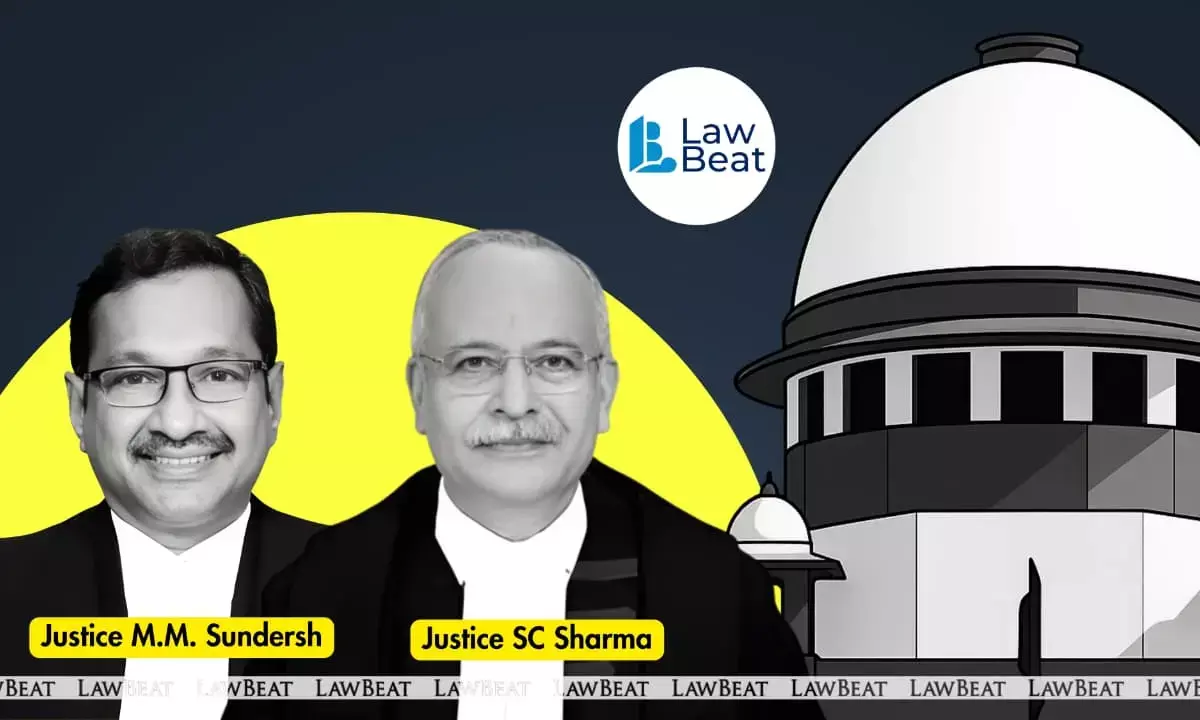
Supreme Court sets aside Andhra Pradesh High Court order to revive major corruption investigations
The Supreme Court on January 8, 2026 took strong exception to a series of orders passed by the Andhra Pradesh High Court quashing multiple FIRs in corruption cases, observing that the investigations had been cut short at the threshold in some cases and criminal proceedings terminated in others solely on the ground of lack of jurisdiction of the police station.
Calling the High Court’s approach a “travesty of justice,” a bench of Justices M M Sundresh and Satish Chandra Sharma allowed the appeal filed by the Joint Director (Rayalseema), Anti-Corruption Bureau, Andhra Pradesh. The bench heard senior advocates Sidharth Luthra and Siddharth Aggarwal appearing for the appellant.
“In our considered view, the High Court took undue pains to ensure that the FIRs are quashed,” the bench observed.
The Supreme Court noted that by adopting a hyper-technical approach, the High Court had extended what it termed a “helping hand” to the accused, resulting in the nullification of the FIRs in an entire batch of cases.
The FIRs in question were registered between 2016 and 2020 at the Anti-Corruption Bureau’s Central Investigation Unit, Vijayawada Police Station, Andhra Pradesh, for offences punishable under the Prevention of Corruption Act.
These FIRs were challenged by the accused persons primarily on the ground that the Anti-Corruption Bureau, Central Investigation Unit, Vijayawada Police Station, was not notified as a police station under Section 2(s) of the Code of Criminal Procedure, 1973, and therefore lacked the jurisdiction to register the FIRs.
Accepting this contention, the Andhra Pradesh High Court held that in the absence of a notification under Section 2(s) of the CrPC, the police station to which the officers belonged had no authority to register the FIRs. It further held that such a declaration must be made through a notification published in the Official Gazette.
Challenging this reasoning, counsel for the appellant argued that the High Court had failed to consider the mandate of the Andhra Pradesh Reorganisation Act, 2014, particularly Sections 101 and 102. It was contended that following the bifurcation of the State, the office of the Anti-Corruption Bureau, which was relocated to the new capital, continued to exercise jurisdiction over the entire State by virtue of the deeming provisions under the 2014 Act.
On the other hand, counsel for the respondents defended the High Court’s orders, arguing that the State itself had acknowledged the lacuna, which was why it issued a subsequent Government Order in 2022, followed by a notification, while the criminal petitions were still pending before the High Court.
After examining the scope of the relevant provisions of the CrPC, the 2014 Act, and a series of Government Orders and circulars, the bench held that the High Court had “completely misdirected itself” in interpreting the law, including the principles laid down by the Supreme Court.
Court found the High Court’s insistence on a Gazette notification for compliance with Section 2(s) of the CrPC to be “unacceptable,” observing that substance and compliance in spirit must prevail over a rigid technical view.
It also rejected the High Court’s conclusion that the clarificatory Government Order of 2022 would not affect the FIRs already registered, calling such a finding untenable and contrary to settled legal principles.
The Supreme Court clarified that when a Government Order is issued purely by way of clarification, the question of retrospective application does not arise. It noted that the 2022 Government Order merely reiterated the provisions of the 2014 Act to remove any ambiguity.
The bench further pointed out that earlier judgments of the Supreme Court had already interpreted the 2014 Act to mean that all existing laws prior to bifurcation would continue to operate in both successor States unless altered, repealed, or amended in accordance with law.
“Any construction to the contrary would defeat the very intent and purpose of the Government Orders, which were given the status of ‘law’ through the circular dated May 26, 2014,” the bench said.
That circular, court noted, clearly stated that all laws applicable to the undivided State of Andhra Pradesh as on June 1, 2014 would continue to apply to both Telangana and Andhra Pradesh notwithstanding the bifurcation.
The bench held that the 2003 Government Order declaring Anti-Corruption Bureau offices as police stations and conferring statewide jurisdiction on the Joint Director, Central Investigation Unit, continued to have the force of law even after the bifurcation.
Disagreeing with the High Court’s view that a fresh notification was required after reorganisation, the Supreme Court emphasised that no legal vacuum was created by the formation of the State of Telangana and the residual State of Andhra Pradesh.
It further observed that the relocation of the Anti-Corruption Bureau’s Central Investigation Unit from Hyderabad to Vijayawada did not strip it of jurisdiction, especially in light of the deeming provisions under the 2014 Act and the binding Government Orders and circulars.
Setting aside the impugned judgment, the Supreme Court made it clear that the Andhra Pradesh High Court should entertain no further challenges to the FIRs.
Court granted liberty to the appellant to proceed with the investigation and directed that final reports be filed within six months. It also directed that no coercive steps, including arrest, be taken against the respondents, provided they cooperate with the expeditious completion of the investigation.
Case Title: The Joint Director (Rayalseema), Anti-Corruption Bureau, AP & Anr Etc Vs Dayam Peda Ranga Rao Etc
Order Date: January 8, 2026
Bench: Justices M M Sundresh and Satish Chandra Sharma