
How To Determine If An Agreement Creates A License Or Lease? Supreme Court Answers
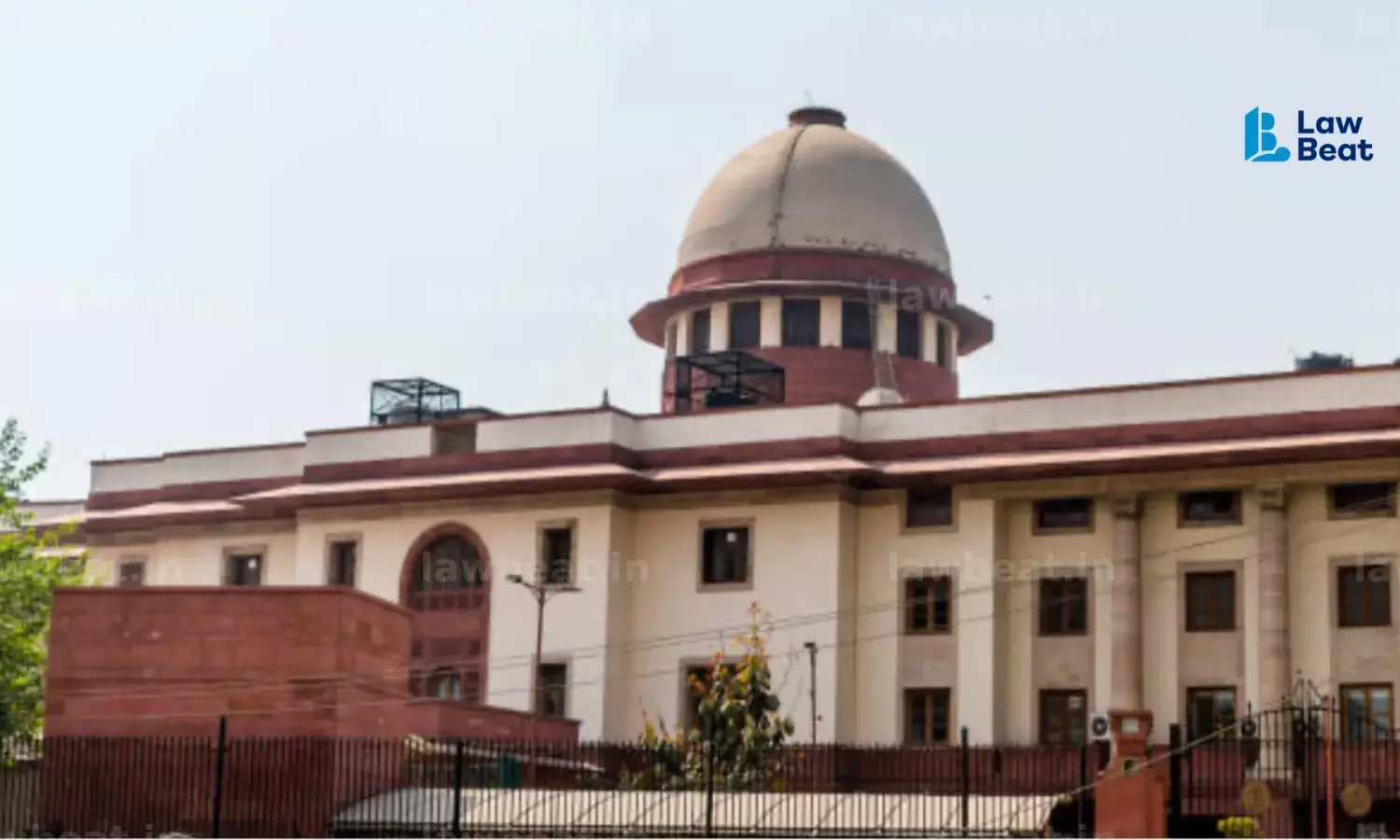
Supreme Court reiterates that courts must conduct a proper inquiry with evidence when a claim of juvenility is raised under the Juvenile Justice Act
The Supreme Court has said the decisive consideration in determining whether an agreement creates the relationship of lessor and lessee or merely that of licensor and licensee is the intention of the parties, which has to be ascertained on a consideration of all the relevant provisions in the agreement.
A bench of Justices Pankaj Mithal and S V N Bhatti said, to ascertain whether a document creates a licence or lease, the substance of the document must be preferred to the form; the real test is the intention of the parties — whether they intended to create a lease or a license.
"If the document creates an interest in the property, it is a lease; but, if it only permits another to make use of the property, of which the legal possession continues with the owner, it is a license; and if under the document a party gets exclusive possession of the property, prima facie, he is considered to be a tenant; but circumstances may be established which negative the intention to create a lease,” the bench said.
The court here allowed a civil appeal filed by the General Secretary, Vivekananda Kendra against the Orissa High Court's judgment of December 23, 2022 in respect of a property.
Vivekananda Kendra filed a civil suit against Anima Bose and others for declaration of its leasehold rights, recovery of possession, and a mandatory injunction, claiming a registered 99-year lease of 1998, under which the plaintiff carried out spiritual and service activities and made constructions like the Ashram Building.
It claimed Bose unilaterally executed a deed of cancellation of lease in 2003, allegedly due to prolonged illness, loss of mental stability, and the fraudulent management of her relatives. It contended the 99-year lease is valid, the deed of cancellation is fraudulent, illegal, and void. However, the defendant No. 2 sold the property and building to other defendants by a registered sale deed in 2006 for a consideration of Rs 17,80,100.
In 2018, the civil suit was decreed. The first appellate court confirmed the judgment and decree of the Trial Court. The High Court, however, set aside the findings of the Trial Court and the first appellate court, and consequently dismissing the suit. Having heard the counsel, the bench said, if the words in a contract/deed are clear, there is very little the courts must do in the construction of the contract in determining the intention of the parties.
In furtherance of determining the intention, the court pointed out, the deed must be read as a whole to ascertain the true meaning of its clauses, and the words of each clause should be interpreted harmoniously. "This intention must be derived directly from the plain and ordinary meaning of the text itself. Furthermore, these words should be understood exactly as the intended parties would commonly use them. The covenants must be applied precisely as written, neither diluted into irrelevance nor stretched beyond their original scope,'' the bench said.
The court pointed out, if the construction of the contract/deed, through its words and context, does not provide the court with the parties’ intention, the court may have regard to the circumstances surrounding its creation and the subject matter to which it was designed and intended to apply.
"While the circumstances of a deed are not the safest guide for interpreting a crystallised document, courts may rely on it when the document’s purport is unclear through literal construction. However, courts must exercise far greater restraint when inferring the parties’ intention from circumstances arising after the creation of the terms. For, the conduct may not be in tandem with either the literal expression or the purpose of the document,'' the bench said.
The court emphasized, interpreting intention through purposive construction or through ex-post facto circumstances is unnecessary when the intention is understood from the plain and ordinary meaning of the text.
"Nomenclature alone of the document is not the decisive factor of the nature of a document; it is the text and the context that point to the obligations undertaken by the parties to a written document,'' the bench said.
In the case at hand, the court held, the document’s nomenclature, text and context lead to only one conclusion: that defendant No. 1 entered into a 99-year lease deed, thus, the unilateral cancellation, in the facts and circumstances of this case, is illegal, and it should be understood as having interfered with the right of the plaintiff to remain in possession of the property for 99 years. The bench declared the reason for ignoring literal construction is not convincing.
Case Title: The General Secretary, Vivekananda Kendra Vs Pradeep Kumar Agarwalla And Others
Bench: Justices Pankaj Mithal and S V N Bhatti
Date of Judgement: February 26, 2026