
IBC Section 7 Explained: Supreme Court Says Simultaneous Proceedings Against Corporate Debtor And Guarantor Permissible
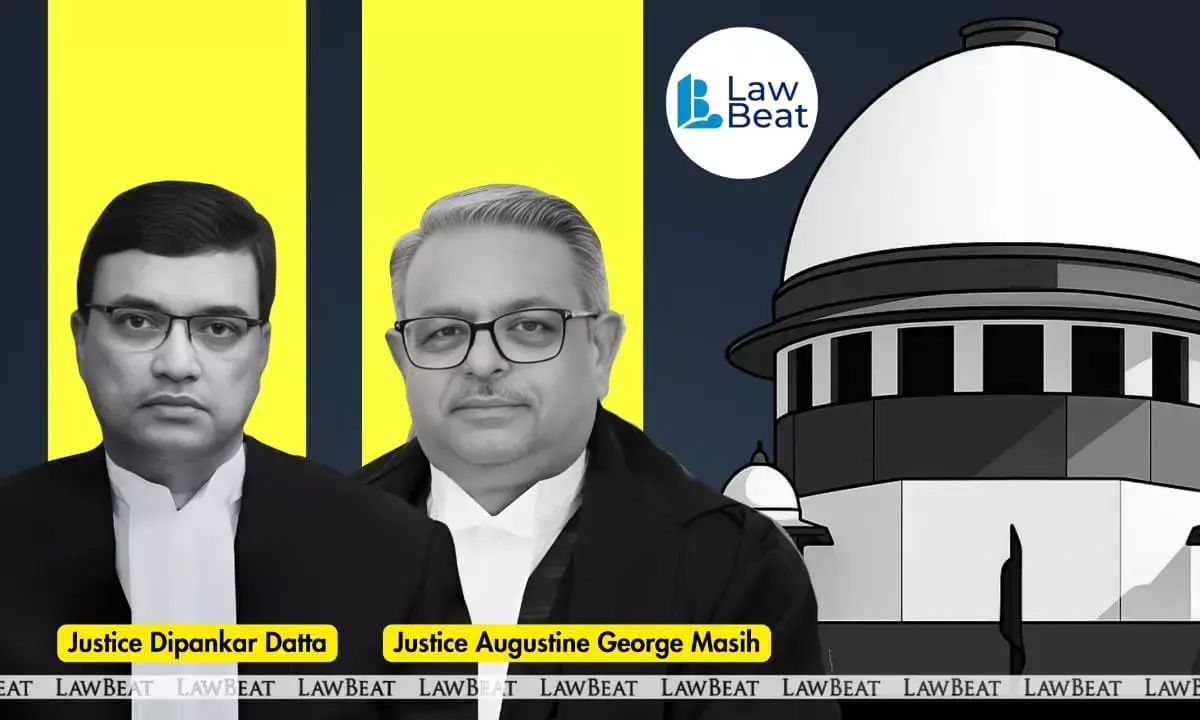
The Supreme Court of india clarifies that creditors can initiate insolvency proceedings simultaneously against both borrower and guarantor under the IBC.
The Supreme Court has clarified that the Insolvency and Bankruptcy Code (IBC) allows a financial creditor to start insolvency proceedings under Section 7 against both the corporate debtor and the corporate guarantor, either at the same time or separately.
A Bench of Justices Dipankar Datta and Augustine George Masih said that the liability of the main borrower and the guarantor is equal and runs together.
Court pointed out that Section 7 of the IBC is part of a carefully designed and well-researched legal framework. It added that even though the IBC functions through courts and tribunals, its impact goes beyond that, affecting sectors like banking and the broader economy.
However, the Bench refused to frame any detailed guidelines for how simultaneous proceedings or group insolvency should work. It said that doing so would amount to stepping into the role of the legislature.
“To venture into uncharted territory by taking on a legislative role would not be appropriate. We leave it to the legislature and the Insolvency and Bankruptcy Board of India (IBBI) to frame any necessary guidelines through a proper consultative process,” Court said.
Court was dealing with a batch of civil appeals filed by ICICI Bank Limited. The main question before the Bench was whether insolvency proceedings can be initiated at the same time against both the principal borrower and the corporate guarantor.
These appeals arose from different orders passed by the National Company Law Tribunal (NCLT) and the National Company Law Appellate Tribunal (NCLAT), but all raised the same legal issue.
The Bench noted that this issue had already been settled in an earlier Supreme Court judgment in BRS Ventures Investments Ltd vs SREI Infrastructure Finance Ltd (2025).
Even so, lawyers appearing in the case asked the court to lay down additional safeguards. They argued that the IBC should not be used as a recovery tool, and that starting insolvency proceedings against multiple companies for the same debt would go against the purpose of the law.
While agreeing that the IBC is not meant to be a recovery mechanism, Court rejected the argument that proceedings against guarantors should be barred for that reason.
The Bench said that when a creditor takes a guarantee, it must be allowed to fully use that protection. It added that a financial creditor has the right to proceed under the Code, and the adjudicating authority must independently examine each case on its merits.
Court also rejected the argument that allowing creditors to claim the full debt from both the borrower and the guarantor would give them an unfair advantage, such as voting rights in two separate committees of creditors.
It said that limiting a creditor’s claim in such situations would defeat the very purpose of a guarantee. Since a guarantor’s liability is equal to that of the borrower, forcing the creditor to choose between them would mean giving up part of its claim, which the law does not require.
Another concern raised was that simultaneous proceedings could allow creditors to recover more than what is actually due.
Court accepted that this concern is valid but said it is not enough to completely bar such proceedings. It noted that safeguards already exist to prevent double recovery.
For example, CIRP Regulation 12A of IBBI (Insolvency Resolution Process for Corporate Persons) Regulations, 2016 requires creditors to update their claims as soon as they recover any amount, whether partially or fully, from another source.
In the end, the Supreme Court limited its decision to the legal issue involved and left all factual and merit-based questions to be decided by the appropriate adjudicating authority.
Case Title: ICICI Bank Limited Vs Era Infrastructure (India) Limited and connected matters
Bench: Justices Dipankar Datta and Augustine George Masih
Date of Judgment: February 26, 2026