
Illegal Termination Must Ordinarily Result in Back Wages, Says Supreme Court
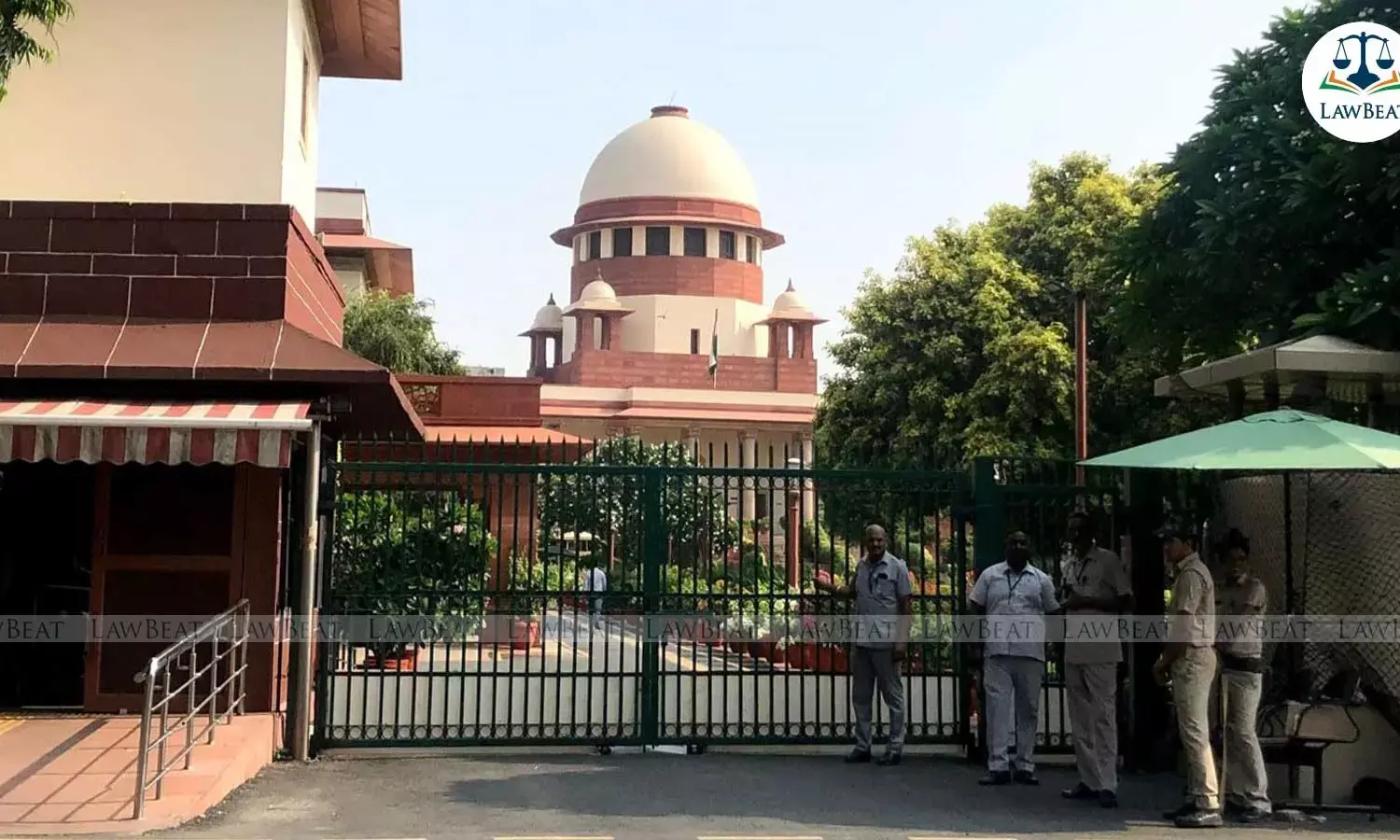
Supreme Court holds that when termination is declared illegal and no proof of alternate employment exists, denial of back wages is unjustified. Read the full judgment in Uma Shankaran v Union of India
The Supreme Court has said if the employer by reason of its illegal act deprives any of its employees from discharging his work and the termination is ultimately held to be bad in law, such employee has a legitimate and valid claim to be restored with all his wages that he would have received but for being illegally kept away from work.
A bench of Justices Manoj Misra and Manmohan emphasised, this is based on the principle that although the employee was willing to perform work, it was the employer who did not accept work from him and, therefore, if the employer’s action is held to be illegal and bad, such employer cannot escape from suffering the consequences.
"We are conscious of the law that ordering back wages to be paid to a dismissed employee – upon his dismissal being set aside by a court of law – is not an automatic relief and, ordinarily, is dependent on the employee being not employed in the interregnum,'' the bench said.
The court was dealing with an appeal filed by constable Uma Shankaran, challenging the Delhi High Court's orders of March 26, 2019 and May 01, 2019 to the extent it denied back wages/ arrears of salary to the appellant.
The High Court allowed the appellant's plea and set aside the order of removal from service with full consequential benefits including fixation of seniority and computation of pay and pension in the manner as if the appellant was never removed from service, arrears of salary/ back wages was denied. The High Court also dismissed the review petition of the appellant.
The apex court also dismissed a special leave petition by the respondent.
The court was concerned with the issue whether in the facts of the case, the High Court was justified in denying arrears of salary.
As per facts of the matter, the appellant was charged with being in possession of assets disproportionate to his income. The said charge was based on a confession that the appellant had dispatched two Bank drafts of Rs 10,000 each to his brother at Kerala. The High Court found the charge baseless.
The appellant contended when the High Court had come to the conclusion that removal from service was completely unjustified and the charge was unfounded based on no material, there was no justification to deny back wages/ arrears of salary for the period during which the petitioner for no fault on his part was kept out of service.
The respondent Union government contended that the previous conduct of the appellant did not justify grant of full back wages and, therefore, it was not a fit case where this court should exercise its discretionary jurisdiction and award full back wages to the appellant.
"What is clear from the judgment of the High Court is that there was no worthwhile evidence on record to substantiate the charge against the appellant. Moreover, the charge was not based on any misconduct but on suspicion arising from preparation and sending of Bank Drafts by the appellant to his family,'' the bench said.
Having noted the legal position, the bench felt, the High Court ought to have undertaken an exercise to ascertain whether the writ petitioner was gainfully employed in the interregnum before denying arrears of salary/ back wages. However, this exercise was not done.
"In our view, as already sufficient time has elapsed since the date of High Court’s order and the order of reinstatement with benefit of continuity in service has attained finality, we do not consider it appropriate to remand the matter for such an exercise,'' the bench said.
The court also pointed out, no any material has been provided to show that the appellant was gainfully employed elsewhere.
"As the plea to deny reinstatement has already been rejected by the High Court, and its direction for reinstatement has attained finality, in absence of any plea that the appellant was gainfully employed elsewhere in the interregnum, in our view, there appears no good reason to deny back wages/ arrears of pay,'' the bench said.
The court pointed out, the charge of dispatch of Bank Drafts of an amount which, prima facie, is within the known sources of income ought not to have been a basis for removal from service, particularly, when the source of money was duly proved.
"In consequence, the action of the respondent(s) is nothing short of being arbitrary. Thus, when the High Court held charge(s) were not proved, there had to be a cogent reason for denial of arrears / back wages. We do not find any such cogent reason to deny those benefits,'' the bench said.
As far as the previous conduct of the appellant was concerned, the court noted, the appellant has already been punished and therefore, denial of back wages on that ground would amount to double punishment.
Allowing the appeals, the court set aside the order of the High Court to the extent it denied the appellant of the arrears of pay/back wages.
"The appellant shall be entitled to arrears of pay / back wages in addition to what he is entitled to under the order of the High Court,'' the bench said.
Case Title: Uma Shankaran v. Union of India and Others
Bench: Justice Manoj Misra and Justice Manmohan
Date of Judgment: 19th January 2026