
'Insolvency Can't Be Debt Recovery Shortcut': Supreme Court Clarifies Limits Under Section 7 IBC
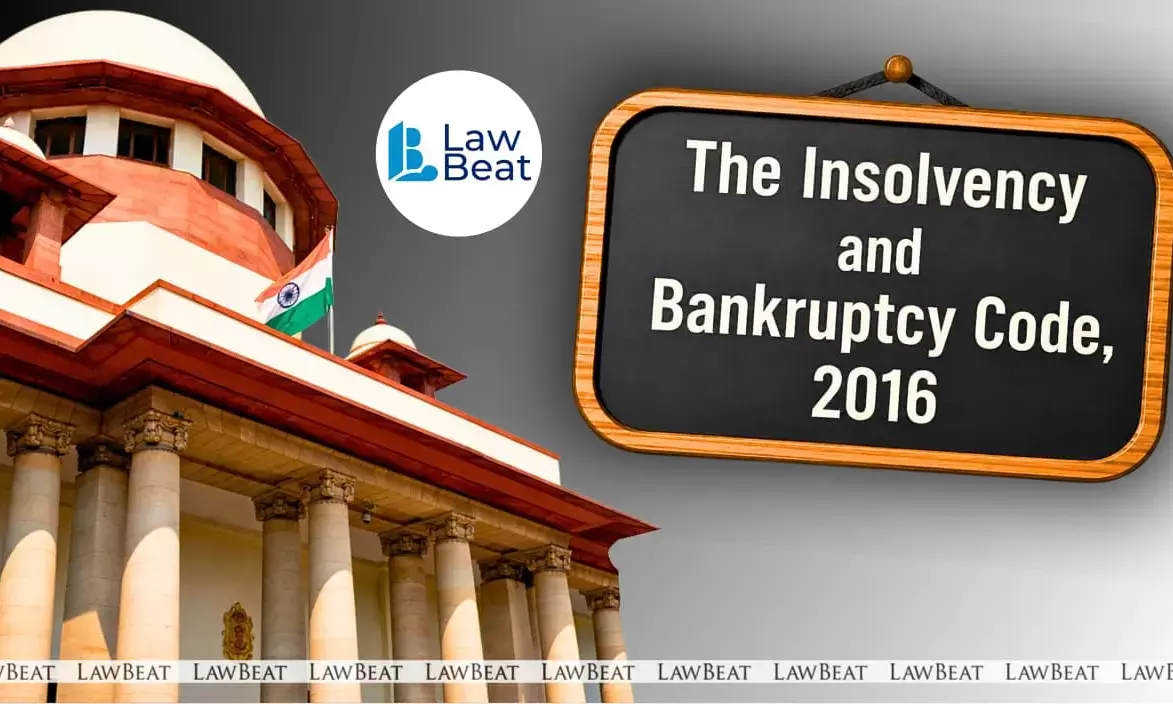
The Supreme Court of India emphasises that insolvency proceedings under the IBC cannot be used to recover dues or enforce court decrees.
The Supreme Court of India has held that the Insolvency and Bankruptcy Code (IBC) cannot be used as a shortcut to recover money or to pressure someone into making payments. It clarified that insolvency proceedings are not meant to resolve disputes over how much money is actually due under a court decree.
A Bench of Justices P S Narasimha and Alok Aradhe observed that insolvency proceedings have serious consequences and should be used only in cases of genuine financial distress, not as a way to enforce payment of dues.
"A creditor who approaches the NCLT not with any genuine concern for the resolution of the corporate debtor but purely to secure payment of his individual dues is acting contrary to the purpose and spirit of the Code,'' the Bench said.
Court also made it clear that a party cannot take conflicting stands before different forums and then treat the amount due as final and undisputed while initiating insolvency proceedings.
Referring to its earlier ruling in Dena Bank (now Bank of Baroda) v. C. Shivakumar Reddy (2021), Court said that although a money decree can give a financial creditor a fresh cause of action under Section 7 of the IBC, this does not mean that every decree-holder has an automatic right to start insolvency proceedings.
"The question of whether, in each case, the invocation of the IBC amounts to misuse of the process or to the use of the Code as a recovery mechanism remains a question to be examined on the facts,'' the Bench said.
Court was hearing an appeal filed by Anjani Technoplast Ltd against a 2022 order of the National Company Law Appellate Tribunal (NCLAT), which had directed the admission of an insolvency plea filed by lender Shubh Gautam.
The lender had given loans to the company, and when repayment cheques bounced, he filed a case under Section 138 of the Negotiable Instruments Act. Later, both sides entered into a settlement under which the company agreed to pay over ₹3.22 crore within a year. In fact, by April 2014, the company had already paid more than ₹3.53 crore.
However, the lender later filed a civil suit in the Delhi High Court, which in 2018 ordered the company to pay over ₹4.38 crore with 24% annual interest from 2016. This decree was upheld by the division bench and later by the Supreme Court, making it final.
Instead of executing this decree through the usual legal process, the lender approached the NCLT under Section 7 of the IBC, claiming that the decretal amount was a financial debt and that the company had defaulted. The NCLT dismissed the plea, but the NCLAT allowed it, leading to the present appeal.
The Supreme Court examined whether insolvency proceedings could be used as an alternative to executing a civil court decree. It reiterated that the IBC is meant for resolving insolvency and maximising the value of assets, not for recovering debts.
Court also pointed to Section 65 of the IBC, which allows penalties if insolvency proceedings are initiated fraudulently or with malicious intent. This, the court said, clearly shows that the law does not permit using the IBC as a recovery tool.
In this case, Court noted that the company had already deposited over ₹3.60 crore with the Registrar General of the Delhi High Court and had consistently shown willingness to pay any legally due amount. It also observed that related proceedings in the high court were still pending.
Given these facts, Court held that initiating insolvency proceedings was nothing but an attempt to recover money using the IBC, which amounts to abuse of the process.
Court allowed the appeal, set aside the insolvency proceedings, and permitted the lender to pursue execution of the decree through proper legal channels. It also imposed a cost of ₹5 lakh on the lender, to be paid to the company within five weeks.
Case Title: Anjani Technoplast Ltd Vs Shubh Gautam
Bench: Justices P S Narasimha and Alok Aradhe
Date of Judgment: April 23, 2026