
Interim Stay Ordinarily Required Where Appeal Involves Serious Consequences: Supreme Court
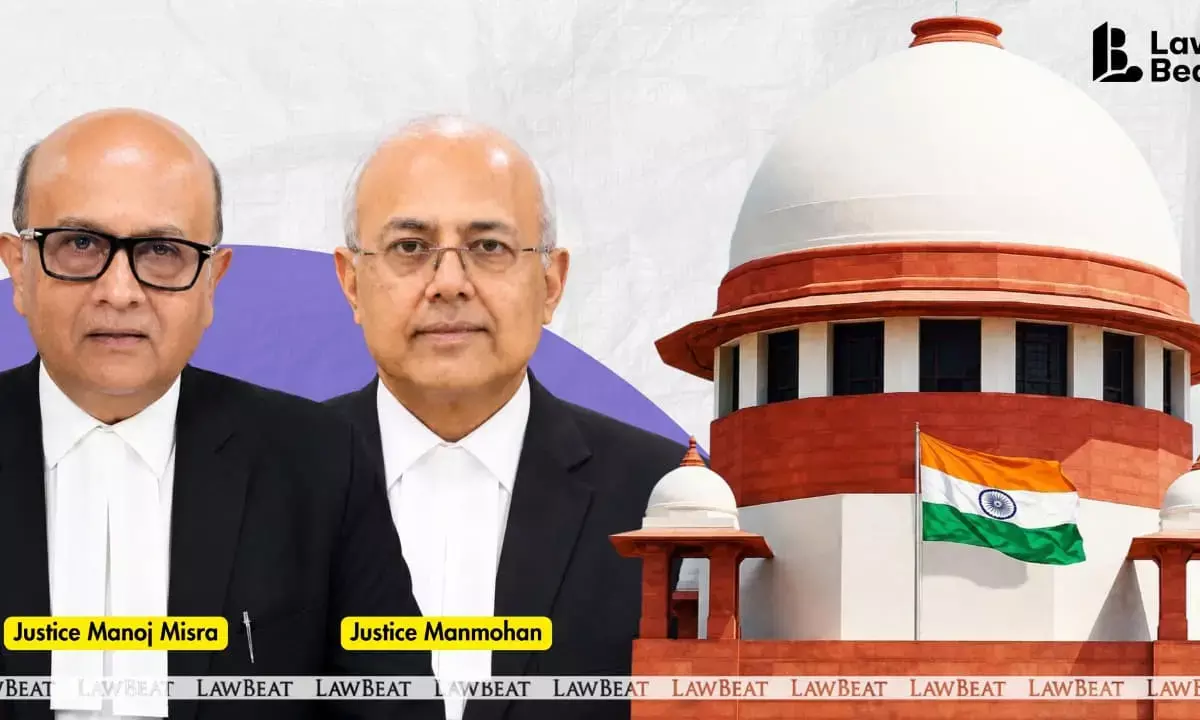
Supreme Court restores stay against dispossession pending first appeal.
The Supreme Court has held that where the order under appeal has serious consequences, it should ordinarily be stayed during the pendency of the appeal. Otherwise, the Court said, the statutory remedy of appeal could be rendered meaningless.
At the same time, Court clarified that an appellate court is always free to impose appropriate conditions while granting such a stay to protect the interests of the non-appellant.
A Bench of Justices Manoj Misra and Manmohan made the observation while setting aside a Madras High Court order that had vacated interim protection against the appellant's dispossession. The Bench restored the earlier interim order granted by the high court.
Why did the Supreme Court restore the interim protection?
The case arose from a March 28, 2025 order of the Madras High Court, which vacated its earlier interim order dated September 30, 2022. The earlier order had protected the appellant from dispossession while his first appeal remained pending before the high court.
Appearing for the appellant, counsel argued that a first appeal is a valuable statutory remedy in which the appellate court can examine both questions of fact and law. It was submitted that if the interim protection against dispossession was withdrawn before the appeal was decided, the very purpose of filing the appeal would be defeated.
Earlier, while entertaining the matter, the Supreme Court had stayed the high court's order subject to the appellant depositing Rs 5 lakh.
Referring to its decision in Mool Chand Yadav & another v. Raza Buland Sugar Company Ltd., Rampur & others (1982), the Bench reiterated:
"Ordinarily where the order under appeal has serious consequences, a stay of the order pending consideration of appeal is appropriate, otherwise the remedy of appeal might be rendered nugatory."
Court, however, emphasised that while granting such protection, the appellate court can always impose suitable conditions to safeguard the interests of the non-appellant.
Taking note of the appellant's compliance with its earlier direction to deposit Rs 5 lakh, the Bench said:
"As the appellant here has deposited Rs 5 lakh we deem it appropriate to set aside the impugned order and dispose of this appeal by directing that the interim order of the high court dated 30.09.2022 shall continue during pendency of appeal before the high court."
The Supreme Court also directed that the amount deposited by the appellant in the Registry of the Court, along with any accrued interest, be transferred to the Madras High Court. It directed the high court to keep the amount in an interest-bearing fixed deposit with a nationalised bank, subject to the final outcome of the appeal.
The Bench further requested the high court to dispose of the pending first appeal expeditiously, preferably within six months.
Case Title: S Duraimanickan Vs D Ilavarasi & Ors
Bench: Justices Manoj Misra and Manmohan
Date of Judgment: May 26, 2026