
Long Passage of Time Without Repeat Offence Can Justify Sentence Reduction: Supreme Court
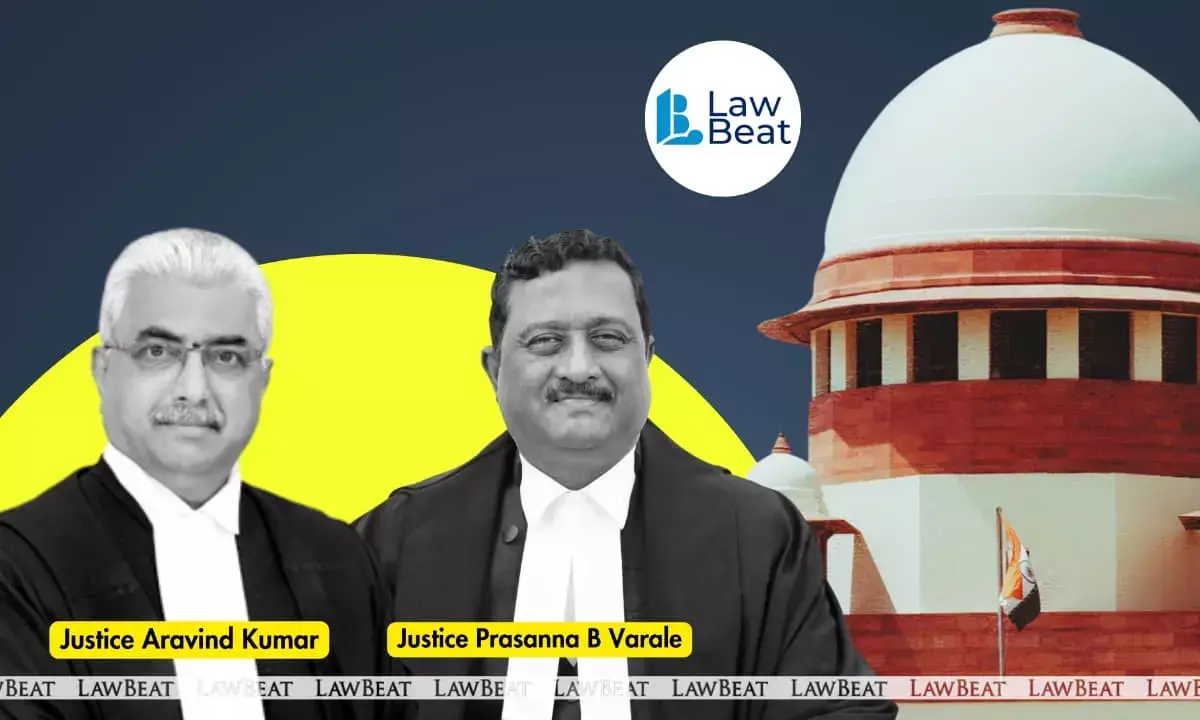
Supreme Court reduces jail term for 30-year-old case citing no repeat offences
The Supreme Court recently observed that long passage of time without any repeat offence can be a valid ground for reducing a sentence, especially in cases involving short custodial sentences and non-heinous crimes.
A bench of Justices Aravind Kumar and Prasanna B Varale reduced the sentence of appellant Amit Singla from three months’ imprisonment to the 15 days already undergone by him in a 1995 case relating to house-breaking with the alleged intent of harassing the complainant’s wife.
Court noted that Singla had no criminal antecedents either before or after the incident and had faced the rigours of criminal litigation for almost 30 years, which, it said, was itself a form of punishment.
The appellant was prosecuted for an offence under Section 456 of the Indian Penal Code in connection with an incident that took place in the early hours of August 13, 1995. According to the prosecution, Singla had been making phone calls to the complainant’s wife and harassing her. It was alleged that on the said date, he unlawfully entered the complainant’s house at night with illicit intent. He was apprehended at the spot, and his scooter was seized, leading to criminal prosecution.
After the trial, Singla was sentenced to six months’ imprisonment along with a fine of Rs 500. The appellate court upheld his conviction but reduced the sentence to three months’ rigorous imprisonment by a judgment dated February 18, 2010.
Before the Supreme Court, counsel for the appellant did not seriously challenge the conviction and made a limited plea seeking reduction of sentence. It was argued that the incident had occurred nearly 30 years ago and that there had been no allegation of any wrongdoing against the appellant thereafter. The counsel also submitted that Singla was now a reputed contractor and a reformed individual, and therefore deserved leniency.
Opposing the plea, the State counsel contended that there was no infirmity in the impugned order warranting interference and sought dismissal of the appeal.
After hearing both sides and examining the record, court observed that the conviction under Section 456 of the IPC was based on consistent eyewitness testimony and supported by circumstantial evidence, including the recovery of the appellant’s vehicle.
“We are not inclined to interfere with the concurrent findings of conviction, which are based on appreciation of facts as recorded by the courts below,” the bench said.
However, on the question of sentence, court held that the ends of justice would be adequately met by restricting the punishment to the period already undergone. The bench noted that the incident occurred in 1995 when the appellant was about 19 years old and may not have been fully aware of the consequences of his actions. It also took into account that he had already undergone 15 days of imprisonment.
Reiterating that Singla had no criminal antecedents before or after the incident and had endured nearly three decades of criminal proceedings, the court said this prolonged litigation itself amounted to punishment.
The bench also referred to its earlier decision in Amit v. State of Uttar Pradesh (2012), where it was held that a long lapse of time without repeat offence, particularly in cases involving short custodial sentences and non-heinous crimes, was a valid ground for exercising discretion in favour of sentence reduction.
“Taking into account the period of actual incarceration already undergone, the long delay in conclusion of the criminal proceedings and the absence of any aggravating circumstances, we are of the opinion that no useful purpose would be served by directing the appellant to undergo the remaining portion of the sentence at this stage,” the bench observed.
Accordingly, court reduced the three-month sentence awarded by the High Court to the period already undergone by the appellant. While allowing the appeal, the bench enhanced the fine from Rs 500 to Rs 5,000, directing that it be paid within four weeks.
Case Title: Amit Singla Vs Union Territory Chandigarh
Judgment Date: January 13, 2026
Bench: Justices Aravind Kumar and Prasanna B Varale