
Matrimonial Dispute: 92 Videos, 237 Photos; Supreme Court Calls for Regulation of Private Investigators
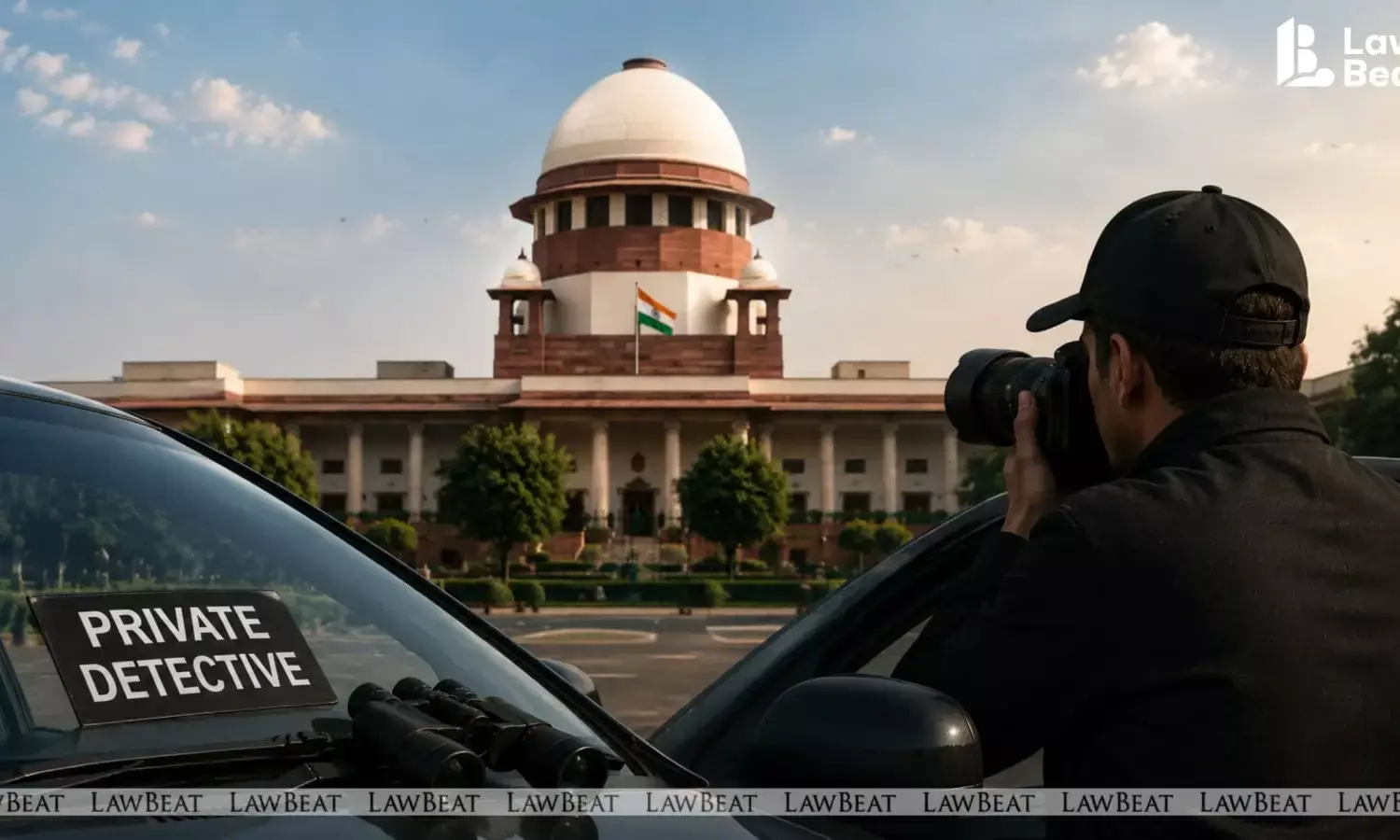
Supreme Court flags privacy risks in private investigation evidence.
The Supreme Court has emphasized the need for having in place a mechanism to regulate private investigators and detectives employed in matrimonial disputes, saying there also has to be some limitation on what these individuals can do in pursuit of their profession.
A Bench of Justices Sanjay Karol and Vipul M Pancholi said there was a need for protections against allegations such as voyeurism under Section 354C of the IPC [corresponding to Section 77 of the Bharatiya Nyaya Sanhita (BNS)], as well as regulation of the data and photographs procured by private investigators.
"There has to be a mechanism in place to deal with the evolving methods of evidence collection,'' the Bench said, emphasizing that regulation and accountability are equally important in the sphere of private investigation.
Why did the Supreme Court flag the need to regulate private investigators?
Court raised the issue while allowing a man's appeal against orders granting interim maintenance to his wife without deciding his application under Section 125(4) of the CrPC [corresponding to Section 144(4) of the new Bharatiya Nagarik Suraksha Sanhita (BNSS)].
The husband had alleged that his wife was in an adulterous relationship and, therefore, was not entitled to maintenance. The Supreme Court held that the trial court ought to have decided his application under Section 125(4) before proceeding further.
"Since the stipulation in the Section 125 (4) is that if adultery is proved, the wife would neither be entitled to interim nor final maintenance, we are of the view that if a husband files an application under Section 125(4) and is, at the first instance, able to establish the charge through evidence ex facie, then only, there can be said to be a bar to interim maintenance,'' the Bench said.
Remanding the matter for fresh consideration, Court held that it was incorrect for the trial court to observe that the husband's application could not have been decided prior to the final adjudication of the wife's application.
92 videos, 237 photographs raise questions over private investigation
Going through the record, Court noted that the appellant-husband had placed on record a large number of photographs allegedly showing his wife pursuing a relationship outside marriage. Approximately 92 videos along with 237 photographs had been furnished.
This prompted the Bench to raise questions about how such material is collected and whether private investigators should have unrestricted freedom to obtain it.
"Who took these pictures? Did they have any authorization to do so? What is the procedure for storing these pictures once taken? Whether these pictures sought to be adduced as evidence are in fact genuine pictures or are doctored using technological advancements; do they present an accurate picture or have they been morphed to suit the narrative sought to be built by the parties? What are the implications for the right of privacy of individuals, protection of their personal data, etc.? Obviously, these are concerns that need to be addressed,'' the Bench said.
Court observed that it appeared there was currently no body that could undertake these issues.
Supreme Court says evidence collection by private detectives needs checks and safeguards
The Bench said verification within the meaning of Section 65B of the Evidence Act, 1872, or its equivalent under the Bharatiya Sakshya Adhiniyam, 2023, was not the only issue that needed to be addressed.
"Checks and measures are perhaps required, drawn from the areas of the law, law enforcement, privacy experts, etc., that can deal with issues arising out of such endeavours, including acting as a grievance redressal forum for any individual who may be aggrieved by the actions of the private investigator having overstepped professional bounds and gone into violating the rights of the individual,'' it said.
Court also observed that, as far as accuracy was concerned, a certificate under Section 65B of the Evidence Act could perhaps go a long way.
Private investigation is not recognised as investigation under law
The Supreme Court also referred to its 2000 judgment in Navinchandra N Majithia v State of Meghalaya, where it had held that the Code of Criminal Procedure does not recognise a private investigating agency.
Court had observed that a person could hire a private agency at his own risk and cost, but such investigation would not be regarded as an investigation made under law. Evidence collected through such private investigation and conclusions reached by private investigators could not be presented by a Public Prosecutor in a trial, though it may be possible for the defence to present such evidence.
The Bench also noted that a bill titled the Private Detective Agencies (Regulation) Bill, 2007, was introduced in the Rajya Sabha in 2007, in view of the increasing reliance on private investigators to gather information.
Supreme Court asks Law Ministry, Law Commission to examine regulation of private investigation
Court said the need to develop a mechanism to deal with such scenarios "cannot be underscored enough".
It said the legislature would need to examine all relevant issues and frame rules and regulations in accordance with prevalent norms and conditions. It could also make reference to other jurisdictions where laws of a similar nature exist, including the State of Queensland in Australia, the Province of Ontario in Canada, the Netherlands and Singapore.
Court directed that a copy of its judgment be sent to the Secretary, Ministry of Law and Justice, Government of India, and the Chairman, Law Commission of India, to take a view on the aspect of private investigation, as may be appropriate.
Case Title: Himanshu Chordia Vs State of Rajasthan & Anr
Bench: Justices Sanjay Karol and Vipul M Pancholi
Date of Judgment: July 31, 2026